Business
Is saving Amsa worth the cost? South Africa’s steel dilemma deepens
Is saving Amsa worth the cost? South Africa’s steel dilemma deepens
The question is being asked more loudly in boardrooms, factories and workshops across the country: can South Africa afford to keep ArcelorMittal South Africa (Amsa) alive and at what cost to everyone else?
The debate has flared up again after Amsa applied for a steep 51% anti-dumping duty on certain flat-rolled steel products imported from China. Added to the existing 10% duty, this could push the effective tariff to 61%, dramatically raising prices for importers and downstream users.
Who pays when tariffs rise?
If government agrees to the request, the costs won’t stop at the harbour. Higher steel prices ripple through the economy hitting mining, construction, manufacturing and every business that relies on steel as an input.
Downstream producers are already under pressure, and many argue they are being asked to subsidise Amsa’s survival through higher input costs. On industry forums and social media, frustration is mounting, with some users asking whether protection for one company is accelerating decline elsewhere.
Amsa’s uphill battle
Amsa’s struggles are not happening in isolation. Over the past decade, its electricity costs have surged by more than 835%, while Chinese steel producers have benefited from government subsidies and state-controlled power prices that have barely moved in years.
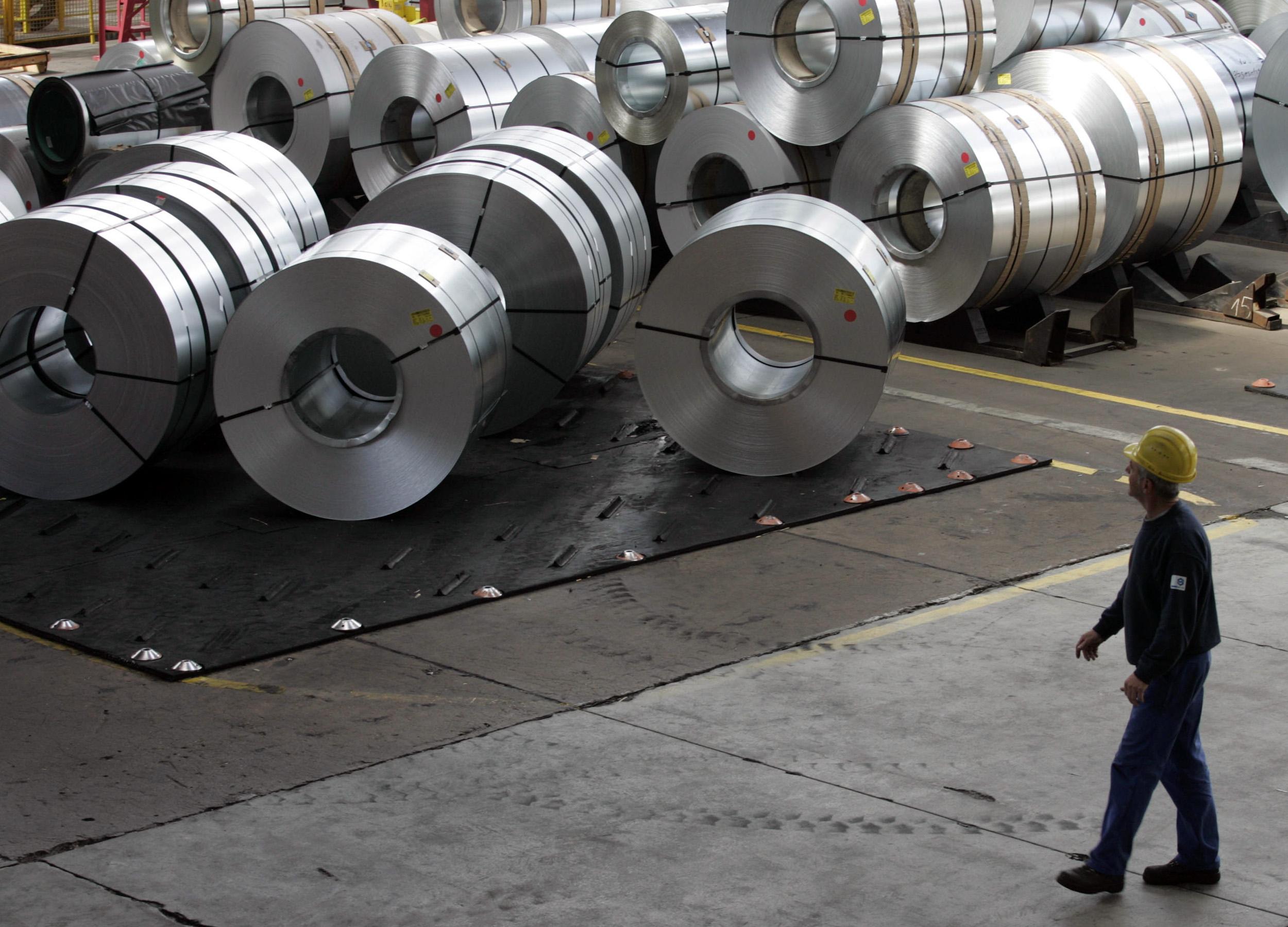
Competing under those conditions has been brutal. In November, Amsa shut down long steel production at its Newcastle plant after burning through R1.683 billion in support from the Industrial Development Corporation. The funding was meant to delay closures at Newcastle and Vereeniging, but soaring energy and logistics costs, combined with cheap imports, proved overwhelming. Newcastle is now in care and maintenance.
Government steps in again
Trade policy sits with the International Trade Administration Commission (Itac), which is currently undertaking the biggest review of steel tariffs in its history. Government appears committed to keeping Amsa afloat through a mix of financial support, import duties and policy interventions.
But critics are unconvinced. National Employers’ Association of South Africa chief executive Gerhard Papenfus has questioned whether it makes sense to save Amsa if it means sacrificing hundreds of downstream businesses that rely on competitively priced steel.
He argues that repeated protection has created a high-cost bubble around an ageing producer, while consumers and manufacturers foot the bill.
What if South Africa lets go?
There is an uncomfortable alternative: allowing cheap Chinese steel to dominate the market. That would likely spell the end of Amsa’s remaining flat steel operations, but it would also mean steel priced at international levels.
South Africa would import most of its steel, hurting the trade balance and putting about 3 500 direct jobs at risk. Yet the country already consumes far less steel than it can produce, and more than 1 000 steel-dependent businesses have closed in the past five years, costing around 110 000 jobs.
Some argue that the economy has already adapted pointing to how the closure of Amsa’s long steel plants did not trigger the collapse many feared.
A history that still shapes policy
Amsa’s roots lie in Iscor, founded in 1928 as a state-backed industrialisation project. Job creation, beneficiation and economic stimulus were central to its mission themes that still echo in today’s policy debates.
But without globally competitive electricity and logistics, those arguments are losing traction. While Eskom and Transnet show early signs of recovery, they are nowhere near strong enough to level the playing field with China.
An industry caught in the middle
South Africa’s steel policy is tangled in competing interests. The IDC is heavily invested in mini mills that benefit from discounted scrap through the Preferential Pricing System a setup critics describe as a massive hidden subsidy.
These mills could absorb some capacity left by Amsa, but they cannot supply all the specialised steel grades required by sectors like automotive manufacturing.
No easy answers
Amsa points out that countries from the US to the EU, UK and India have all stepped in to protect their steel industries from import surges, mainly from China. That argument carries weight but so does the reality that tariffs have not stopped deindustrialisation at home.
The uncomfortable truth is this: South Africa is being forced to choose between protecting a struggling giant and easing pressure on the rest of the economy. And whichever path it takes, the consequences will be felt far beyond the steel mills.
{Source: Moneyweb}
Follow Joburg ETC on Facebook, Twitter , TikTok and Instagram
For more News in Johannesburg, visit joburgetc.com