Business
Ramaphosa reform push gains momentum amid economic stability
Ramaphosa finds his footing as reform drive gathers pace
For years, South Africans have asked the same weary question: When will the turnaround actually begin?
Now, according to a new report from the Bureau for Economic Research, President Cyril Ramaphosa may finally be answering it not with promises, but with momentum.
The analysis, authored by Natasha Marrian and Claire Bisseker, suggests Ramaphosa’s long-promised reform agenda is no longer stuck in neutral. Instead, it appears to be gaining traction against a far steadier economic backdrop than the country has seen in years.
A speech that felt different
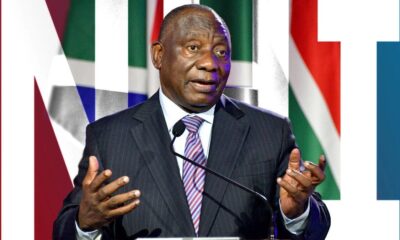
In politics, tone matters. And this year’s State of the Nation Address struck a different chord.
The report argues that Ramaphosa, after years of cautious messaging and incrementalism, sounded clearer and more decisive. His central message? Deep institutional reform not flashy quick fixes is the only way to rebuild the state.
From strengthening the criminal justice system to fixing struggling water boards, the emphasis was on rebuilding foundations. The president also acknowledged what many citizens already know: South Africa’s problems are layered and long in the making. There are no shortcuts.
Some critics have pointed out that this clarity was needed back in 2019, when he first took office. But the report’s authors make a pragmatic point what matters is that it’s happening now.
Governing through firestorms
It’s easy to forget just how turbulent Ramaphosa’s presidency has been.
He inherited a state hollowed out by corruption during the African National Congress’s years of internal turmoil under Jacob Zuma. Then came the crippling energy crisis, the Covid-19 pandemic, and the July 2021 unrest that shook parts of KwaZulu-Natal and Gauteng to the core.
Externally, tensions flared amid criticism from former US president Donald Trump, while domestically, Zuma’s MK Party emerged as a disruptive political force.
Add to that the ANC’s first major electoral setback since 1994 forcing it into a Government of National Unity and it’s been anything but a smooth ride.
Against that backdrop, reform was often promised but rarely felt.
A more stable economic climate
What has changed?
The report points to a stronger macroeconomic setting: sustained fiscal discipline, movement toward a lower inflation target, and the relative durability of the Government of National Unity.
In simple terms, the economic weather has calmed slightly. That matters. Reform is easier to push when markets are steadier and the fiscal house isn’t on fire.
South Africa is not booming far from it but it is arguably on more solid ground than it has been in years. That stability may explain Ramaphosa’s renewed political energy.
But how long can it last?
Here’s the political catch.
Ramaphosa is serving his final term as ANC president. The party will elect a successor next year. Historically, once succession battles intensify, sitting leaders risk becoming sidelined or weakened sometimes even pushed out.
The ANC faces an uncomfortable reality: who replaces Ramaphosa could define not just the party’s future, but the country’s trajectory. The report warns that South Africa cannot afford a return to scandal-driven leadership while state institutions deteriorate.
At present, Deputy President Paul Mashatile is widely seen as the frontrunner. But succession politics in the ANC are rarely straightforward.
Public mood: cautious hope, deep scepticism
On social media and talk radio, reaction to Ramaphosa’s recent tone has been mixed.
Some South Africans say they finally hear urgency in his voice. Others remain sceptical, arguing that reform announcements have come and gone before without visible change at municipal level where service delivery failures are most keenly felt.
With local government elections looming, that municipal track record could become a decisive battleground. The ANC’s delivery record in many towns and metros remains poor, and voters are impatient.
In many ways, Ramaphosa’s reform “green shoots” may be the party’s strongest campaign message.
South Africa’s political story often swings between despair and resilience. The past decade delivered its fair share of institutional damage. Rebuilding takes longer than dismantling.
The Bureau for Economic Research’s assessment doesn’t claim the country has turned a corner entirely. Instead, it suggests that for the first time in a while, reform has both clearer direction and slightly more favourable conditions.
Whether Ramaphosa can lock those gains in before succession battles consume the ANC is another question entirely.
For now, though, there is something that has been missing for years: momentum.
{Source: IOL}
Follow Joburg ETC on Facebook, Twitter , TikTok and Instagram
For more News in Johannesburg, visit joburgetc.com