Business
High Court sends strong message to SARS in R531 million Ferreria tax battle
For years, one phrase has sent a chill through boardrooms and accountants’ offices alike: pay now, argue later.
It is one of the most formidable tools in the arsenal of the South African Revenue Service. If SARS issues a tax assessment, the expectation is clear. You pay first. If you disagree, you fight it out in court afterwards.
For business owners, that can mean millions leaving the bank account before a judge has even weighed in. Cash flow tightens. Assets may need to be sold. Operations can stall.
But a recent decision from the Gauteng High Court has reminded taxpayers that even SARS must play by the rules.
The case that put the spotlight on discretion
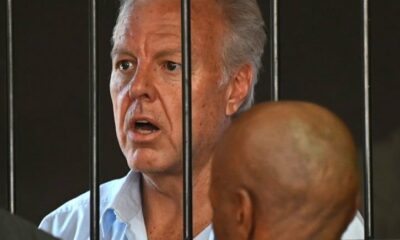
In Ferreria v Commissioner for SARS, businessman Mario Ferreria was hit with additional income tax assessments totalling more than R531 million for the years between 2009 and 2021. He disputes the liability, and the matter is heading to the Tax Court.
While the dispute was pending, Ferreria applied for a suspension of payment under section 164 of the Tax Administration Act. That section allows SARS to suspend payment if certain conditions are met. These include whether recovery is at risk, whether there is fraud, whether the taxpayer would suffer irreparable hardship, and whether adequate security has been offered.
Ferreria first offered security that SARS rejected. He then went further. He tendered his 80 percent shareholding in TMM Holdings, valued at more than R1 billion. Despite this, SARS refused to suspend payment.
When security outweighs the debt
In court, SARS acknowledged that the shareholding was indeed worth more than R1 billion, almost double the disputed amount.
The High Court considered this critical. If security comfortably exceeds the alleged debt, it becomes difficult to argue that recovery is in jeopardy or that assets are likely to disappear.
Even more concerning for SARS was the suggestion that its Independent Debt Committee may not have been properly informed of the full value of the security when it made its decision. The court found that failing to properly consider such a material fact rendered the refusal irrational and procedurally unfair.
The judges also acknowledged commercial reality. Forcing immediate payment of R531 million could have required asset sales at knockdown prices, potentially damaging ongoing business operations beyond repair. Even if Ferreria later won in the Tax Court, the damage could already have been done.
A rare move from the bench
Perhaps the most striking part of the ruling was what the court did next. Instead of sending the matter back to SARS to reconsider, it substituted its own decision. The court ordered that payment be suspended on condition that the shareholding be pledged within five days.
Courts are typically cautious about replacing administrative decisions with their own. The fact that this step was taken signals how seriously the flaws in SARS’ reasoning were viewed.
What this means for taxpayers
Importantly, the judgment does not dismantle the “pay now, argue later” principle. The Constitutional Court has previously upheld its constitutionality, and SARS retains strong collection powers.
What this case clarifies is something more nuanced. SARS must exercise its discretion rationally and fairly. It cannot rely on generic claims of risk where credible, substantial security has been offered.
For businesspeople facing large disputed assessments, this ruling offers a measure of reassurance. If meaningful security is available and properly tendered, and SARS refuses suspension without solid reasoning, judicial review is not just theoretical. It can be decisive.
In a country where tax disputes can stretch over years, that distinction matters. It signals that process and fairness still count, even when the taxman is involved.
Follow Joburg ETC on Facebook, Twitter, TikT
For more News in Johannesburg, visit joburgetc.com
Source: Daily Investor
Featured Image: News24