Business
How a ‘!’ in a name is stopping a young South African from getting a smart ID
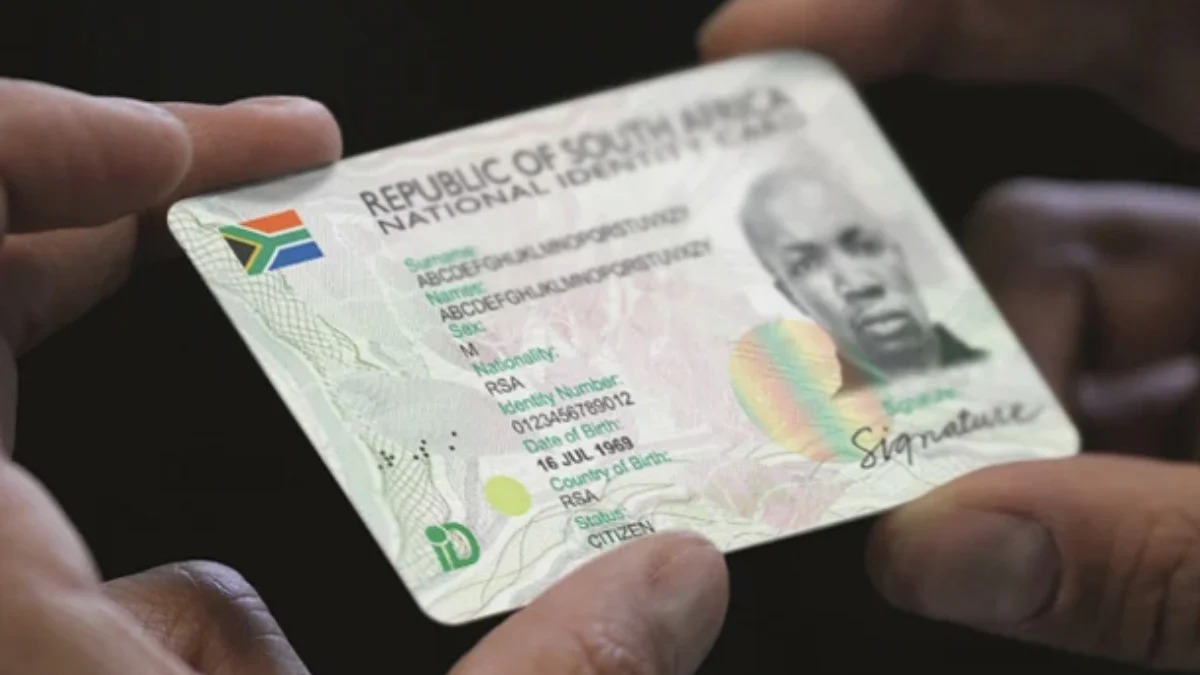
For most South Africans, applying for a smart ID card is meant to be a routine step into adulthood. For one Cape Town family, it has become a crash course in how technology can quietly erase culture.
Lesle Jansen’s son, !Khūboab Oedasoua Lawrence has been unable to get a smart ID card because the Department of Home Affairs’ live capture system cannot process parts of his name. The problem is not paperwork or eligibility. It is the clicks and diacritics that sit at the heart of Khoekhoegowab, the language of the Nama people and part of South Africa’s Khoisan heritage.
Why the system breaks at indigenous names
In Khoekhoegowab, the exclamation mark is not punctuation. It represents a click sound, just as other diacritical marks shape pronunciation and meaning. Lawrence’s name contains two such characters. According to Jansen, Home Affairs officials told her the system simply cannot capture them.
Speaking publicly about the issue, she questioned how this could still be the case. In her words, it is difficult to accept that in 2026, a national identity system remains limited to what fits neatly into the 26-letter English alphabet.
Home Affairs has since confirmed that while the National Population Register can record indigenous names with clicks and diacritics, the newer live capture system used for smart ID cards and passports is not yet fully optimised to transmit those characters onto smart IDs. The result is a digital bottleneck where a name exists in the system but cannot make it onto the card.
Living without an ID in the meantime
Despite not having a smart ID, Lawrence has managed to navigate some key milestones. With support from his school and an affidavit attached to his birth certificate, he was able to write his matric exams. He also managed to open a bank account after showing proof that a smart ID application had been attempted.
Still, the gaps are becoming more obvious as he steps into adulthood. Everyday processes that most people take for granted begin to pile up when an ID number does not neatly translate into a plastic card. Jansen has described it as discovering new complications as her son tries to live a normal young adult life.
What Home Affairs says it is doing
In response to the concerns, the Department of Home Affairs has pointed to legal, policy, and administrative reforms aimed at recognising indigenous identities. It has emphasised that the National Population Register allows for indigenous clicks, diacritics, and names from languages such as isiZulu, isiXhosa, and Setswana, as well as corrections to names distorted during colonial and apartheid eras.
However, the department has also acknowledged the limits of its current smart ID technology. Until system enhancements are complete, Lawrence has been advised to apply for a green ID book at a non-live capture office. It is a practical workaround, but one that feels like a step backwards in a country pushing digital transformation.
Not an isolated problem
Issues with smart IDs are not limited to indigenous names. Since May 2025, naturalised citizens have been allowed to apply for smart ID cards, starting with those from visa-exempt countries. In practice, many who naturalised decades ago have run into their own obstacles.
Smart ID applications for naturalised citizens require a naturalisation certificate, a document many no longer have. Without it, even applicants holding valid South African passports have been turned away at bank-based Home Affairs offices.
One Durban North applicant described booking an appointment at a Home Affairs-supported bank branch, only to be refused service because they could not produce the certificate. Attempts to have it reissued reportedly led to dead ends and additional costs, pushing them to abandon the process and stick with a green ID book.
The bigger question of identity
On social media and talk radio, reactions to cases like Lawrence’s have been swift. Many South Africans see it as another example of systems that promise inclusion but struggle when faced with the country’s real linguistic and cultural diversity.
At its core, this is not just a technical glitch. It is about whether national systems are built to reflect who South Africans actually are. Names carry history, language, and belonging. When technology cannot accommodate them, it sends an uncomfortable message about whose identities fit easily into the future, and whose still need manual workarounds.
For now, families like the Jansens wait for system upgrades. The hope is that modernising Home Affairs will eventually mean more than faster queues and bank partnerships. It will mean an identity system that can fully recognise every name, click and all.
Follow Joburg ETC on Facebook, Twitter, TikT
For more News in Johannesburg, visit joburgetc.com
Source: MyBroadband
Featured Image: BusinessTech