Business
South Africa’s longest tunnel gets major R4 billion upgrade
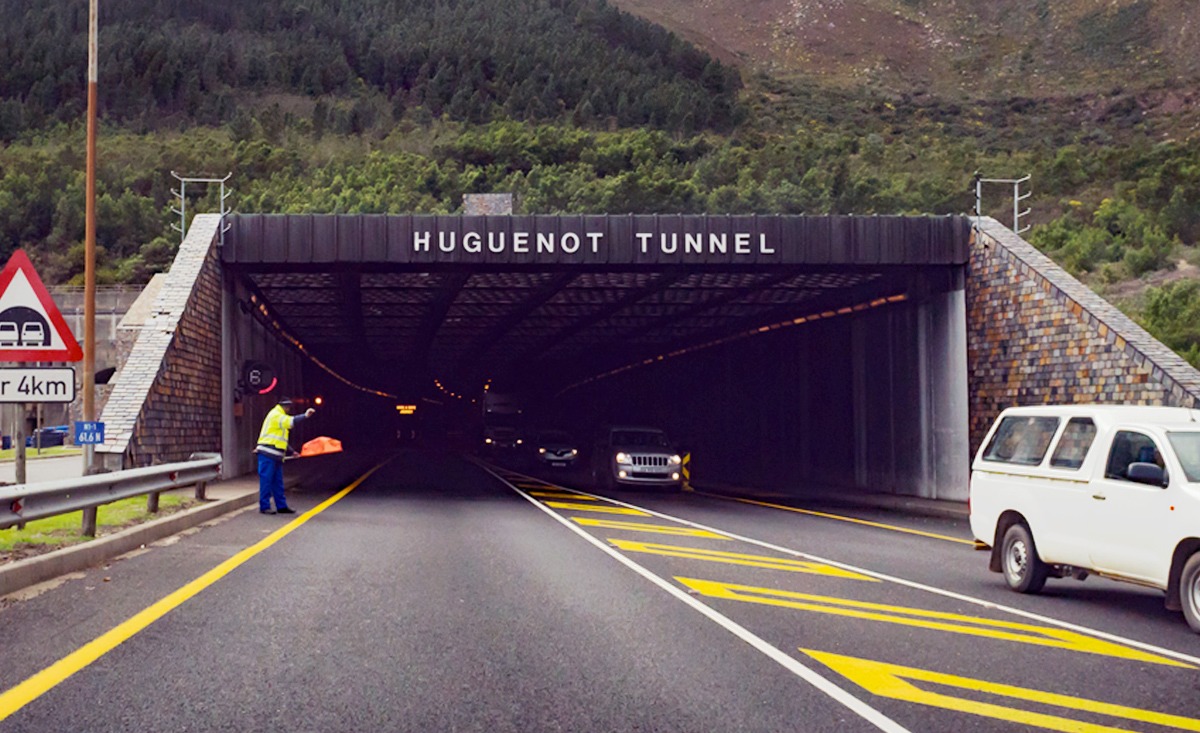
South Africa’s longest road tunnel set for major modern upgrade
Tucked through the rugged Du Toitskloof Mountains, the Huguenot Tunnel has quietly carried millions of travellers between Paarl and Worcester for decades. Now, the longest road tunnel on the African continent is heading into a new chapter, with a major upgrade project aimed at reshaping how traffic moves along one of the Western Cape’s busiest routes.
Stretching about 3.9 kilometres, the tunnel has long been a critical shortcut along the N1. For many drivers heading inland from Cape Town, it is the difference between a smooth, direct journey and the slower, winding climb over the Du Toitskloof Pass.
From a single tunnel to a smarter system
The current setup relies on the South Bore, which opened in March 1988 and still carries traffic in both directions. That is set to change. Plans are in motion to introduce a second operational tunnel, known as the North Bore, which has never been opened for public traffic.
Sanral began work on the North Bore in 2024, with the goal of transforming the system into two separate tunnels. Each will eventually handle traffic in a single direction, creating a four-lane flow through the mountain.
Right now, the North Bore is in the commissioning phase as it is prepared for live traffic. At the same time, the South Bore is being refurbished so that both tunnels can operate to modern international standards.
The project, estimated at around R4 billion, is designed to shift the tunnel from a single bi-directional route to two dedicated carriageways. Once complete, the plan is to finish the North Bore first, then temporarily close the South Bore for its final upgrades.
If everything runs smoothly, the full system could be operational within three to five years, although timelines may shift depending on procurement and construction challenges.
Safety, energy, and technology upgrades
The upgrade is not only about adding capacity. It is also about bringing the tunnel in line with the kind of smart infrastructure seen in leading transport corridors around the world.
Planned improvements include transparent wind barriers on the Hugo’s River Viaduct to reduce the risk of trucks overturning in strong winds, as well as advanced sensors to monitor air quality, lighting, and traffic conditions inside the tunnel.
Energy efficiency is another focus. Wind turbines near the tunnel entrances are expected to help reduce overall power demand, while a distributed jet fan ventilation system will improve airflow and fresh air supply.
Emergency readiness is also being strengthened through the addition of a high-level water reservoir designed to support firefighting efforts if needed.
A route that already saves time and fuel
The Huguenot Tunnel has long been more than just a piece of engineering. It is a daily lifeline for thousands of drivers.
Sanral data shows that about 13,000 vehicles pass through the tunnel each day, with roughly 100 million vehicles having used it over its lifetime. By bypassing the older mountain pass, the route can cut between 15 and 26 minutes off the trip between Paarl and Worcester.
Over the years, that time saving has translated into significant fuel efficiency, with estimates suggesting the tunnel has helped save millions of barrels of fuel.
Pride in local engineering
When the system was inspected in 2024 by former transport minister Sindisiwe Chikunga, it was described as a strong example of South African engineering capability. That sense of pride often shows up in public conversation too, especially on social media, where infrastructure projects that actually improve daily commuting tend to draw rare moments of national optimism.
For many motorists, especially long-haul truck drivers who rely on the N1, smoother traffic flow through the mountain is not just a convenience. It is a real economic benefit.
A surprising scientific opportunity underground
Beyond transport, the tunnel has also attracted scientific interest because of its unique geology. Researchers have proposed creating an underground physics research facility within or alongside the tunnel corridor.
The proposed Paarl Africa Underground Laboratory, known as the Paul project, would be the first facility of its kind on the continent. The idea is to build a dedicated section where professional researchers and postgraduate students could conduct specialised experiments.
If plans proceed as hoped, excavation for the lab could begin toward the end of 2025, with completion targeted for around mid-2027.
More than just a shortcut
For decades, the Huguenot Tunnel has quietly shaved time off road trips and kept freight moving between regions. The coming upgrade is set to turn it into a smarter, safer, and more efficient transport corridor.
In a country where infrastructure stories often focus on breakdowns, this project offers a different narrative. It is about modernising something that already works and making sure it keeps serving the next generation of travellers.
Follow Joburg ETC on Facebook, Twitter, TikT
For more News in Johannesburg, visit joburgetc.com
Source: MyBroadband
Featured Image: TopAuto