Business
Farmers say John Steenhuisen’s FMD response is not good enough
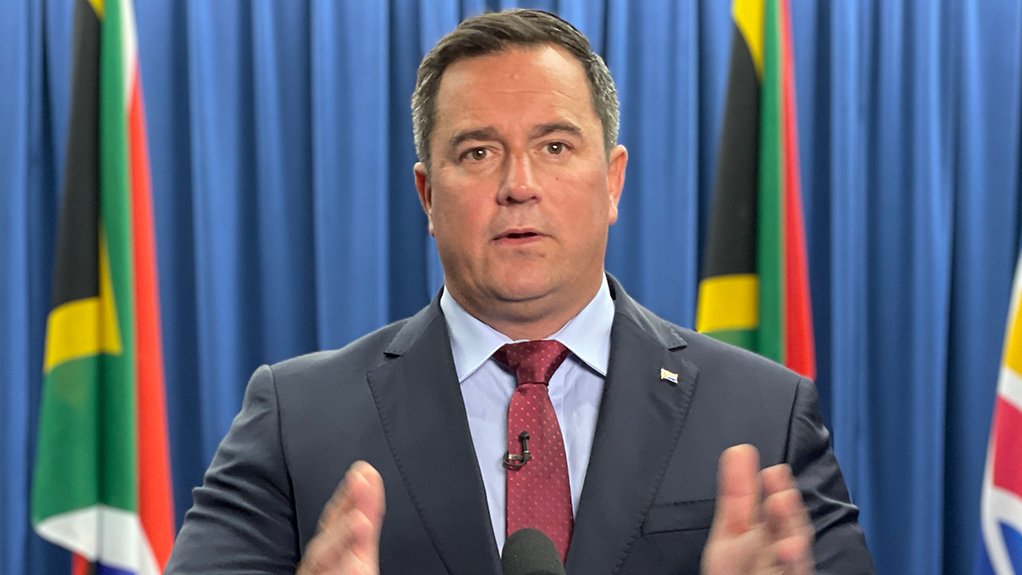
South Africa’s foot-and-mouth disease crisis has become more than a veterinary emergency. It has turned into a legal and political showdown, with farmers demanding clarity and the Minister of Agriculture insisting the law must come first.
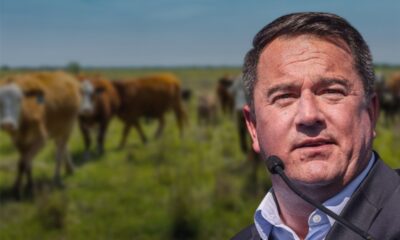
At the centre of the storm is John Steenhuisen, whose recent public response to legal threats from agricultural groups has been labelled vague, evasive, and legally insufficient by those on the ground. For farmers watching cattle herds shrink and dairy operations buckle, patience is running out.
A disease outbreak meets a legal deadline
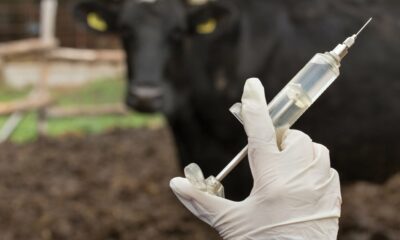
The dispute erupted after Sakeliga, SAAI, and Free State Agriculture sent a formal letter of demand to Steenhuisen and senior officials. Their request was straightforward in principle: confirm in writing that livestock owners and the private sector may procure and administer foot-and-mouth disease vaccines themselves, without being blocked by state red tape.
The organisations argue that existing legislation does not explicitly prohibit private vaccination. They say allowing farmers to act would support, not undermine, the national response by enabling faster, decentralised protection where the disease is spreading fastest.
They gave the Minister until close of business on Friday, 30 January 2026, to respond clearly. Anything less, they warned, could trigger court action.
Steenhuisen’s warning shot
Steenhuisen responded publicly on Tuesday, 27 January 2026, cautioning that looming litigation could derail vaccine procurement and rollout efforts. He accused the groups behind the legal action of exploiting the crisis for membership recruitment and fundraising.
The Minister stressed that foot-and-mouth disease is a controlled animal disease governed by the Animal Diseases Act of 1984. According to him, the Department of Agriculture is legally obliged to manage the outbreak through a tightly controlled, state-led process.
He argued that challenging this framework during an active outbreak risks diverting resources away from frontline disease control and could delay vaccine purchases and deployment. The department also warned that uncontrolled access to vaccines could jeopardise South Africa’s ability to regain international foot-and-mouth disease-free status, with serious consequences for agricultural exports.
Why Sakeliga says the response falls short
Sakeliga was unimpressed. Its CEO, Piet le Roux, said Steenhuisen’s statement did not meet the basic requirements of their letter of demand. While acknowledging the speed of the response, Sakeliga described it as vague and inadequate.
Crucially, the group wants a direct answer to a simple question: Does the Minister believe there is a legal barrier preventing private parties from vaccinating their own livestock? If so, they want that barrier identified explicitly, with references to the relevant laws or regulations.
Without that clarity, Sakeliga says a real dispute exists, and litigation may be unavoidable. The organisation also accused Steenhuisen of misrepresenting the legal consequences of court action, arguing that a case would not halt lawful state action or suspend disease control measures.
The threat of personal liability
The standoff has escalated further with Sakeliga warning that legal action could extend beyond the department itself. If officials are found to have unlawfully delayed or obstructed private sector responses, the group says it may pursue claims against individuals in their personal capacity.
This is an unusually sharp move in South African agricultural politics and signals how high the stakes have become for farmers who feel exposed and unheard.
Vaccines, control, and a deeper trust gap
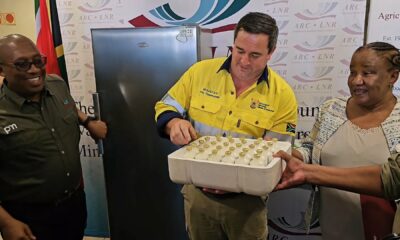
Steenhuisen maintains that the state has made progress. According to the department, millions of vaccines have already been administered, import permits for private suppliers have been issued, and a national plan has been developed with input from scientists, veterinarians, and industry bodies.
The department argues that centralised monitoring and strict controls are essential to prove there has been no virus transmission for at least 12 months, a requirement to restore South Africa’s international disease status.
Farmers and industry groups, however, point to ongoing infections and slow state responses as evidence that the current system is not working fast enough. On farming WhatsApp groups and agricultural social media pages, frustration is palpable. Many producers say they are willing to pay for vaccines and veterinary support themselves, if only the state would step aside.
A crisis bigger than one court case
Beyond the legal technicalities, this clash reflects a deeper tension between centralised control and private initiative in South African agriculture. It also exposes lingering distrust between farmers and government departments, shaped by years of uneven service delivery and slow crisis response.
With the Friday deadline looming, all eyes are on whether Steenhuisen will issue the clear, written confirmation the farming groups demand. If not, South Africa may soon see a courtroom battle unfolding alongside a disease outbreak that farmers say they cannot afford to wait out.
For now, the message from the fields is blunt: this is not about politics or paperwork. It is about saving herds, livelihoods, and an industry already under immense pressure.
Also read: Ramaphosa warned as investor confidence hangs on military control
Follow Joburg ETC on Facebook, Twitter, TikT
For more News in Johannesburg, visit joburgetc.com
Source: Business Tech
Featured Image: Polity.org.za