Business
NHI court delays raise fresh doubts over South Africa’s healthcare reform timeline
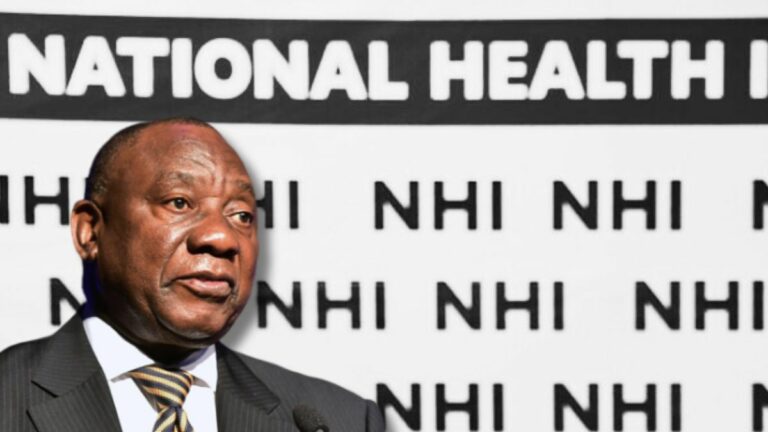
When President Cyril Ramaphosa signed South Africa’s National Health Insurance Act into law in 2024, the moment was framed as historic. Supporters saw it as a bold step toward universal healthcare. Critics warned it would spend years tangled in court.
Two years later, that warning is no longer hypothetical.
Constitutional Court defers key case
The Constitutional Court of South Africa has deferred a case that challenges the rationality of the President signing the NHI Act into law. The reason is procedural but significant. Another legal challenge, this one focused on how Parliament handled the drafting process, is still underway.
The court wants that matter resolved first. If the drafting process is found to be flawed, it could make the rationality challenge unnecessary. But if it is not, the deferred case could return to court later.
In simple terms, the legal road ahead looks long.
Eight organisations, multiple fronts
The NHI is currently being challenged by eight different organisations. They represent private hospitals, healthcare funders, doctors, medical professionals, unions, and political parties.
Their objections are wide-ranging. Some question whether the President acted rationally in signing the Act. Others argue that Members of Parliament failed to properly consider public submissions during the drafting stage. There are also concerns about provisions that would effectively dismantle private healthcare funding and medical aid schemes, as well as constitutional questions about the right to choose how one accesses healthcare.
For many South Africans who rely on private medical aids, that last point is especially sensitive. Social media discussions around the NHI often circle back to fears about losing choice, longer queues, or overburdened facilities. At the same time, supporters argue that inequality in healthcare access cannot continue as it is.
The tension between these positions is playing out in courtrooms rather than on talk shows.
Government attempts to manage the legal flood
In August 2025, Health Minister Aaron Motsoaledi applied to pause and consolidate all constitutional challenges to the NHI. His concern was that multiple cases before different courts could lead to duplication, wasted resources, and even conflicting judgments.
Ironically, that application created yet another court process. The matter is now before the High Court and could itself be appealed.
Meanwhile, Finance Minister Enoch Godongwana acknowledged in a parliamentary debate in 2026 that the growing number of court cases would inevitably delay implementation. He urged litigants and government departments to seek a settlement outside court, arguing that continued litigation would push the rollout back by years.
Litigants were not persuaded. Many have said they turned to the courts precisely because they felt their concerns were ignored during the legislative process. Some are seeking to have the NHI set aside entirely, with alternative reforms considered instead.
“NHI is law”
The Department of Health has drawn a firm line. It insists that the NHI is no longer a policy idea open for negotiation. It is an Act of Parliament, signed by the President after what it describes as years of public participation and legislative work.
According to the department, the only legitimate way to alter the NHI is through judicial review. Courts exist to test constitutionality, not backroom negotiations.
That stance suggests there is little appetite within government for a compromise settlement. If change comes, it will likely come from the bench.
A decade-long vision, now even longer
Even without legal challenges, the NHI was always envisioned as a multi-year project that could take more than a decade to fully realise. Some aspects of the law are already being implemented, but full rollout remains indefinite.
With cases being deferred and new ones added to the queue, the timeline now looks even more uncertain.
For ordinary South Africans, the debate can feel abstract until it hits closer to home. Public hospitals remain under pressure. Private healthcare costs continue to climb. The promise of universal coverage is powerful, but so are the fears around execution.
What is clear is this: the courtroom will shape the future of South Africa’s healthcare system just as much as Parliament has. And unless a breakthrough emerges, the NHI is likely to spend years navigating legal hurdles before it reaches its final form.
Follow Joburg ETC on Facebook, Twitter, TikT
For more News in Johannesburg, visit joburgetc.com
Source: Business Tech
Featured Image: Innov8ions