Business
The one global deal South Africa cannot afford to lose
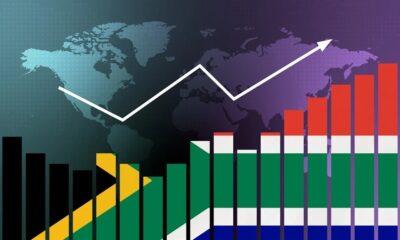
South Africa’s economy is finally stirring after years of frustration, false starts, and national setbacks. For the first time in a decade, there is cautious optimism in boardrooms and policy circles. But behind that optimism sits a hard truth. Without decisive reforms and a single critical international trade agreement, the country risks slipping back into economic drift.
After enduring state capture, the shock of Covid-19, the July 2021 unrest, and devastating floods in 2022, the economy has spent most of the past ten years barely moving forward. Growth has struggled to rise above 2 percent in real terms, which means that once population growth is factored in, most South Africans have effectively become poorer year after year.
A recovery that feels real but remains fragile
The International Monetary Fund now expects South Africa’s economy to grow by about 1.3 percent in 2025, with a slight improvement forecast for 2026. While that signals stability, it still leaves the country lagging behind many emerging market peers that are expanding at a far quicker pace.
There is a longer-term hope that growth could reach closer to 3 percent by the end of the decade. Economists agree, however, that this is far from guaranteed. It depends heavily on policy reform, infrastructure recovery, and the country’s ability to maintain strong global trade relationships.
One uncomfortable indicator of decline is South Africa’s shrinking footprint on the world stage. In the mid-1990s, the country accounted for more than a quarter of Africa’s total economic output. Today, that share has halved. Its slice of the global economy has also steadily narrowed over the same period.
Manufacturing, once a backbone, now under strain
Few sectors tell the story of economic strain more clearly than manufacturing. Long seen as a key driver of jobs and stability, the sector has contracted significantly since the pandemic. Weak local demand, unreliable infrastructure, and rising costs have eroded confidence among manufacturers, many of whom are struggling to compete both at home and abroad.
Economists argue that reviving manufacturing is essential not just for growth figures but also for restoring livelihoods and rebuilding the country’s productive base. Without it, any economic recovery risks being shallow and short-lived.
Why one trade deal matters more than ever
Amid all these challenges, one agreement stands out as a potential lifeline. The African Growth and Opportunity Act, known as AGOA, allows qualifying African countries preferential access to the United States market. For South Africa, it has long been a gateway for exports ranging from vehicles to agricultural products.
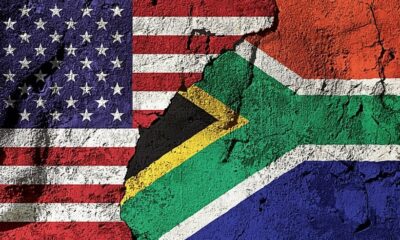
While there is bipartisan support in the United States to extend AGOA, South Africa’s continued inclusion is not assured. Diplomatic tensions, shifting global alliances, and new US trade tariffs have all introduced uncertainty. Recent military exercises involving South Africa, China, and Russia have also raised eyebrows in Washington and sparked debate locally about the country’s foreign policy direction.
On social media and in business circles, the conversation has become increasingly blunt. Many commentators argue that South Africa cannot afford mixed messages when so much depends on access to its largest export markets.
Global risks and local relief
Beyond the US relationship, another risk looms in the east. China remains South Africa’s biggest trading partner, and any slowdown in the Chinese economy would quickly ripple through local exports, investment, and commodity prices.
There is, however, a small dose of good news at home. With inflation easing, oil prices stable, and the rand showing resilience, the South African Reserve Bank is expected to begin cutting interest rates in 2026. This could offer some breathing room to households and businesses alike, potentially supporting demand and investment.
The crossroads moment
South Africa stands at a familiar crossroads. The foundations for recovery are there, but they are fragile. The choices made now on policy reform, infrastructure investment, and international alignment will shape the next decade.
Securing continued access to AGOA is not a silver bullet, but it could be a powerful catalyst. As many economists have noted, sustainable growth will require harmony between domestic reform and global partnerships. Without that balance, the long-awaited recovery could once again slip out of reach.
Also read: Why lower interest rates are back on the table for South Africa in 2026
Follow Joburg ETC on Facebook, Twitter, TikT
For more News in Johannesburg, visit joburgetc.com
Source: Business Tech
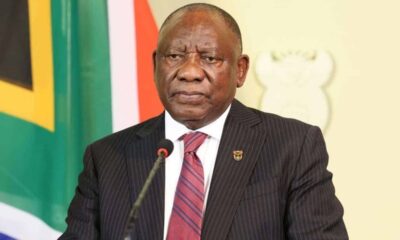
Featured Image: LinkedIn/Melanie Verwoerd