Business
South Africa’s EV tax incentive fails to attract carmakers so far
When the government unveiled a generous 150% tax rebate to encourage electric vehicle production, the message seemed clear: South Africa must move with the times.
Yet nearly a year after the incentive was first announced, the country’s biggest vehicle manufacturers appear to be standing still.
A policy push with high hopes
In his February 2024 Budget Speech, Finance Minister Enoch Godongwana introduced the rebate as part of a broader plan to future-proof one of the country’s most important industries.
The announcement followed the long-awaited Electric Vehicles White Paper released by the Department of Trade, Industry, and Competition in December 2023. That document mapped out how South Africa could transition from traditional internal combustion engine production to new energy vehicles, or NEVs.
NEVs include fully electric cars, hybrids, and hydrogen-powered vehicles. In reality, hydrogen has struggled to gain meaningful traction in passenger transport globally.
The rebate was meant to sweeten the deal for manufacturers considering retooling their plants. It was also designed to work alongside the Automotive Production Development Programme, which is currently under review.
But so far, no major manufacturer operating in South Africa has confirmed plans to use the incentive to build fully electric or hydrogen vehicles locally.
BMW’s position: Hybrids are not enough
BMW operates its Rosslyn plant in Gauteng, where it produces the BMW X3 SUV. Around 97% of those vehicles are exported, mainly to Europe, the United Kingdom, and North America.
Those markets are far ahead of South Africa in electric vehicle adoption and increasingly demand zero-emission options.
However, BMW has indicated it will not benefit from the 150% rebate because it only applies to fully electric production upgrades. It does not extend to hybrid manufacturing. The Rosslyn plant currently builds the X3, including a plug-in hybrid version, but there are no confirmed plans to introduce fully electric or hydrogen models locally in the near term.
The National Association of Automobile Manufacturers in South Africa, known as the National Association of Automobile Manufacturers of South Africa, has previously argued that hybrid upgrades should also qualify for support. For many in the industry, hybrids are viewed as a practical stepping stone rather than a final destination.
Volkswagen bets on petrol exports
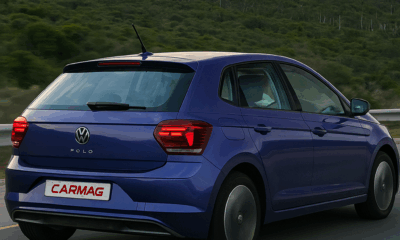
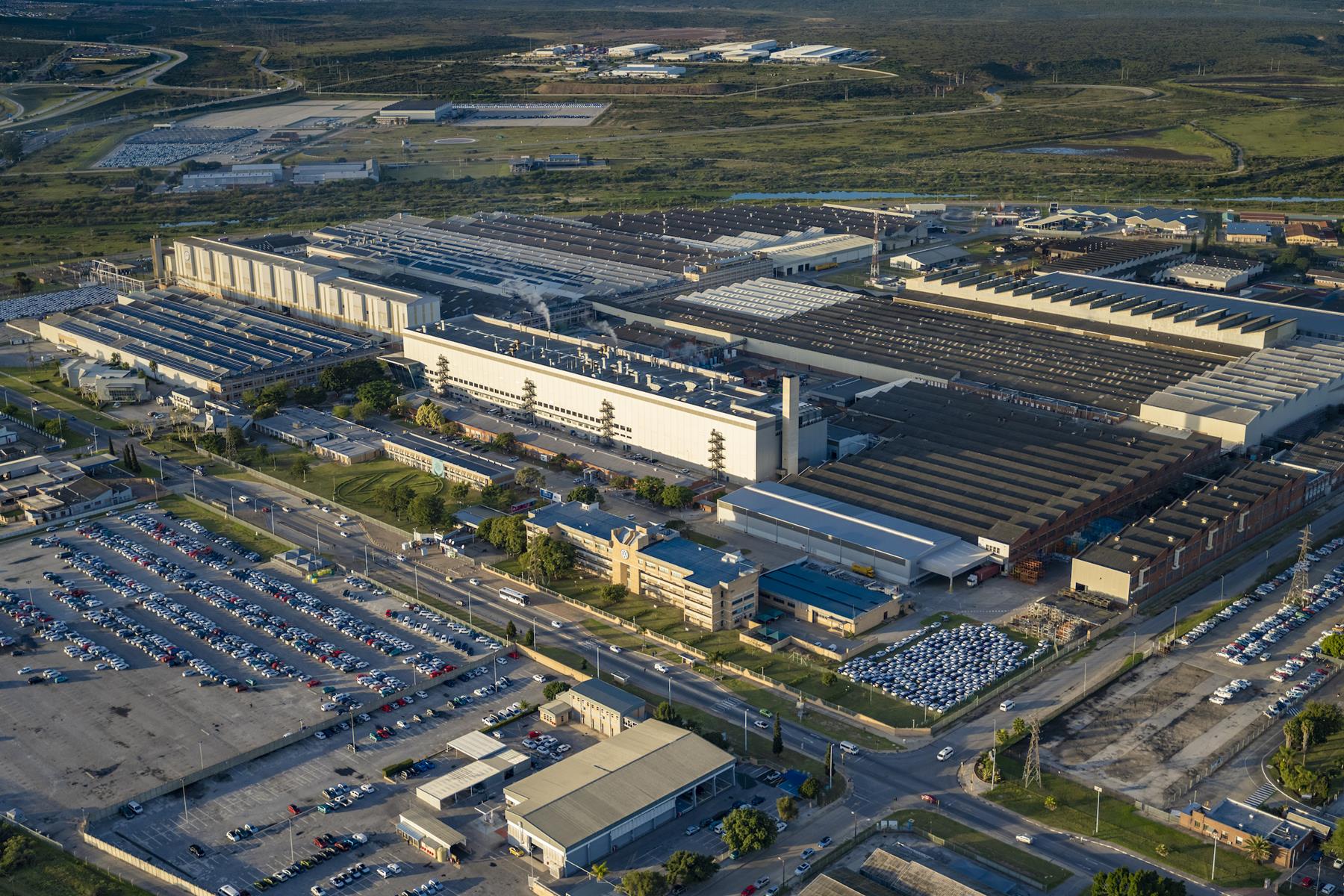
Volkswagen South Africa has also reiterated that it does not plan to produce electric vehicles in the country before at least 2035.
According to its local leadership, the company believes there is stronger short-term potential in exporting affordable petrol models to other African markets.
That strategy may carry risk. Several African countries are already accelerating their shift to electric mobility. Ethiopia has banned the import of petrol and diesel cars. Kenya has signalled plans to ban the sale of new petrol and diesel models by 2030. Rwanda has restricted new petrol-powered motorcycles in Kigali and aims to increase EV market share by 2030.
Meanwhile, Morocco has overtaken South Africa as Africa’s largest vehicle producer, supported in part by its growing electric vehicle ecosystem.
The battery bottleneck
Even if manufacturers wanted to move quickly, there are structural hurdles.
The rebate is capped at R500 million per year. Retrofitting a major automotive plant for EV production can cost several billion rand. For perspective, Ford Motor Company spent around $1 billion to upgrade its Silverton plant to produce a plug-in hybrid Ranger.
Another challenge is batteries. While Sub-Saharan Africa extracts many of the raw materials used in lithium-ion batteries, most of those materials are exported to China for processing. South Africa has limited lithium reserves and no local lithium-ion cell manufacturing capacity.
Companies such as Freedom Won and SolarMD assemble battery packs locally, but they import their cells from China.
Without a strong domestic battery supply chain, scaling up EV manufacturing becomes more complex and more expensive.
A crossroads for a critical industry
The automotive sector remains one of South Africa’s most important export industries. Plants in Gauteng and the Eastern Cape are deeply embedded in global supply chains.
Yet as Europe and North America push for stricter zero-emission targets, South Africa risks falling behind if it cannot align production with global demand.
On social media, reactions to the stalled EV momentum have been mixed. Some argue that the government should prioritise local affordability and energy stability before pushing electric mobility. Others warn that delaying the transition could cost jobs and export markets in the long run.
For now, the 150% tax rebate stands as a bold policy that has yet to translate into factory floor change. The next few years will determine whether South Africa adapts its approach or watches from the sidelines as the global automotive shift accelerates.
Follow Joburg ETC on Facebook, Twitter, TikT
For more News in Johannesburg, visit joburgetc.com
Source: MyBroadband
Featured Image: ALL THINGS MOTORING