Business
South Africa edges closer to a nail-biting interest rate decision
South Africa waits on a knife-edge as interest rate decision looms
For anyone with a bond, a credit card, or even a small business overdraft, Thursday afternoon feels unusually tense. South Africa’s interest rate decision is shaping up to be one of the closest calls in years, with economists, traders and analysts split almost down the middle.
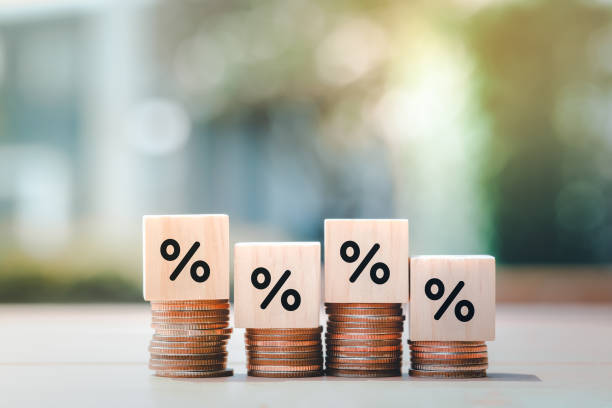
The South African Reserve Bank’s monetary policy committee is due to announce its decision after 15h00 in Pretoria. At stake is whether the benchmark repo rate stays at 6.75 percent or dips by a modest 25 basis points. On paper, that quarter point may seem small. In reality, it signals how serious the central bank is about locking inflation down at its newly endorsed 3 percent target.
A divided house at the Reserve Bank
Surveys show just how finely balanced the debate has become. In a recent poll of economists, a narrow majority expects the bank to hold steady, while almost as many are betting on a cut. Markets are no clearer. Forward rate agreements, often used by traders to place their bets, are pricing in only a slim edge in favour of a reduction.
Even inside the MPC itself, the six-member panel is expected to be split. Some economists believe four members will opt for caution and hold rates, while two may push for an immediate cut. That internal tension reflects a bigger question facing policymakers. Is now the moment to ease, or is patience the better signal while inflation expectations are still above target?
Inflation is lower, but not quite there
Headline inflation has cooled significantly from last year’s highs, but it is not fully behaving yet. December’s figure ticked up slightly to 3.6 percent, still above the Reserve Bank’s 3 percent goal. Inflation expectations have eased to around 3.7 percent, which is progress, but not a clean win.
This is why some economists argue that keeping policy tight for a little longer helps anchor expectations. Restrictive monetary policy sends a message that the new target is not just aspirational, but real.
Others counter that the broader picture has shifted enough to justify a gentle move lower.
The rand changes the picture
One of the strongest arguments for a cut is the rand. Since the Reserve Bank’s last meeting in November, the currency has strengthened by nearly 8 percent against the US dollar. That rally makes imports cheaper and helps dampen inflation pressure, especially in a country so dependent on imported fuel, machinery and goods.
A stronger rand also means the central bank’s inflation forecasts are likely to be revised lower. For households and businesses feeling the squeeze of high borrowing costs, that currency performance feels like a rare bit of good news.
Budget nerves and electricity questions
Still, there are reasons for caution. Finance Minister Enoch Godongwana is preparing to deliver the national budget later this month, the first full test of whether government spending plans truly align with the lower inflation target he has now formally endorsed.
There is also uncertainty around administered prices, particularly electricity tariffs. Any sharp increases there could undo some of the inflation progress already made. Some analysts believe the Reserve Bank may prefer to wait until after the budget and tariff clarity before committing to a rate cut.
What this means for 2025 and beyond
Even among those expecting no change this week, few believe rate cuts are off the table entirely. Markets are already pricing in more easing over the year, and some economists see room for two or three quarter-point cuts if inflation continues to behave and the rand holds its ground.
Others expect a slower, more deliberate path, with cuts only gaining pace next year and a terminal rate of around 6 percent reached later in 2026.
For now, the message is clear. South Africa’s rate outlook is no longer one-directional. It is a balancing act between credibility, caution and a fragile recovery. Whatever the decision on Thursday, it will say a lot about how confident the Reserve Bank really is that inflation has been tamed.
Follow Joburg ETC on Facebook, Twitter, TikT
For more News in Johannesburg, visit joburgetc.com
Source: Business Tech
Featured Image: iStock