Business
Rand and gold rally as South African markets shrug off Trump turmoil
At a time when global headlines are dominated by geopolitical tension and trade drama, South Africa’s financial markets have quietly done something unexpected. They have strengthened.
Despite renewed anxiety in the Middle East following United States President Donald Trump’s decision to deploy a large military presence to the region and Iran’s move to close the Strait of Hormuz, local markets did not retreat. Instead, investors leaned in.
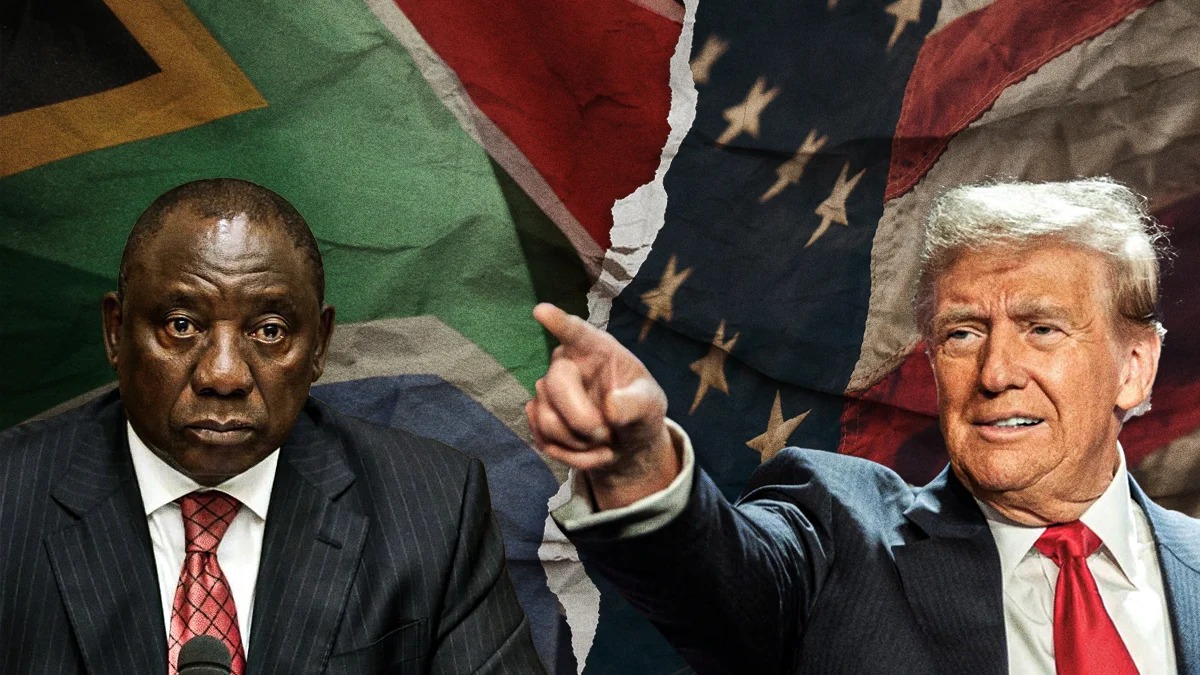
Add to that a major ruling from the US Supreme Court declaring Trump’s global tariffs illegal, and the mood shifted further in South Africa’s favour. For a country that had been hit with a 30 percent tariff on exports to the US, the judgement offered a welcome dose of optimism.
Gold jumps and the rand finds its footing
Within hours of the US court ruling, gold prices surged by more than 100 dollars, closing at 5,109 dollars. Over the week, bullion ended 68 dollars higher and has climbed 5.7 percent over the past month. For South Africa, a major gold producer, that rally matters.
The rand responded swiftly. At one point last week, it traded near R16.20 to the dollar, up significantly from R15.95 just days earlier. By Friday afternoon, following the tariff judgement, it strengthened again to close around R16.03 to the dollar.
Against the pound, the local currency appreciated to R21.61, its strongest level in three years. The rand also firmed against the euro, ending the week around R18.89, its best level since December 2024.
For ordinary South Africans watching the currency ticker on social media or refreshing their banking apps, the reaction was clear. Relief, mixed with cautious optimism.
JSE rebounds after January jitters
The Johannesburg Stock Exchange also regained momentum. After heavy speculative selling at the end of January, which saw the All Share index shed more than 5 000 points in a single session, the market has clawed back ground.
Last week alone, the All Share index rose by 2 438 points, a gain of just over 2 percent. The precious metals and mining sector advanced by 2.3 percent, supported by stronger gold, platinum and palladium prices.
Since the start of the year, mid-cap stocks have been up 5 percent. Financial shares have improved by more than 9 percent, while the Resource 10 index has surged 11 percent year to date.
This is not just investor noise. It signals renewed confidence in sectors closely tied to commodities and domestic banking strength.
Local data adds fuel to the recovery
South Africa’s own economic indicators have also helped steady sentiment.
Unemployment eased to 31.9 percent in the fourth quarter of 2025, a drop of 3.4 percentage points from the previous quarter. The economy added 44 000 jobs over that period. Inflation cooled slightly to 3.5 percent in January, down from 3.6 percent in December.
These figures, while still reflecting deep structural challenges, offered reassurance that the domestic picture is not deteriorating.
Gold and foreign exchange reserves reached a record high of 79.85 billion dollars in December 2025. With commodity prices rallying, government revenue prospects may also improve. Estimates suggest that sustained precious metal strength could boost tax intake by around R20 billion per year over the next two years.
All eyes on the budget
Attention now shifts to Finance Minister Enoch Godongwana, who will deliver the national budget this week.
Economic growth for 2025 to 2026 is projected at 1.8 percent, slightly better than the 1.6 percent forecast in last year’s budget. Globally, growth is expected at 3.3 percent in 2026, an improvement on earlier projections.
The government remains committed to narrowing the budget deficit to 3.4 percent of GDP in 2026 to 2027 and further to 3.2 percent the following year. A primary surplus of 0.8 percent of GDP is anticipated for 2025 to 2026, with plans to bring national debt down gradually from 77.4 percent of GDP.
For now, there are no expected changes to company tax, personal income tax, or VAT. But the key question remains whether improved commodity revenues and strong reserves can meaningfully reduce debt service costs, which remain the largest line item in the national budget.
What happens next
Markets are still watching President Trump closely. He has indicated he will not retreat from his tariff ambitions and has proposed a temporary 10 percent global tariff under a different legal framework. It remains unclear how this will affect existing tariffs, including those on South African exports.
For South Africa, the story is one of resilience. In a week shaped by global uncertainty, local markets strengthened. Gold surged. The rand rallied. Investors recalibrated.
Whether that momentum continues depends on both Washington and Pretoria. But for now, the numbers tell a rare story of confidence in the face of chaos.
Follow Joburg ETC on Facebook, Twitter, TikT
For more News in Johannesburg, visit joburgetc.com
Source: IOL
Featured Image: BusinessTech