Business
South Africans are poorer today after 20 years of weak economic growth
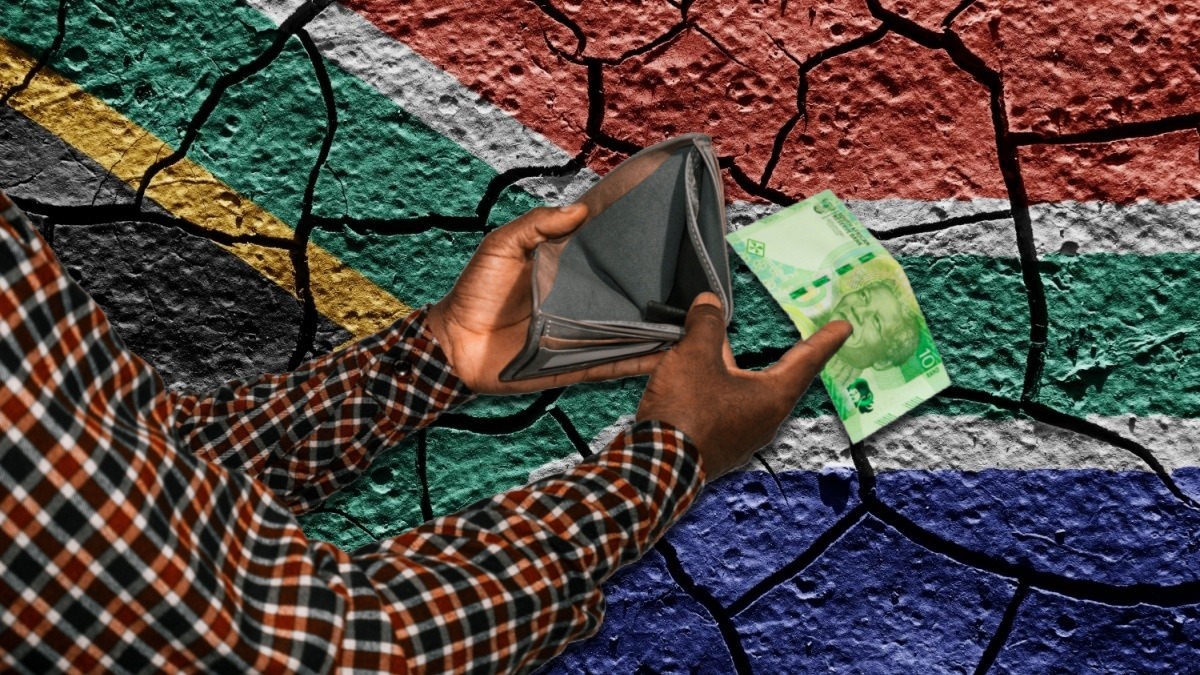
South Africans are poorer today than two decades ago
There was a time in the early 2000s when South Africa felt like a rising star. The country had momentum, global attention, and the kind of economic optimism that came with joining major emerging market groupings. Fast forward to today, and the mood is far more sober.
Fresh economic data now shows that the average South African is effectively worse off than nearly 20 years ago. The country’s per capita GDP, a key measure used worldwide to gauge living standards, has slipped below where it stood in 2007. In simple terms, the economy is not producing as much value per person as it once did.
What per-person income really tells us
Per capita GDP is calculated by dividing a country’s total economic output by its population. Economists use it as a quick snapshot of how productive an economy is and how much prosperity is being generated for the average citizen. When the number rises, living standards usually improve. When it falls or stagnates, it often signals pressure on jobs, wages, and household finances.
South Africa’s decline stands out because many other emerging economies faced the same global shocks over the past two decades yet still managed to grow faster. Instead, local growth has lagged behind peers, leaving the country trailing the very group it once hoped to lead after joining BRICS in 2010.
The power crisis that reshaped the economy
Ask any South African business owner what has held the economy back, and the answer is rarely complicated. Electricity shortages have been a constant thread running through the country’s economic story for decades.
Economists point to the collapse and long neglect of the energy system as one of the biggest structural barriers to growth. Problems in electricity supply were already visible in the late 1990s, and the effects have compounded over time. Even though rolling blackouts have eased recently, the long-term damage is already baked into the economy.
Research over the years has suggested that power cuts shaved significant growth off the country’s potential. Estimates indicate the economy could have been about 10 percent larger by the mid-2010s if electricity had not been a limiting factor. At the time, that translated into hundreds of billions of rand and the possibility of more than a million additional jobs.
Energy instability did more than interrupt daily life. It weakened investor confidence, reduced productivity across industries, and slowed expansion in sectors that rely heavily on reliable power.
More than just electricity
The energy crisis is only part of the story. Analysts also highlight deep challenges in the labour market, which remains one of the biggest constraints on economic activity. When the basic systems that support production and employment struggle, it becomes harder for any policy or reform to spark meaningful growth.
South Africa’s open economy also means it is exposed to global downturns. Yet other emerging markets weathered the same storms with stronger recoveries. That contrast suggests domestic structural issues, rather than global shocks alone, explain why local growth has remained stuck in low gear.
Why many households feel the pressure
For ordinary South Africans, these macro numbers translate into something far more personal. Slower growth means fewer new jobs, limited wage increases, and rising living costs that outpace income. Over time, that erosion chips away at purchasing power.
Electricity tariff hikes have also placed sustained pressure on households. In response, many families and businesses have turned to solar and other alternatives, a shift that reflects both resilience and frustration with unreliable supply.
A country at a crossroads
Despite the bleak headline, economists still note that South Africa has strong financial institutions, a diversified industrial base, and deep capital markets. The challenge is unlocking that potential by fixing the foundations that have held the country back for years.
Future policy discussions are increasingly centred on modernising the energy system, replacing ageing coal infrastructure, and creating a stable revenue model that allows long-term investment in power generation. Without those fixes, growth is likely to remain subdued.
For many South Africans, the story is not just about statistics. It is about the lived reality of an economy that once promised rapid progress but has struggled to deliver it consistently. The next chapter will depend on whether the country can finally resolve the structural issues that have quietly shaped everyday life for nearly two decades.
Also read: South Africa’s housing market enters a new phase in 2026
Follow Joburg ETC on Facebook, Twitter, TikT
For more News in Johannesburg, visit joburgetc.com
Source: Business Tech
Featured Image: Daily Investor