Culture Craze
Mama Joy funding row ignites national debate over superfans in South Africa
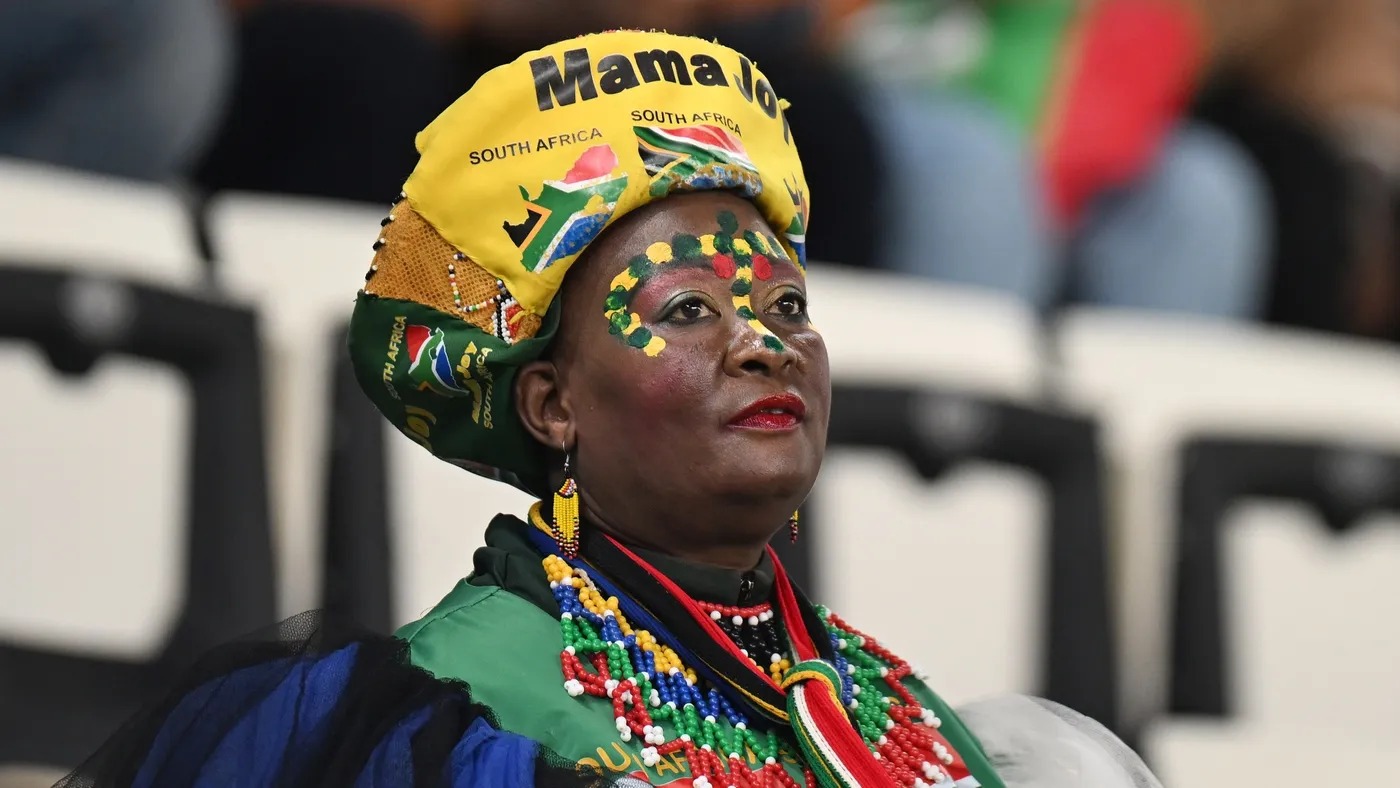
If you’ve spent even a few minutes on social media this week, chances are you’ve seen her name. Not on a match ticket or a fan banner this time, but at the heart of one of the country’s loudest public debates.
Mama Joy, the woman many South Africans associate with painted faces, bright outfits, and unwavering energy in the stands, has found herself in unfamiliar territory. Instead of cheering from the sidelines, she is now the subject of a national conversation about money, fairness, and who gets to represent the country on the global stage.
When fandom meets policy
The spark came from a firm announcement by Sport, Arts and Culture Minister Gayton McKenzie. The department, he said, would no longer fund superfans to attend international tournaments.
His reasoning was blunt but difficult to ignore. There is no policy that supports sending individual fans abroad using public funds, and doing so would be unfair in a country where millions of supporters receive nothing.
What might have stayed a routine policy update quickly escalated when Mama Joy pushed back publicly. Speaking on radio and later on social media, she raised concerns about everyday supporters being excluded from major global events like the upcoming World Cup.
She also claimed that some of her past trips, including major tournaments, were personally funded by President Cyril Ramaphosa.
That claim did not sit well with the minister. McKenzie responded directly, stating that departmental funds had covered those trips. He pointed to one example that immediately caught public attention: a single international trip costing around R700 000.
The number that changed everything
That figure landed hard.
In a country where service delivery and basic needs are ongoing concerns, the idea of nearly a million rand being spent on one supporter shifted the conversation overnight. What started as a discussion about sport turned into something far bigger, touching on accountability, priorities and how public money is used.
McKenzie framed it as a matter of principle rather than personality. For him, the issue was not Mama Joy as an individual but the precedent it sets.
Still, his comments did not go unanswered. Mama Joy insisted she had not asked to be personally funded for future trips. Instead, she said her request had been about creating opportunities for a broader group of fans.
More than just a fan
To understand why this debate feels so personal for many South Africans, you have to go back to where it all began.
Born in Malamulele, Limpopo, Mama Joy built her reputation over decades in the stands, most famously as a devoted supporter of Orlando Pirates. Her presence became part of the matchday experience, as familiar as the sound of vuvuzelas.
Her profile soared during the 2010 FIFA World Cup, when international audiences took notice of her energy and personality. Over time, she evolved from a passionate supporter into something closer to a cultural symbol.
That journey reached a global peak when she attended the 2022 FIFA World Cup and was recognised with a Best Superfan award. It was a moment that seemed to cement her place as one of the most recognisable supporters in world football.
A changing identity in the stands
But fame has its complications.
In recent years, Mama Joy’s shifting club loyalties, including moves away from Pirates and support for teams like Royal AM and Mamelodi Sundowns, have sparked debate among fans. Some see it as evolution, others as a loss of authenticity.
This has fed into a broader narrative that she is no longer tied to one team but rather represents a wider, more fluid version of fandom.
At the same time, she has stepped into business, partnering with brands like Roots Butchery, showing how supporter culture can extend beyond the stadium into entrepreneurship.
Let me be clear: the President of the country did not pay for Mama Joy's trips, despite what she may think. DSAC did. Both trips I could find info on from before my term were covered by the department. Her France trip alone cost R700k. I hope this matter can now be put to rest. https://t.co/1kWlRDAIOg
— Gayton McKenzie (@GaytonMcK) April 8, 2026
A nation divided
Scroll through X or listen to talk radio, and you will hear two very different versions of the same story.
On one side, there are those who believe Mama Joy embodies the spirit of South African sport. They argue that her presence on the global stage is not just personal but symbolic.
On the other hand, there is growing sentiment that the era of state-funded superfans should end. For these voices, the issue is simple: public money should not be used for what is seen as a personal benefit.
Between those two camps sits a more nuanced question. Who gets to represent South African fans internationally, and how should that be decided?
I didn’t Ask Minister @GaytonMcK to take me to the Worldcup,I asked for 50 fans he promised ,He wanted to take the influencers unfortunately DSAC denied cos of budget, I also didn’t know the money spent for RWC,I felt targeted by his answer no respect for Papajoy, pic.twitter.com/6942M5cwcR
— MamaJoy Chauke (@JoyChauke5) April 9, 2026
What comes next for superfans
McKenzie has suggested a shift in approach. Instead of government funding, clubs could nominate loyal supporters who would then attend tournaments through private sponsorship.
It sounds like a practical compromise, but it raises new questions. What happens to independent supporters who are not tied to a single club? And how do you measure loyalty in a country where football culture is as diverse as its people?
For now, there are no easy answers.
What is clear is that Mama Joy’s story has moved far beyond the stands. It has become a mirror reflecting bigger conversations about fairness, identity, and the value we place on those who carry the country’s spirit, whether in a jersey or in the crowd.
Follow Joburg ETC on Facebook, Twitter, TikT
For more News in Johannesburg, visit joburgetc.com
Source: IOL
Featured Image: Goal.com