News
After Witness D’s Murder, the Madlanga Commission Refuses to Be Silenced
The brutal killing of Marius van der Merwe, known publicly as Witness D, has cast a long and chilling shadow over South Africa’s latest attempt to confront corruption inside its criminal justice system. Shot outside his Brakpan home on December 5, 2025, in front of his wife and children, Van der Merwe’s death has shaken both the public and those tasked with uncovering the truth.
Yet despite the fear such a killing is meant to inspire, the Madlanga Commission of Inquiry says it will not stop.
A killing meant to silence
Van der Merwe had recently testified before the commission, where he implicated a suspended Ekurhuleni Metro Police Department deputy chief in an alleged murder cover-up. His testimony placed him at the heart of one of the most sensitive strands of evidence being examined.
According to commission spokesperson Jeremy Michaels, the murder marks a turning point. Not because it weakens the inquiry, but because it exposes just how high the stakes have become. The killing, he said, is a reminder that there are individuals who are deeply invested in preventing accountability from taking root.
In Brakpan, where Van der Merwe was laid to rest earlier this week, the mood has been sombre. On social media, many South Africans have expressed anger and disbelief that a witness in a public inquiry could be killed so brazenly, with some calling for urgent action to protect those who come forward.
What the commission has uncovered so far
The comments from the commission came as it handed an interim report to Cyril Ramaphosa, exactly three months after explosive testimony by KwaZulu-Natal SAPS Commissioner Lieutenant General Nhlanhla Mkhwanazi.
That interim report reflects the scale of the work already done. Over 45 hearing days, the commission has heard from 37 witnesses. Phase One focused on corroborating allegations of criminality, political interference, and corruption, with 28 witnesses supporting claims made by Mkhwanazi. Phase Two has allowed nine individuals to respond to allegations made against them, with many more expected to testify in 2026.
Hearings have taken place in a mix of formats. Some were fully public, others partially closed, and one entirely in camera. This approach, according to the commission, balances transparency with the safety of witnesses and the integrity of sensitive evidence.
A growing paper trail and more voices coming forward
Beyond live testimony, the commission has quietly built an extensive record. It has received dozens of walk-in submissions and hotline tips that fall within its mandate. To date, more than 8,000 pages of hearing transcripts and 120 document bundles have been compiled, ranging from witness statements to supporting evidence files.
Michaels says the steady increase in people willing to come forward is one of the most encouraging signs. In a country where whistleblowers often pay a heavy price, each new submission represents a small act of courage.
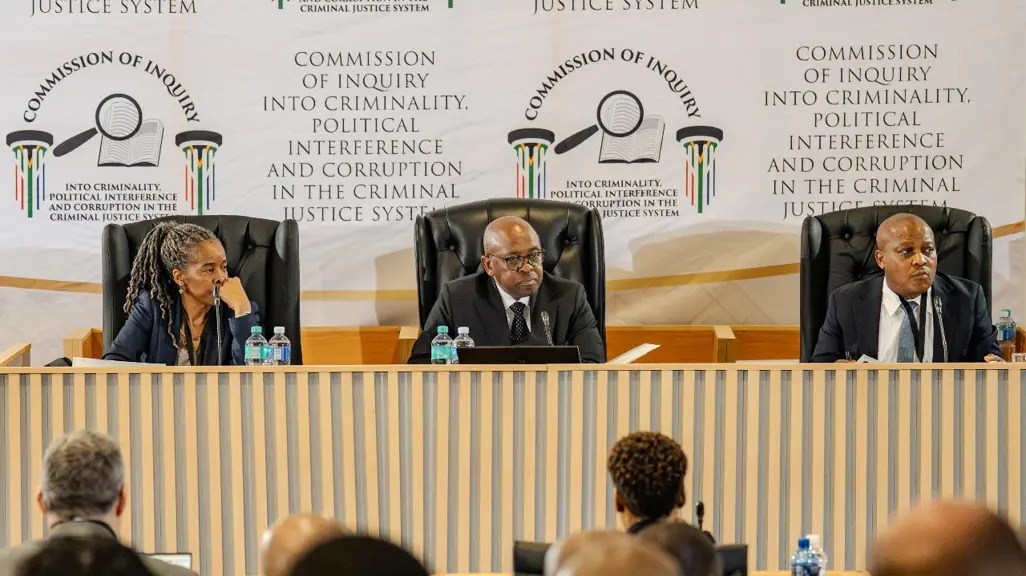
Justice Mbuyiseli Madlanga and his fellow commissioners, Advocate Sesi Baloyi SC and Advocate Sandile Khumalo SC, have publicly thanked witnesses, state entities, service providers, and the media for sustaining the commission’s work under intense pressure.
Why this moment matters
South Africa has a long and painful history of commissions whose findings never fully translate into accountability. That context makes the murder of Witness D especially unsettling. It echoes past cases where those who spoke out were intimidated, attacked, or worse.
Still, there is a sense that this inquiry may yet mark a shift. Vincent Magwenya, speaking for the Presidency, confirmed that President Ramaphosa has received the interim report and expects the commission to refer suspected criminal conduct for prosecution where appropriate.
For now, the commission is in recess over the festive season, with only essential staff on duty. Behind the scenes, investigators and evidence leaders are already preparing for the next phase. Public hearings are expected to resume in January 2026, with dates to be announced.
In the wake of Van der Merwe’s death, the commission’s message is stark and deliberate. The violence meant to silence a witness has instead underscored why this work matters. The pursuit of justice, it says, will continue.
Follow Joburg ETC on Facebook, Twitter, TikT
For more News in Johannesburg, visit joburgetc.com
Source: IOL
Featured Image: EWN