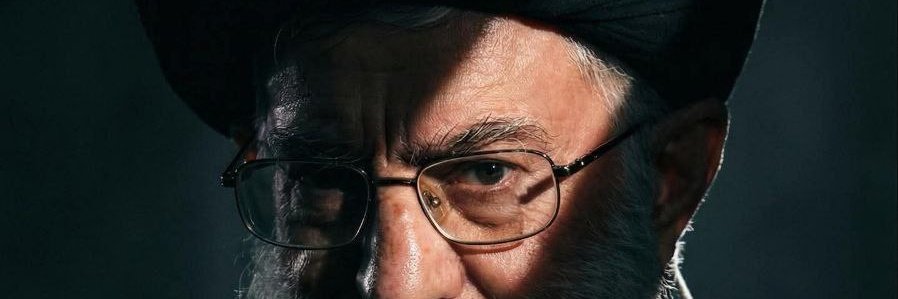
The death of Iran’s Supreme Leader Ayatollah Ali Khamenei has triggered a carefully scripted constitutional processone that will determine the future of the Islamic Republic.
Under Article 111 of Iran’s Constitution, a three-member interim leadership council has been formed to temporarily assume the supreme leader’s duties until a permanent successor is chosen.
The Interim Council
The three members come from different political and religious backgrounds, representing the diverse strands of Iran’s complex power structure:
-
Masoud Pezeshkian (President): A 71-year-old reformist politician and heart surgeon, elected in 2024 on a platform of economic stabilisation and constructive foreign engagement. He previously served as health minister.
-
Gholamhossein Mohseni Ejei (Chief Justice): A hard-line conservative and senior religious leader, appointed head of the judiciary by Khamenei in 2021. He has a deep background in security and intelligence, having served as intelligence minister from 2005 to 2009.
-
Ayatollah Alireza Arafi (Jurist): A prominent religious figure and member of the powerful Guardian Council since 2019. He leads Friday prayers in the holy city of Qom, heads the nationwide seminary system, and serves as deputy chairman of the Assembly of Expertsthe very body tasked with choosing the next supreme leader.
The Succession Process
The actual selection of the new supreme leader is the responsibility of the Assembly of Experts, an 88-member panel of Shia clerics elected every eight years and vetted by the Guardian Council.
Under Iran’s governing system of vilayat-e faqih (guardianship of the Islamic jurist), the new supreme leader must possess both political and religious authority.
The selection process is required by law to happen as soon as possible. Iran’s foreign minister has indicated a new leader could be chosen within “one or two days.”
The Candidates
Khamenei never publicly named a successor, leaving the process opaque. But one name has emerged as a central figure: his son, Mojtaba Khamenei.
The 56-year-old cleric studied under religious conservatives in Qom and is believed to have close ties to the powerful Revolutionary Guard. Although he has never held formal government office, he has wielded significant behind-the-scenes influence, effectively acting as a “gatekeeper” to his father.
Former President Ebrahim Raisi was previously considered a strong candidate, but he died in a helicopter crash in May 2024.
How Iran’s System Works
The succession process highlights the unique structure of Iran’s governance.
Under vilayat-e faqih, ultimate authority rests with a senior Islamic scholarthe Supreme Leaderwho oversees the armed forces, judiciary, and key state institutions.
While Iranians vote for a president and parliament, all legislation and major decisions must align with Islamic law and the constitution.
The Supreme Leader is not elected by the public but is appointed by the Assembly of Experts, whose members are elected by voters. There is no fixed term limit.
This differs fundamentally from Western systems, where ultimate authority rests with elected officials and constitutional law, and religion is institutionally separate from the state.
The Bottom Line
Iran is now in a constitutional interregnum. A three-member council governs temporarily. The Assembly of Experts is deliberating. And the world watches.
The choice of Khamenei’s successor will shape not only Iran’s future, but the future of the region. The process is designed to be swift. The consequences will be anything but short-lived.