Courts & Legal
“Not an Island”: ANC Rejects Standalone Anti-Corruption Body, Calls for “Happy Medium”
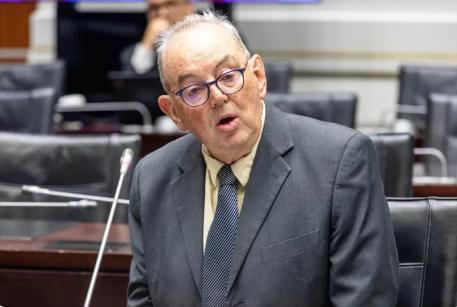
In a room where the word “corruption” hung heavy in the air, a fundamental question was asked: Who should guard the guards themselves? This week, Parliament’s Ad Hoc Committee heard a bold prescription from civil society to treat South Africa’s “deeply dysfunctional” criminal justice system: create a powerful, new anti-corruption watchdog insulated from political hands. The ANC’s response, delivered by Khusela Sangoni-Diko, was a firm, philosophical no.
The call came from groups like Accountability Now, whose director, Advocate Paul Hoffman SC, argued that the current system is crippled by impunity and eroded trust. Their solution? Establish a new Chapter 9 institutiona constitutional body like the Public Protectordedicated solely to corruption, but operating free from executive control.
Sangoni-Diko acknowledged the value of the input, praising the civil society presentations as “extremely valuable” for shaping future legislative changes. But on the central proposal, she drew a clear line in the sand.
The ANC’s Core Argument: Oversight, Not Autonomy
“For us, as the African National Congress, we don’t think that laws should be made around individuals,” Sangoni-Diko stated, framing the issue as one of democratic principle over practical remedy. She questioned whether political interference was a “systemic issue” or anecdotal, suggesting the committee needed more proof before considering such a radical institutional overhaul.
Her core contention was rooted in the theory of representative democracy. “The people vote for particular leaders to lead these institutions,” she argued. “They cannot just be a law unto themselves.” In the ANC’s view, placing a critical function like prosecuting corruption entirely outside the chain of executive oversight and policy guidance would create an unaccountable “island,” separate from the will of the people as expressed through their elected government.
A “Happy Medium” and Existing Promises
Sangoni-Diko did not leave the conversation at a blunt rejection. She pointed to an existing roadmap: the National Anti-Corruption Advisory Council (NACAC) report, which contains similar recommendations and which President Cyril Ramaphosa has committed to implementing. “I think with civil society, we should be able to find one another in terms of a happy medium,” she offered, signalling a preference for reforming and strengthening existing bodies within the current constitutional framework.
The Unspoken Context and Public Sentiment
The debate plays out against a backdrop of profound public cynicism. For many South Africans, the very term “executive oversight” has become synonymous with political meddling and protection. Social media reaction to the committee’s work has been largely skeptical, with many users viewing the entire process as political theatre, given the serious allegations by KZN Police Commissioner Nhlanhla Mkhwanazi that sparked it.
Civil society’s push for a fortress like institution is, in essence, a direct response to this eroded trust. They seek not just a new tool, but a symbolic reseta body whose independence is structurally guaranteed.
Sangoni-Diko’s dismissal, therefore, is more than a policy difference. It is a clash of visions. One side seeks to quarantine anti corruption efforts from a polluted political system. The other insists that system, flawed as it may be, must ultimately remain in democratic control.
The search for that “happy medium” will now define the committee’s work. But as Sangoni Diko herself admitted, “It’s a debate that is going to rage.” And for a public weary of scandals, the patience for debate is wearing thin.
Follow Joburg ETC on Facebook, Twitter , TikTok and Instagram
For more News in Johannesburg, visit joburgetc.com