News
Salaries on Hold, Donors on Edge: Why the ANC’s Money Troubles Signal a Bigger Crisis
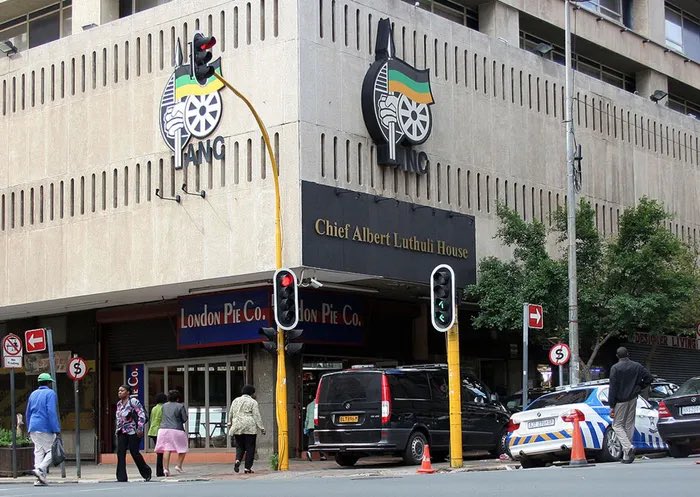
A party that once commanded loyalty now struggles to pay its own
For years, the ANC projected itself as the political home that never ran out of friends, funds or influence. But the mood at Luthuli House today tells a very different story, one of quiet panic, delayed salaries, and donors who seem to be backing away from what insiders now call a “sinking ship.”
The ruling party’s financial problems are no longer whispers in corridors; they’ve become a monthly reality for staff who depend on the organisation for their livelihoods. And while the ANC insists it is not on the verge of bankruptcy, those inside the party say its financial well has run drier than the leadership is willing to admit.
Donors aren’t picking up the phone, here’s why
ANC secretary-general Fikile Mbalula has laid the blame squarely at the feet of the Political Funding Act, which forces parties to publicly list their donors and the amounts given. According to him, long-time funders and the middle-class base the ANC proudly claims to have uplifted, no longer want to be associated publicly with the party.
At a media briefing, Mbalula confirmed that the ANC’s monthly wage bill sits at around R20 million. What he didn’t confirm was how the party actually manages to raise that money. What he did admit, however, is that even his own salary has faced delays.
Despite this, Mbalula insists that retrenchments are not on the table, a statement many analysts view as more political than practical.
A recurring crisis that analysts say the ANC created for itself
Political analyst Doctor Tshwale didn’t mince his words: this isn’t a once-off stumble; this is becoming a pattern.
The ANC has a long history of salary delays, and Tshwale argues it’s now an Achilles’ heel, undermining staff morale and harming families who rely on that income.
But it’s the bigger picture that’s more concerning.
“The inability to pay salaries is a sign of organisational decline. Funders want to associate with something that has future prospects. The ANC no longer projects that,” he says.
Tshwale believes the party has lost its aura that global stature and local prestige it once enjoyed. Instead, he says, the ANC now appears like “just another organisation” rather than an influential political force.
A crisis of credibility, not just cash
Beyond the financial troubles lies a deeper question many South Africans are asking:
If the ANC can’t manage its own budget, how can it manage the country’s?
Tshwale argues that the governing party’s inability to pay workers on time shows a lack of long-term planning and poor organisational management, a contradiction for a party that governs the state and its massive fiscus.
This month-to-month, crisis-to-crisis management style, he says, is an indicator of a structure that is slowly disconnecting from the electorate and from the public it claims to serve.
A warning echoed from abroad
Professor Lesiba Teffo adds another layer: the issue isn’t only about the ANC; it’s about the entire ecosystem the party controls.
He says the ANC’s wage bill, much like the state’s, is excessively high. And he’s felt the embarrassment of having to explain South Africa’s expensive political class to European colleagues who can’t understand why salaries for politicians are so steep in a country battling unemployment and poverty.
It’s a perspective that stings, because it shines a light on a growing perception at home and abroad: South Africa is paying premium prices for leadership that no longer delivers premium results.
What South Africans are saying
Across social media, the reaction has been swift and brutally honest.
“If they can’t pay their own workers, how are they running a country?”
“Donors didn’t desert the ANC the ANC deserted accountability.”
“A wage bill of R20 million a month? Yhu.”
Many see the crisis as a reflection of the party’s fading influence. Others say it’s karma for years of mismanagement. But the common thread across platforms is disbelief that the liberation movement that once commanded unwavering support is now struggling to pay basic salaries.
The deeper meaning behind the money problem
Yes, this is about unpaid wages.
Yes, it’s about donors fleeing.
But beneath the financial story lies a political one:
A ruling party losing its grip not because opposition parties are strong, but because its own foundations are cracking.
A party that was once unstoppable now battles public scepticism, donor fatigue, internal disorganisation, and a credibility crisis that grows each month salaries don’t arrive.
The ANC will deny it is collapsing. But the signs, analysts warn, are becoming too loud to ignore.
{Source: The Citizen}
Follow Joburg ETC on Facebook, Twitter , TikTok and Instagram
For more News in Johannesburg, visit joburgetc.com