News
Truth in the Trenches: Anton Harber’s Six-Decade Fight for Press Freedom
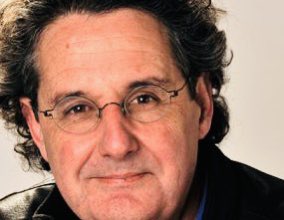
In a sunlit Parkview home, where books cascade from shelves onto coffee tables and sofas, Professor Anton Harber settles into an armchair and reflects on a life lived in pursuit of truth. At 67, he is officially retired from academiabut journalism, he insists, remains his lifelong calling.
“I never stopped practising journalism,” he says with a quiet certainty. “I continue to research, write columns and books, and engage with younger journalists who are entering a very different world.”
From Durban to the Frontlines
Harber’s story begins in Durban, in a liberal household that nurtured both creativity and resilience. His father was a jazz musician; his mother a caterer-restaurateur. “Being from Durban means that before anything else, I am a failed surfer,” he jokes. But beneath the wit lay a serious foundation: his parents, both products of hardship, “taught me to value education and hard work. And a love for jazz.”
After matriculating at Carmel College, he moved to Johannesburg to study politics and English literature, already certain of his path. He taught himself to type on a manual machine, “banging away on one of those pre-electric models,” and launched his career at the Springs Advertiser.
The Making of a Radical Journalist
The crucible came at the Sunday Post, working under the legendary Percy Qoboza. There, Harber’s involvement in the Media Workers Association of South Africa (Mwasa) strikewhich ultimately closed the papermarked his entry into what he calls “radical journalism.”
He moved to the Sowetan as deputy chief sub-editor, contributing to its unflinching anti-apartheid coverage, then to the Rand Daily Mail as a political reporter. When the Mail was shut down in 1985, Harber and a group of colleagues refused to accept silence. They launched The Weekly Mail.
“We were a younger generation who saw the story had moved to the township streets, the factory floors and the exile movements,” he recalls. “We took a more strident view in opposing apartheid, fighting censorship, and covering resistance politics.”
Co-editing with Irwin Manoim, Harber faced harassment, petrol bombs, and state intimidation. He describes it simply: “The most challenging and most exhilarating period of my career.”
Teaching the Next Generation
Even as he edited, Harber was training. The Weekly Mail Training Project produced a generation of editors who would shape South African media for decadesnames like Mondli Makhanya and Ferial Haffajee.
In 2001, he transitioned to academia, taking up the Caxton Chair of Journalism at Wits University. Over two decades, he built a journalism programme that trained hundreds of young professionals, many now in influential positions across the industry.
The Henry Nxumalo Foundation and Our City News
Retirement from Wits has not meant retreat. Harber now devotes much of his energy to the Henry Nxumalo Foundation, named after the legendary Drum Magazine investigative reporter who exposed the horrors of apartheid labour conditions. The foundation supports investigative journalism in the public interest.
“We step in when a journalist needs resources to do in-depth digging, particularly for accountability,” he explains. “A number of exposés over the past two decades were backed by us.”
His latest project, Our City News, is a virtual newsroom focused on holding Johannesburg’s city management accountable through innovative, digitally-driven reporting.
The New Threats
For all the battles fought against apartheid-era censorship, Harber is acutely aware that the war for press freedom has not endedit has transformed.
“Now, the biggest threats to journalism are financial and technological,” he warns. “Social media undermines much of our work, while disinformation and hate speech spread unchecked. Good journalists are needed more than ever to separate truth from nonsense, but it is getting harder as the search for truth is drowned out by noise.”
He observes a worrying trend in newsrooms: the loss of experienced editors. “Under financial pressure, many newsrooms have retired the more experienced and expensive journalists and filled their ranks with less experienced youngsters. Youngsters often bring a fresh perspective, so it is good to have them, too. But what we really lack these days is editingso much of the work we see appears to be raw, unverified and unedited.”
Passing the Torch
What role, then, for the old guard? Harber’s answer is characteristically generous: “I see our role as supporting young journalists and enabling them to do their best work. There are still excellent pockets of journalism in this country and we have to keep these going.”
His own life is a testament to that mission. From the Weekly Mail’s resistance press to the lecture halls of Wits, from the Henry Nxumalo Foundation to Our City News, Anton Harber has spent six decades doing one thing: defending the idea that a free press is essential to democracy.
His legacy is not only in the stories he told, but in the generations of journalists he inspired to keep telling them. As he sits surrounded by books in his Parkview home, the professor may be retiredbut the journalist is very much at work.
{Source: Citizen}
Follow Joburg ETC on Facebook, Twitter , TikTok and Instagram
For more News in Johannesburg, visit joburgetc.com