News
A factory goes quiet as illicit cigarettes tighten their grip on South Africa
A factory goes quiet as illicit cigarettes tighten their grip on South Africa
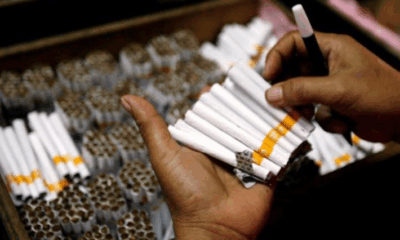
For decades, the Heidelberg tobacco factory in Gauteng hummed along as a fixture of South Africa’s manufacturing landscape. Soon, its production lines will fall silent not because South Africans stopped smoking, but because legal cigarettes are being squeezed out by an illicit market that has spiralled out of control.
British American Tobacco South Africa (BATSA) has announced it will shut down its only local cigarette manufacturing plant by the end of 2026, marking a sobering milestone for an industry under growing pressure from illegal trade.
When the black market became mainstream
South Africa’s illicit cigarette problem isn’t new, but it has reached a tipping point. Industry estimates now suggest that roughly three-quarters of all cigarettes sold in the country are unregulated and untaxed.
That reality has transformed street corners, spaza shops and taxi ranks into distribution hubs for cigarettes sold at prices legitimate manufacturers simply can’t compete with. For many smokers struggling with the cost of living, the cheaper option has become the default, regardless of legality.
BATSA says the shift has made local production impossible to sustain.
Inside the Heidelberg decision
The Heidelberg facility, which has been operating for around 50 years, is currently running at just 35% of capacity. Legal cigarette volumes have collapsed as illicit brands flood the market.
BATSA confirmed that the factory will close by the end of 2026, with about 230 jobs at risk. The company has started formal consultations with workers and unions in line with labour laws, with discussions expected to conclude by March 2026.
“This is an incredibly difficult day,” the company said, acknowledging the impact on skilled employees and their families. While BAT says it remains committed to South Africa, it plans to supply the local market entirely through imports once production ends.
COVID-19’s long shadow
Many analysts trace today’s crisis back to one pivotal moment: the COVID-19 lockdown tobacco sales ban.
When legal cigarette sales were halted, illegal networks stepped into the vacuum almost overnight. Those networks didn’t disappear when the ban ended, they expanded, professionalised and entrenched themselves.
Researchers, including experts from the University of Cape Town, warn that the illicit cigarette trade has since evolved into a sophisticated, profit-driven system involving large-scale players rather than informal street sellers.
Billions lost, enforcement stretched
The cost to the country has been staggering. Research suggests illegal cigarettes now account for between 60% and 75% of the market, translating into tax losses of between $2.7 billion and $4.4 billion over the past five years. Since the pandemic alone, the revenue gap is estimated at around $2.1 billion.
Over the past decade, the state has lost tens of billions of rands in excise and VAT revenue, money that could have funded healthcare, education and infrastructure.
Authorities face an uphill battle. Policing a market this large requires sustained enforcement, political will and coordination across borders all while competing priorities stretch already thin resources.
A warning beyond tobacco
What makes the Heidelberg closure especially unsettling is what it signals for other sectors.
Industry leaders warn that illicit trade is no longer limited to cigarettes. Alcohol, pharmaceuticals, cosmetics, food, clothing even toys are increasingly affected by unregulated markets that drain revenue and undermine formal businesses.
“If this can happen to a facility that’s been operating for 50 years, it can happen to anyone,” BATSA cautioned.
Public reaction: anger, worry and resignation
Online reaction has been mixed. Some South Africans expressed anger at tobacco companies, while others voiced concern for workers losing their livelihoods. Many pointed fingers at government enforcement failures, arguing that honest businesses are paying the price for policy missteps made during the pandemic.
Others see the closure as a stark reminder that once illegal trade becomes normalised, reversing the damage is far harder than preventing it in the first place.
As Heidelberg prepares for its final chapter, the question isn’t just about cigarettes, it’s about whether South Africa can still protect formal industries in a market where the illegal economy is fast becoming the dominant player.
{Source: Business Insider Africa}
Follow Joburg ETC on Facebook, Twitter , TikTok and Instagram
For more News in Johannesburg, visit joburgetc.com