Bondi Beach is usually the picture of carefree Australian life, sunburnt shoulders, kids chasing waves, tourists snapping photos as the sky turns gold. On Sunday evening, that familiar rhythm was broken in the most violent way imaginable.
Crowds had gathered on the sand to mark the start of Hanukkah, an annual Jewish celebration that regularly draws families, children and visitors to the iconic beach. By nightfall, 15 people were dead, including a 10-year-old girl, after a father and son opened fire in what authorities have described as an act of antisemitic terrorism.
The moment everything changed
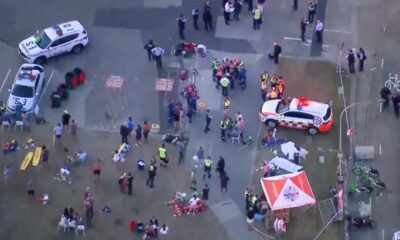
Witnesses say the attack began suddenly. From a raised boardwalk overlooking the beach, the two gunmen began firing into the dense crowd below. Swimmers, festival-goers and families scattered in panic, running across sand still warm from the day’s heat.
Police say the shooting lasted around 10 minutes, an eternity for those trapped in the open. By the time it ended, 42 people had been injured and rushed to hospital with gunshot wounds and trauma-related injuries.
The 50-year-old father was shot dead by police at the scene. His 24-year-old son survived and was arrested, remaining under guard in hospital with serious injuries.
‘An act of pure evil’
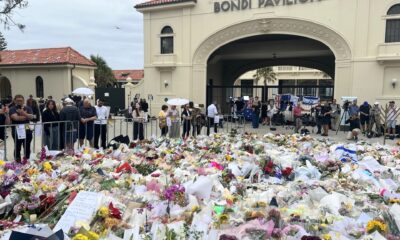
By Monday morning, the scale of the tragedy had sunk in. Prime Minister Anthony Albanese, visibly shaken as he laid flowers at the Bondi Pavilion, did not mince words.
“What we saw was an act of pure evil, an act of antisemitism, an act of terrorism on our shores,” he said.
Authorities believe the attack was deliberately designed to terrorise Australia’s Jewish community. The event had drawn more than 1,000 people, making it a highly visible and symbolic target.
Courage in the chaos
Amid the horror, stories of bravery began to emerge.
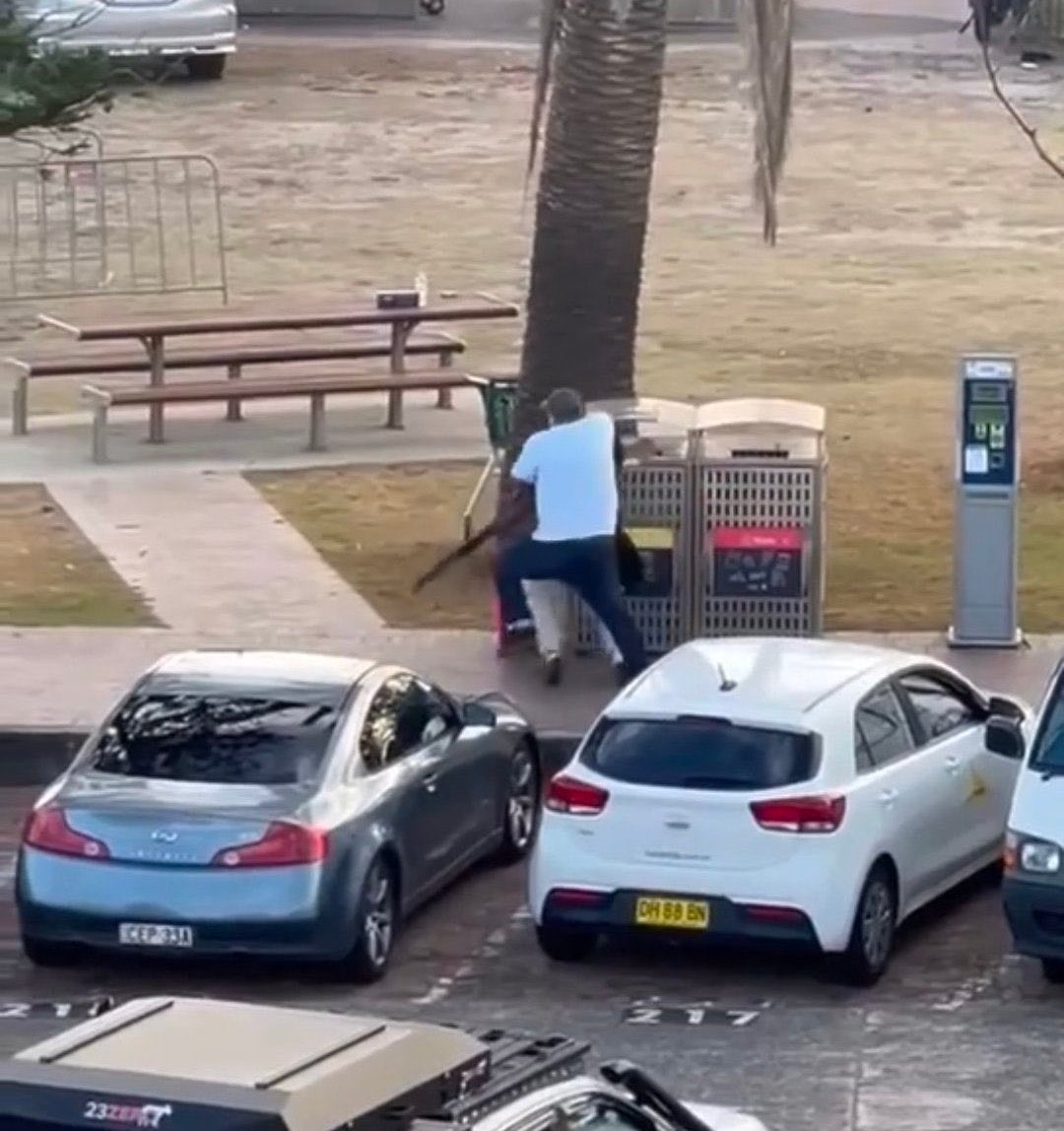
Video footage circulating online shows a man identified by local media as Ahmed al Ahmed, a fruit seller, grappling with one of the gunmen as shots rang out. He wrestled the weapon away, forcing the attacker to retreat.
Off-duty lifeguards also ran straight into danger.
“They ran out under fire to clear children from the playground,” said Steven Pearce from Surf Life Saving New South Wales. Others performed CPR and dragged the wounded to safety, using surfboards as makeshift stretchers.
For many Australians, these moments of courage have become symbols of a community refusing to be paralysed by fear.
Fear, shock and unanswered questions
Police later confirmed they discovered a homemade bomb inside a car parked near the beach, believed to have been planted by the attackers. Questions about ideology and motive remain, with authorities cautious about releasing details that could inflame tensions or inspire copycat attacks.
“This is about understanding what drove this,” said New South Wales police commissioner Mal Lanyon.
Rabbi Mendel Kastel, who lost his brother-in-law in the attack, voiced what many felt: disbelief that such violence could erupt in a country long proud of its social cohesion.
“This is not the Australia we know,” he said.
A nation already on edge
The attack has landed in a country already grappling with rising antisemitic incidents. Since the October 7, 2023 Hamas attack on Israel and the war in Gaza, Jewish communities across Australia have reported heightened fear.
In recent years, authorities linked Iran to arson attacks on a kosher café in Sydney and a synagogue in Melbourne allegations Tehran denies, despite condemning Sunday’s shooting.
International leaders reacted swiftly. US President Donald Trump called it a “purely antisemitic attack,” while Israeli Prime Minister Benjamin Netanyahu accused Australia’s leadership of failing to confront antisemitism forcefully enough.
Gun laws under renewed scrutiny
Mass shootings are rare in Australia, largely due to strict gun laws introduced after the 1996 Port Arthur massacre, where 35 people were killed. That tragedy reshaped the nation’s relationship with firearms.
Yet police have confirmed the father involved in the Bondi attack legally owned six licensed firearms, believed to have been used in the shooting, a detail that has reignited debate about whether existing laws go far enough.
Albanese acknowledged that tougher measures may now be necessary.
Mourning and resolve
By Monday, flags across Australia were flying at half-mast. Shoes, blankets and abandoned belongings still dotted the grass overlooking Bondi, silent markers of a night that will not be forgotten.
For many Australians, the shock is not just about the violence, but where it happened. Bondi Beach is meant to be shared ground, open and safe.
That it became a site of terror has left a deep scar and a collective resolve that hatred, no matter how violently expressed, will not define the country.