News
The Road Belongs to China: Inside the Car Market’s Biggest Power Shift
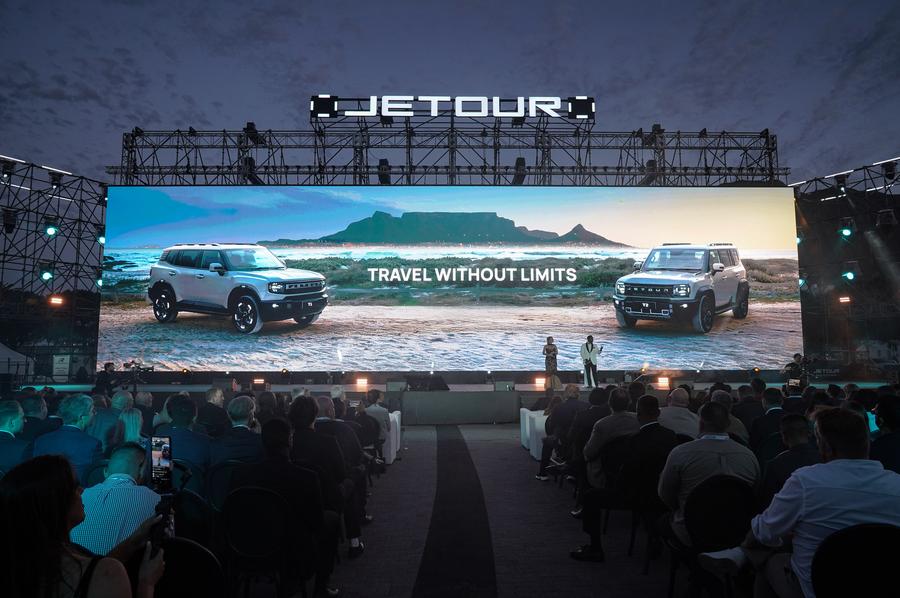
There is a quiet revolution happening on the roads of the global South. While Europe and the United States debate tariffs and trade barriers, drivers across Asia, Africa, and Latin America are already steering into a new reality where Chinese car brands are fast becoming the most popular wheels on offer.
From Johannesburg to Jakarta and Rio de Janeiro, brands such as BYD, Chery, Changan, and GWM are no longer newcomers. They are the market shapers.
Why the Global South is Choosing Chinese
The story begins with affordability and modern technology. For decades, car buyers in developing economies had a limited selection. European and Japanese vehicles were considered reliable but expensive. More recently, electric cars arrived with a price tag that placed them far out of reach for everyday families.
China changed that. By mastering its electric vehicle production from battery materials to software innovation, it began selling smart cars at prices that feel fair in countries where cost matters most. The shift has been especially dramatic in South Africa, where Chinese market share has reached around 15 percent. In other parts of the continent, local motorists are also increasingly choosing Chinese SUVs and EVs with generous tech features.
A Shift That Cannot Be Ignored
The numbers tell the story of a turning tide. Thailand now sees more than 32 percent of its sales coming from Chinese automakers. Israel is almost identical. In Latin America, Chile, Ecuador, Uruguay, and Panama are seeing shares of 26 percent or more. Even Australia has jumped to nearly 17 percent, a surprising development in a market once ruled by Japanese and Korean favourites.
Brazil, the automotive giant of the region, has seen Chinese manufacturers rise from 6.8 percent to 9.1 percent within a single year. Colombia and Mexico show similar growth. Ukraine has watched BYD climb quickly into the top ranks, while South East Asia sees demand driven by advanced EVs and bold styling that appeal to younger buyers.
This is not a small wobble in global market forces. It is a clear acceleration. Chinese brands are growing faster than any rivals in more than a dozen key nations. Year after year, more people are deciding that a Chinese car simply makes more sense.
BYD and the Future of Electrification
At the heart of this rise stands BYD. Beyond being the world’s top EV producer, the company has recently broken into Japan with its first plug-in hybrid model. For a country deeply loyal to local brands, this move signals a shift in customer priorities.
Japanese families who once trusted only Toyota or Honda are now considering a high-tech alternative that costs less yet still offers a long driving range and the kind of digital features previously reserved for luxury models. It shows that even the world’s most competitive markets are no longer impenetrable.
What This Means for Global Mobility
The implications are significant. If the future of transport is electric, affordable, and tech-heavy, Chinese companies are already positioned to lead it. Their growing international dealer networks and consumer confidence show that this is only the beginning.
For the first time in decades, the centre of the automotive world is not Berlin, Detroit, or Tokyo. It is Bangkok, São Paulo, Johannesburg, and Jakarta. The roads of emerging markets are deciding which brands will shape the next generation of mobility.
Right now, Chinese automakers are firmly in the fast lane.
Also read: Brazil’s Right Wing Scrambles for New Leadership as the Bolsonaro Era Collapses
Follow Joburg ETC on Facebook, Twitter, TikT
For more News in Johannesburg, visit joburgetc.com
Source: IOL
Featured Image: Xinhua