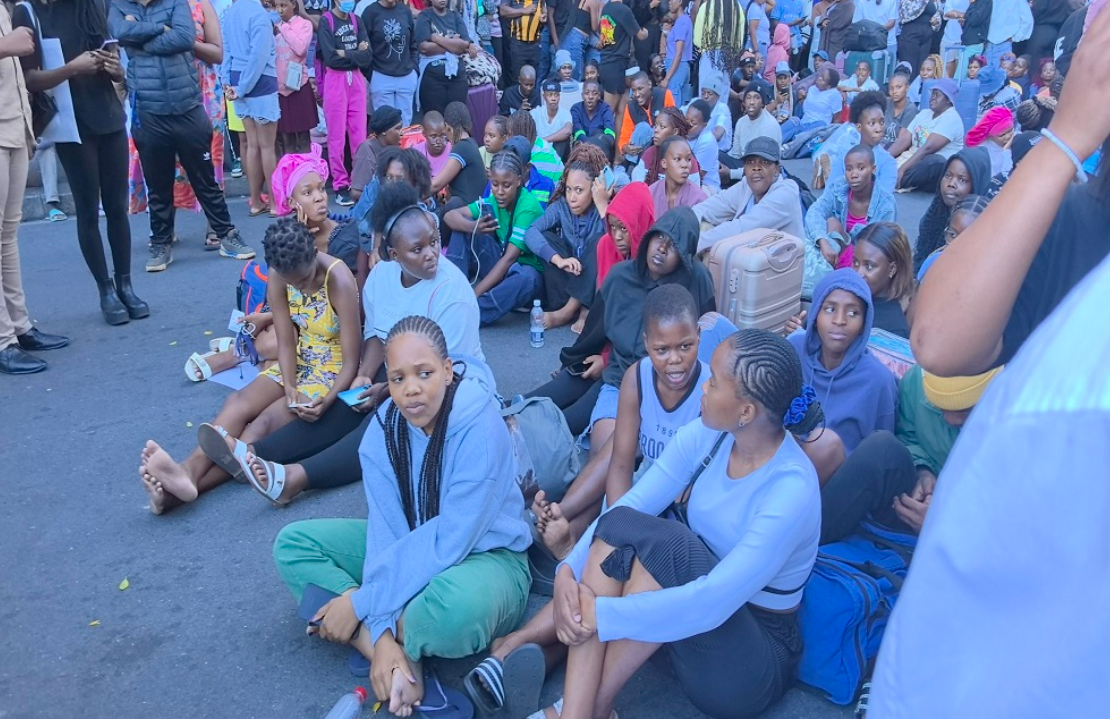
When the spotlight was firmly on President Cyril Ramaphosa delivering the State of the Nation Address at Cape Town City Hall last week, another crowd gathered just outside the venue.
This time, it was not politicians or dignitaries. It was students.
Hundreds of students from Cape Peninsula University of Technology assembled peacefully, hoping their message about an alleged accommodation crisis would cut through the noise of SONA 2026.
But the university is not buying their version of events.
University Says Protest Was Misleading
CPUT has dismissed the demonstration as nothing more than an attention stunt, accusing students of misrepresenting the facts.
According to university spokesperson Lauren Kansley, only a small number of those protesting were without beds and those students had already been assisted.
She argued that the real issue lies elsewhere. Students who arrive late without securing approved accommodation, she said, often still expect placement despite missing official processes.
The university maintains that structured systems are in place to allocate residence space, particularly for students who are funded and performing academically.
The NSFAS Rule Stirring Tension
Part of the frustration appears to be linked to updated requirements from National Student Financial Aid Scheme.
Under the current rule, students are expected to pass at least 60 percent of their subject load to remain eligible. For some, that benchmark has become a barrier to accommodation and funding.
Kansley acknowledged that the rule has excluded certain students, many of whom are understandably unhappy.
For students, however, the issue feels far more urgent than policy compliance. Social media lit up in the hours after SONA, with some users arguing that housing insecurity remains a recurring crisis at South African universities, particularly at the start of the academic year.
A Familiar Start Of Year Struggle
Accommodation battles are hardly new in the country’s higher education landscape. Each February, headlines often follow the same script. Late admissions. Funding delays. Private residences filling up. Students sleeping in libraries or on friends’ floors while awaiting placement.
The Department of Higher Education has repeatedly promised to address student housing shortages nationwide, yet capacity still lags behind demand.
This year’s protest outside SONA placed that conversation directly in front of the country’s leadership. Whether intentional or not, it guaranteed national visibility.
Engagement Or Escalation?
CPUT insists it remains committed to engaging students through formal channels and supporting those who qualify under its housing policies.
For now, both sides appear firm in their positions. The university says processes exist and support has been offered. Students say the crisis runs deeper than acknowledged.
With academic calendars already underway, the bigger question is whether this public clash signals a short term dispute or a longer simmering problem in the sector.
One thing is certain. In a week meant to focus on the nation’s future, a group of students ensured their present realities were impossible to ignore.