News
‘Prime Evil’ Takes the Stand: Eugene de Kock Testifies in Cradock Four Inquest
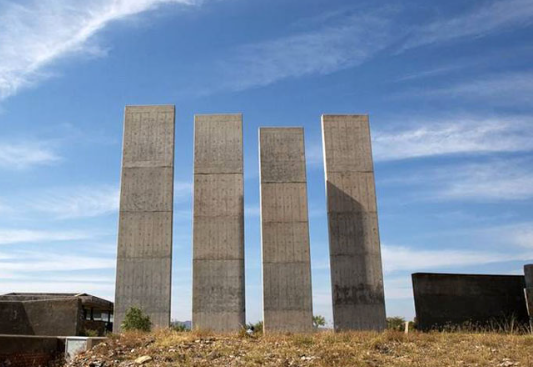
The inquest into the 1985 murders of the Cradock Four is expected to resume at the Gqeberha High Court on Monday, with ex-apartheid police commander Eugene de Kock set to testify.
The Cradock FourMatthew Goniwe, Fort Calata, Sicelo Mhlauli, and Sparrow Mkontowere anti-apartheid activists abducted in June 1985 after attending a United Democratic Front meeting in Gqeberha.
They never returned home to Cradock (now Nxuba). Their bodies were later found near Bluewater Bay. They had been tortured and burnt.
The Delay
In October last year, the inquest heard that De Kock, widely known as “Prime Evil”, had been hospitalised for suspected heart failure. He had been scheduled to testify at the time.
Lawyers representing former apartheid security officials asked for proceedings to be delayed until he could appear.
De Kock, former Vlakplaas security police base commander, previously gave evidence before the Truth and Reconciliation Commission.
He was sentenced to two life terms plus 212 years in prison for his role as head of the apartheid-era police death squad C10. After serving about 20 years, he was granted parole in 2015.
The ‘Signal’
The UDM’s Bantu Holomisa testified in October about the so-called “Signal” a document allegedly directing the “permanent removal” of the Cradock Four.
Holomisa identified senior security officials as being involved in orchestrating the murders.
He said he did not allege that then-president FW de Klerk personally ordered the killings, but that as head of state he bore ultimate responsibility for the apartheid government and its security forces.
The Investigation
Senior Hawks investigator Colonel Mthetheleli Dweba also testified, detailing the difficulties in reconstructing the case.
In 2021, he was tasked with rebuilding the murder docket after many original documents went missing.
Some suspects had already died, while othersincluding Niel Barnard, former head of the National Intelligence Service, and Barend du Plessis, then minister of black educationallegedly refused to cooperate.
Dweba said he had to trace witnesses and officials decades after the killings.
The Spy’s Testimony
Former apartheid-era spy Craig Williamson also gave evidence.
Williamson, who spent years posing as an anti-apartheid activist, was later exposed as a double agent working for the Security Branch. His operations included infiltrating banned organisations such as the ANC and the SACP, and involvement in state-sponsored bombings and assassinations abroad.
He told the court his work focused on operations outside SA and denied involvement in actions inside the country that led to activists’ deaths.
Advocate Tembeka Ngcukaitobi SC, representing the families, asked Williamson whether he had instructed intelligence officer Jacob van Jaarsveld in 1984 to observe Goniwe’s home for a possible assassination.
Williamson denied this.
Van Jaarsveld previously received amnesty for conspiring to murder Goniwe and told the Truth and Reconciliation Commission he had assessed whether Goniwe could be targeted.
Ngcukaitobi later argued with Williamson’s lawyer, Advocate Jaap Cilliers SC, over the relevance of certain questions. He also accused Cilliers of showing disrespect toward black advocates and suggested he could be in contempt of court.
Williamson further confirmed that while working overseas in the 1970s, he supplied intelligence that helped authorities monitor Steve Biko, who died in police detention in 1977, and other activists.
He said his overseas work included operations linked to the deaths of Jeanette Schoon, her young daughter Katryn, and Ruth First.
Schoon and her six-year-old daughter were killed by a letter bomb in June 1984. First, a journalist and anti-apartheid activist, was assassinated by a letter bomb in Maputo in August 1982.
The Bottom Line
Forty years after the Cradock Four were murdered, their families are still waiting for answers.
Now, Eugene de Kockone of the apartheid regime’s most notorious killersis set to testify. The question is whether he will provide the truth the families have sought for so long.
{Source: IOL}
Follow Joburg ETC on Facebook, Twitter , TikTok and Instagram
For more News in Johannesburg, visit joburgetc.com