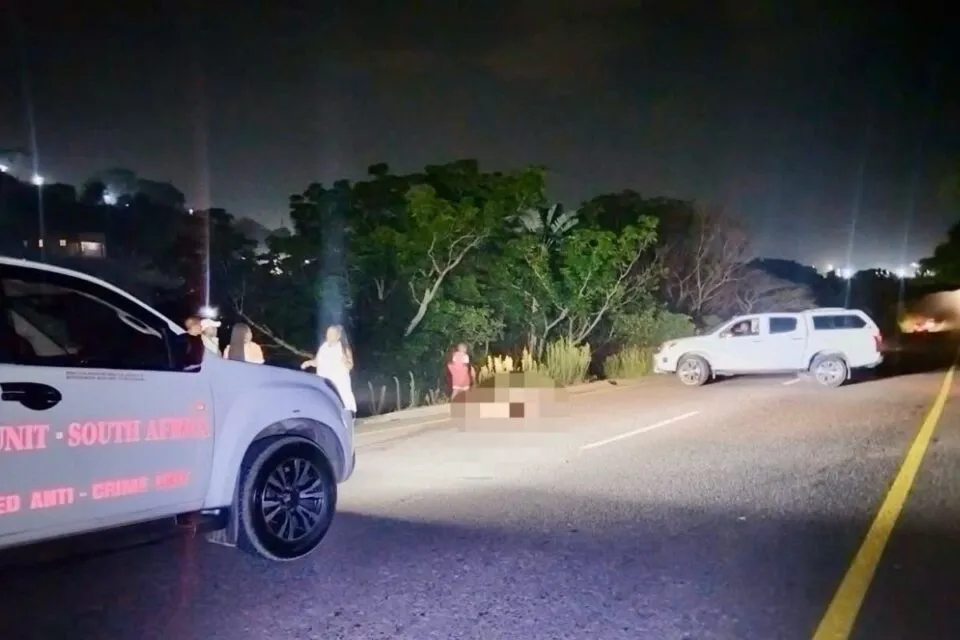
The festive season’s joy turned to horror on Jabu Ngcobo Road in Durban this week. A normal Tuesday turned into a nightmare when a 13-year-old boy lost his life in a gut-wrenching sequence of events that has left the Inanda community shattered and asking painful questions.
According to Reaction Unit South Africa (RUSA), the tragedy unfolded when a white Nissan NP200 bakkie, traveling with six children seated in the open load bed, was making its way towards Inanda. In a moment of catastrophic decision or panic, the young boy allegedly jumped from the moving vehicle.
A Chain of Catastrophe
The initial act led to unspeakable horror. A vehicle following behind at high speed, unable to stop in time, struck the boy and ran him over. He sustained fatal injuries and died right there on the scene. The raw trauma of that moment is now permanently etched into the tarmac of that road.
But the story, as relayed by responders, takes an even darker turn. It is alleged that the driver of the bakkie was under the influence of alcohol at the time. Instead of stopping to render aid or face the devastating consequences, he reportedly fled the scene entirely. He left behind not only the scene of the tragedy but his partner and the five other terrified children, alone with the bakkie and the unbearable aftermath.
The Unanswered Questions That Haunt a Community
This incident strikes at the heart of several ongoing crises in South Africa. The image of children riding unprotected in the back of a bakkie is, tragically, not uncommon in many communities, a stark reminder of transport disparities. The alleged presence of alcohol points to the deadly cocktail of irresponsible driving and a celebration season that too often spirals into tragedy.
Local social media channels are flooded with grief and fury. Residents are demanding answers: Why did the boy jump? Was it a dare, a fear, or a desperate attempt to get away from something? More pointedly, who was the driver, and how could he abandon children in their moment of utmost terror? The police search for the driver is not just a legal formality; for the community, it’s a pursuit of basic accountability.
A Sobering Contrast in a Violent Week
This heartbreaking loss came on the same day police in Nelspruit discovered the bodies of two women, 64-year-old Eunice Mahlodi and 20-year-old Eugenia Masuku, in a ransacked house. Their hands were bound, and Masuku had been strangled. Two stories, hundreds of kilometers apart, yet both speak to a society grappling with profound violence and lossone a sudden public tragedy, the other a hidden, brutal crime.
For Durban, the focus remains on a child who should be planning his summer holidays. The road where he died is now a makeshift memorial, a place of flowers and whispered prayers. It stands as a grim plea for responsibility, for protecting the most vulnerable, and for the simple, profound understanding that a vehicle is never just transportit’s a responsibility, especially when young lives are in your care.