News
How illegal electricity connections are costing Eskom billions in KwaZulu-Natal
How illegal electricity connections are costing Eskom billions in KwaZulu-Natal
Electricity theft has become one of the biggest financial drains on Eskom, and nowhere is the problem more severe than in KwaZulu-Natal.
According to the power utility, illegal connections and stolen infrastructure are costing it roughly R6 billion every year in the province alone a staggering figure that raises serious questions about the sustainability of the country’s electricity system.
The scale of the issue became clear this week when Eskom technicians, backed by armed security personnel, carried out a surprise operation in a suburb near Pietermaritzburg.
What they found highlights the complex reality behind South Africa’s electricity crisis.
A surprise operation in Hardingsdale Farm
The raid targeted Hardingsdale Farm, an informal settlement popularly known as Claridge, where Eskom officials suspected widespread illegal connections.
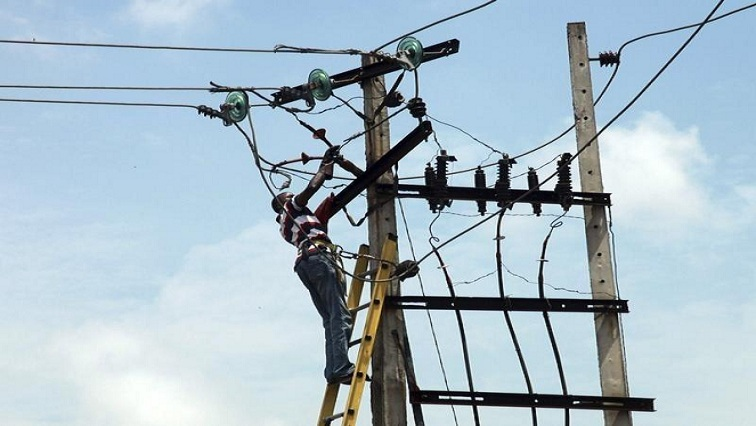
Technicians moved through the area removing cables, transformers and other equipment used to tap directly into the electricity grid.
According to Dadewabo Mbhele, Eskom’s senior manager for customer services, the situation reflects a much broader problem across the province.
She said around half of Eskom’s 1.2 million customers in KwaZulu-Natal are involved in electricity theft.
In some areas, the losses are even worse.
“There are places where more than 70% of the electricity revenue is not collected,” Mbhele explained.
Stolen transformers and organised operations
During the operation, Eskom teams recovered several pieces of infrastructure that had allegedly been stolen from the utility.
Six transformers had originally been identified as missing, although only five were recovered during the raid.
Some equipment found on site could not immediately be linked to Eskom, suggesting that stolen materials may have come from other sources as well.
Authorities believe some of the equipment was removed before the operation, possibly after word spread that Eskom officials were on their way.
The recovered equipment will now be used as evidence in criminal cases being prepared with the South African Police Service.
Mbhele said investigations are expected to lead to arrests.
Illegal electricity worth millions
The scale of illegal consumption in Hardingsdale is particularly striking.
Eskom estimates that residents in the area have been using electricity worth about R25 million a year without paying and that the situation has continued for more than seven years.
Ironically, the suburb is not made up solely of informal structures.
According to Eskom officials, the area contains more than 1,000 homes, many of them large double-storey houses.
Based on economic indicators, the utility believes many residents can afford to pay for electricity.
Why some residents say they had no choice
But the story looks different from the community’s perspective.
Some residents say they have been trying to obtain legal electricity connections for years without success.
One resident, Langalibalele Moloi, said he first applied for electricity and water services back in 2012.
More than a decade later, the infrastructure still has not been installed.
According to residents, the main obstacle is that the land has not yet been formally rezoned for residential use.
Without rezoning approval, authorities cannot legally connect the area to municipal services.
Community leaders estimate that fast-tracking the rezoning process could cost around R3 million, a figure residents say is far beyond their reach.
Life without electricity
The consequences of the power cuts have been severe.
Eskom disconnected the area more than eight months ago, leaving many households without electricity.
Residents say daily life has become far more difficult.
Parents worry about their children’s education because studying after sunset has become nearly impossible without proper lighting.
Some households have turned to solar panels as a temporary solution, installing rooftop systems to power basic appliances.
A province-wide problem
Electricity theft is not limited to one neighbourhood.
Mbhele said every municipality in KwaZulu-Natal is dealing with some form of illegal electricity use.
In parts of Pietermaritzburg, she estimates that up to 90% of customers are not paying for electricity.
The issue is also increasingly linked to organised crime.
According to Eskom, illegal operators sometimes install full electricity networks using stolen cables, transformers and poles.
These systems allow entire communities to draw power from the grid without paying.
The bigger impact on South Africa’s power system
Electricity theft has become one of the hidden drivers behind South Africa’s power crisis.
When Eskom loses billions in revenue, it has fewer resources to maintain infrastructure or expand the grid.
Stolen equipment also damages the network, increasing the risk of outages and safety hazards.
This problem has been growing for years.
In 2024, the late Public Enterprises Minister Pravin Gordhan revealed that Eskom had lost nearly R19 million in a single year due to stolen transformers.
Can technology stop electricity theft?
Eskom believes one possible solution lies in smart meters.
These digital systems allow utilities to monitor electricity usage more accurately and detect illegal connections quickly.
If implemented widely, they could make it much harder for people to tap into the grid without paying.
At the same time, Eskom says it will continue removing illegal connections and working with communities to encourage legal electricity purchases.
A deeper issue than just unpaid bills
The crisis in Hardingsdale highlights a difficult truth about South Africa’s energy challenges.
Electricity theft is partly driven by criminal activity but it is also tied to deeper issues such as service delivery delays, urban growth and planning failures.
For Eskom, the message remains simple.
If electricity bills are not paid, the utility says it cannot expand infrastructure or keep the system running reliably.
But for residents waiting years for legal connections, the debate often feels far more complicated.
And until those underlying problems are resolved, the battle over electricity in places like Pietermaritzburg is unlikely to end anytime soon.