News
“Real cartels sit in Parliament,” says Fadiel Adams as he rejects claims Cat Matlala led crime syndicate
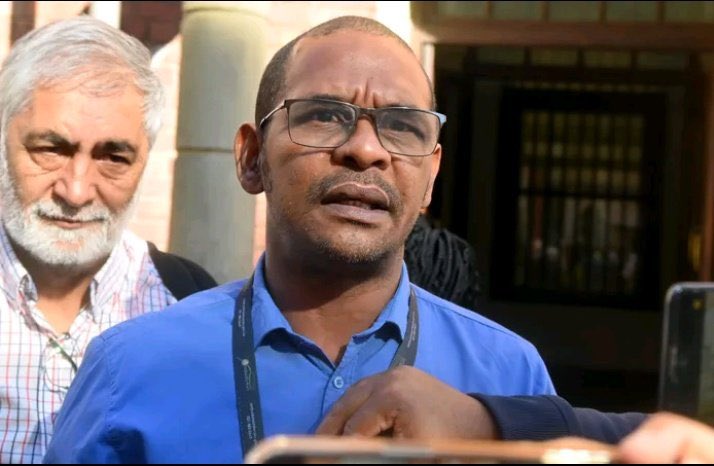
“Real cartels sit in Parliament,” says Fadiel Adams as he rejects claims Cat Matlala led crime syndicate
A tense parliamentary inquiry this week turned into a blunt confrontation over organised crime in South Africa, with MP Fadiel Adams delivering one of the most provocative claims yet.
The leader of the National Coloured Congress told lawmakers he does not believe businessman Vusimuzi “Cat” Matlala deserves the title of cartel boss. Instead, Adams suggested that the real power networks may be operating much closer to the heart of government.
“The cartels are here, in Parliament,” Adams told the committee.
His remarks came during testimony before an ad hoc parliamentary panel investigating explosive allegations about organised crime and political interference within the police.
Parliamentary probe into explosive policing claims
The inquiry was created after dramatic allegations made last year by Nhlanhla Mkhwanazi, the provincial police commissioner in KwaZulu-Natal. His briefing triggered widespread concern that criminal syndicates may have infiltrated the country’s law-enforcement and political systems.
During the hearings, Adams was questioned by advocate Maria Mokhoaetsi about claims he had accessed or handled sensitive police intelligence improperly.
But Adams used the opportunity to challenge the narrative that Matlala was one of the alleged leaders of a powerful “Big Five” cartel.
“Too small to run a cartel”
Adams argued that the term cartel should be reserved for the large, internationally organised criminal groups that dominate global trafficking networks.
“Cartels, I look at the Russians, the Colombians, the Bulgarians, maybe even the Moroccans,” he told the committee.
“Vusi Cat Matlala is way too small for that job.”
His comments pushed back against earlier testimony by Dumisani Khumalo, head of crime intelligence at the South African Police Service.
Khumalo previously told the inquiry that a powerful criminal network known as the “Big Five” had infiltrated both politics and law enforcement, influencing investigations and shielding its activities from prosecution.
He named Matlala and another alleged member, Katiso “KT” Molefe, as part of that structure.
The shadow of the DJ Sumbody murder case
Molefe’s name has also surfaced in the high-profile murder case involving Oupa Sefoka, better known to fans as DJ Sumbody, who was shot and killed in Gauteng in 2022.
Khumalo previously described the alleged cartel as a multi-layered criminal operation headquartered in Gauteng but active across several provinces, including the Western Cape, KwaZulu-Natal and the Eastern Cape.
According to his testimony, the network’s activities allegedly extended far beyond drug trafficking encompassing contract killings, kidnappings, extortion, tender fraud, cash-in-transit heists and vehicle hijackings.
Adams: Matlala was a “cash funnel”
Adams told the committee he believes Matlala played a different role entirely.
Instead of being a cartel kingpin, he argued that the businessman functioned as a conduit for money flowing to powerful figures inside the police.
“What I think he was, was a cash funnel for some very powerful people within the SAPS,” Adams said.
Matlala is currently facing attempted murder charges and had previously secured a controversial R360-million police health services contract, which has since been cancelled.
During the hearing, Adams questioned how such a large contract could have been awarded in the first place.
“You don’t give yourself a R300-million tender,” he said.
Sensitive police data at the centre of outrage
One of Adams’ most serious accusations concerned access to confidential police health information.
He claimed that Matlala’s company had access to records covering the health status of police officers nationwide including highly sensitive personal data.
“With one click of a mouse you’ll know who has HIV. One click and you know who has mental health issues,” Adams said.
He argued that granting a criminal suspect access to such data posed serious ethical and security concerns.
Questions over SAPS leadership
Adams also criticised police leadership, including National Commissioner Fannie Masemola, for allegedly failing to stop the contract when concerns were first raised.
He said the issue was only uncovered after intervention by the Special Investigating Unit.
“If the SIU had not investigated this, Vusi Cat Matlala would still be trading with SAPS,” Adams claimed.
He further argued that there had been little real investigation into Matlala’s case.
“At his last court appearance there were two pages in the docket. Two pages. That’s not an investigation, that’s a joke,” he told the committee.
A political storm still unfolding
Adams’ testimony adds another volatile chapter to a saga already entangled with politics.
Last year, Mkhwanazi alleged that Matlala had financially supported the political ambitions of suspended police minister Senzo Mchunu and businessman Brown Mogotsi, claims that further deepened the controversy.
Online, South Africans have reacted with a mix of frustration and disbelief. Social media discussions following the hearing focused less on the individuals named and more on the broader question: how deeply organised crime might have penetrated state institutions.
For many observers, the hearings highlight a troubling reality, that the line between politics, policing and criminal networks may be far more blurred than the public realises.
The parliamentary committee is expected to question Adams further once a new hearing date is announced. Until then, his claims, especially the suggestion that the real cartels sit inside Parliament itself, are likely to keep the debate burning.
{Source: IOL}
Follow Joburg ETC on Facebook, Twitter , TikTok and Instagram
For more News in Johannesburg, visit joburgetc.com