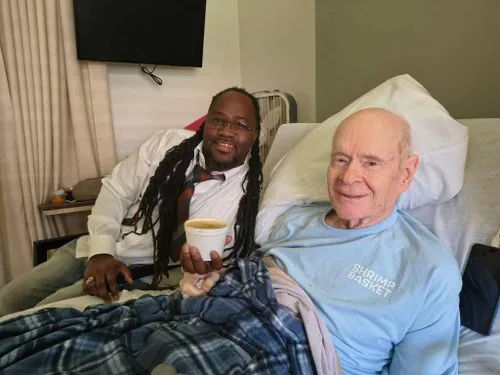
For nearly a decade, the rhythm was as steady as the Gulf Coast tides. Every day, Charlie Hicks, a 78-year-old Air Force veteran and retired accountant, would take his seat at the Shrimp Basket in Pensacola. His order never changed: a cup of gumbo, a seat by the TV, and a quiet hour watching baseball.
To the staff, he was just a polite, regular face. But to chef Donell Stallworth, Charlie became a friend. Between lunch rushes, Stallworth would sit and talk baseballCharlie a die-hard Yankees fan, Stallworth pulling for the Dodgers. When baseball season ended, their chats stretched into life itself. A simple customer relationship quietly deepened into something far more meaningful.
Then, in early September, the rhythm broke. Charlie didn’t show up.
A Faint Cry Through the Door
Manager Denise Galloway, who had Charlie’s number for emergencies, called. He said he was sick, so she offered to bring his beloved gumbo. He asked her to leave it at the door, not wanting to spread his illness. A kind gesture, but the concern lingered.
When days passed and calls started going straight to voicemail, Galloway told Stallworth. The chef didn’t hesitate. “I just grabbed my keys and walked out,” he said of his actions on September 11.
At Charlie’s apartment, Stallworth knocked. Silence. He was about to leave when he heard ita faint, desperate cry for help. The door was unlocked. Inside, he found Charlie on the floor, severely dehydrated, with two broken ribs, utterly disoriented. He had been there for days.
“He didn’t even know what day it was,” Stallworth recalled, staying with him, offering sips of water until paramedics arrived. “I don’t know what would have happened if Donell hadn’t showed up,” Charlie later admitted.
From Regular to Family
What followed was more than a rescue; it was an adoption. Charlie faced a long recovery in the hospital and rehab. Simultaneously, his apartment lease was ending, and his rent was soaring. That’s when Shrimp Basket’s general manager, Casey Corbin, stepped in.
Noticing an empty apartment right next to the restaurant, she secured it for him. But it needed work. So, the staff rolled up their sleevescleaning, painting, and unpacking boxes shipped by a niece. Corbin even found a secondhand walker and had the entire staff sign it as a welcome gift.
“This is my grandpa,” Corbin said, shrugging off any awkwardness about helping a customer this way. Charlie, a self-described “loner” with no children of his own, suddenly had a bustling, chosen family.
A Legacy in a Soup Bowl
The story, first reported by WEAR-TV, has since resonated far beyond Pensacola, striking a chord in a world that often feels disconnected. The restaurant’s president, Jeff Brooks, made it official: Charlie gets free gumbo for life.
Now, Charlie can walk to his favorite spot. But often, his gumbo is delivered to his new doorstep, a tab is supposedly running somewhere, but he’s never seen it. On Thanksgiving, his new family hosted a feast at the restaurant just for him.
For Charlie, the attention is humbling. “It’s not like I found the cure for cancer or something,” he said. “I just fell in my apartment.”
But for Casey Corbin and the Shrimp Basket family, the lesson is profound. “People matter,” she said. “Every person that walks through that door I treat like a Mr. Hicks.”
It’s a reminder that community isn’t always where you’re born. Sometimes, it’s the place where they notice when you’re gone, and the chef who leaves his kitchen to make sure you come back. All because of a daily cup of gumbo, and the human connection that simmered right alongside it.