News
Inside the Storm: Why Floyd Shivambu’s Admission Sparked a National Outcry
A remark that shook South Africa
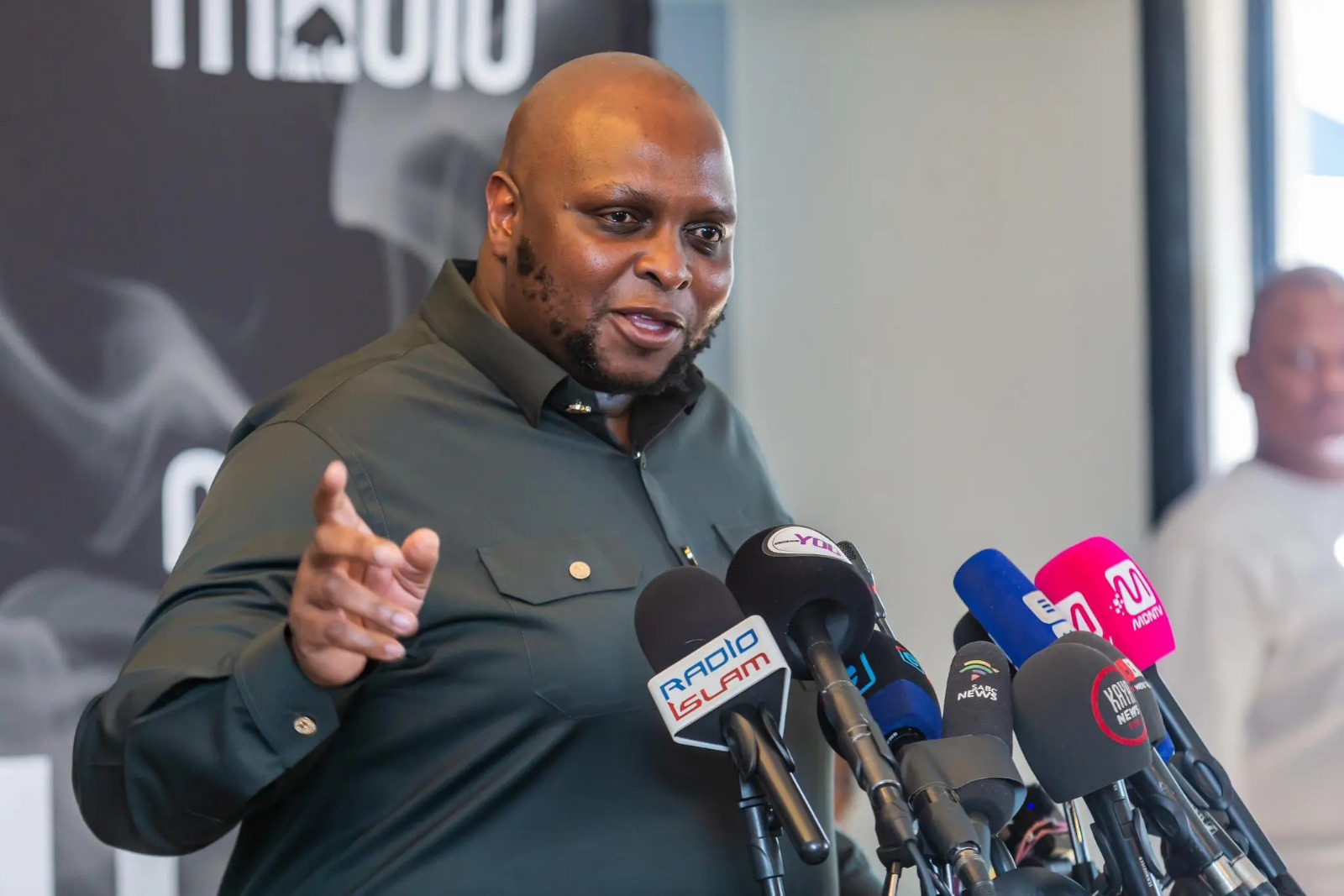
South Africans have heard many political revelations over the years, yet few have stirred as much debate as Floyd Shivambu’s recent admission that he once sat in a meeting where people allegedly discussed how to divert government money. The Afrika Mayibuye Movement leader insisted he did nothing more than witness the conversation, but that alone raised eyebrows and expectations across the country.
For forensic scientist and crime analyst Thabang Bogopa, the situation is far from simple. He explained that any allegation involving unreported knowledge of a planned crime is immediately tied to Section 34 of the Prevention and Combating of Corrupt Activities Act, which states that failure to report certain offences is itself unlawful. Although the law is clear, Bogopa believes the reality behind such cases is far more complicated.
The moment that sparked the storm
Shivambu told the public that he once watched people discuss how to steal government money. He even said specific figures were mentioned during the conversation. He insisted he was not telling a fictional story and criticised what he described as behaviour that pretends to be revolutionary while plotting wrongdoing.
His comments travelled quickly across social media and political circles. Supporters applauded the candour, while critics questioned how someone could witness something so serious without reporting it. The public reaction only grew after well-known commentator and Rise Mzansi leader Songezo Zibi challenged the country’s response. Zibi argued that only in South Africa could a political figure openly describe being present during discussions about theft and still receive praise instead of legal scrutiny.
A bigger cultural concern
Celebrated author Zakes Mda entered the conversation soon afterwards. He pointed to what he believes is a deeper national issue. According to him, South Africa has developed a culture of impunity where leaders feel comfortable making confessions because very little consequence follows. His comments struck a nerve with South Africans who have grown increasingly frustrated with corruption and the sense that powerful individuals rarely face accountability.
Why justice is not straightforward
Bogopa offered a broader view by explaining why cases like this often become tangled in legal and procedural hurdles. High-level officials, including those working in the State Security Agency, frequently have access to sensitive political information that cannot easily be disclosed. He recalled a historical moment from an ad hoc committee where an individual admitted knowing about wrongdoing by parliamentarians yet took no action, saying he would only act if provoked. The example illustrated how knowledge and accountability do not always meet neatly.
Another complexity lies in the fact that many government positions require individuals to sign Non-Disclosure Agreements. These agreements protect classified information but can also make it harder to prove exactly what someone knew and when they knew it. Even when someone hints at wrongdoing, the standard of proof in court must still reach beyond a reasonable doubt. At the same time, the Constitution protects every person against self-incrimination.
Because of these overlapping protections and the high threshold required in criminal cases, Bogopa said that proving culpability would not be easy in this matter. He explained that relying only on a person’s comments would never be enough to meet the full legal test.
Where this leaves the public
South Africans are now left to consider not only Shivambu’s remarks but also the wider environment that allows such statements to surface without clear consequences. The debate touches on politics, culture, accountability, and public trust. It also highlights how difficult it is for the justice system to act when allegations exist without concrete evidence.
What remains clear is that this moment has forced the country to reflect on its expectations of political leaders and on how far the culture of impunity has reached. Whether any further action emerges or not, the conversation has already reshaped the national mood.
Follow Joburg ETC on Facebook, Twitter, TikT
For more News in Johannesburg, visit joburgetc.com
Source: IOL
Featured Image: Explain