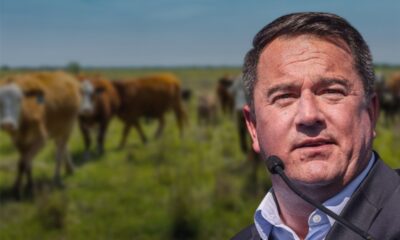
The numbers are moving in the wrong direction. Despite a high-profile mass vaccination campaign led by Agriculture Minister John Steenhuisen, foot-and-mouth disease cases in South Africa continue to climb. The North West department of agriculture confirmed this week that three additional cases have been detected, bringing the total number of infections from 158 to 179.
For farmers watching their herds, for communities dependent on livestock for livelihood, for an industry already under pressure, the news is deeply concerning.
The North West Hotspot
The Dr Kenneth Kaunda district municipality remains the epicentre of the outbreak, with 58 confirmed cases. The Bojanala platinum district follows with 53, while the Dr Ruth Segomotsi Mompati district has recorded 35 cases and the Ngaka Modiri Molema district 33. The geographic spread across the province suggests the virus is not contained to a single area but circulating widely.
Of the 100,000 doses of the Biogénesis Bagó vaccine received last month, 53,110 animals have been vaccinated to date. That’s progress, but it’s also a reminder that half the doses remain unusedand that new cases are still emerging.
North West MEC for agriculture and rural development Madoda Sambatha has stressed that vaccination alone is not enough. “This disease does not move on its own; people and animals spread it,” he said. “I therefore appeal to our farmers to work with veterinary services to control movements of animals and to report any suspicious cases of FMD.”
The National Picture
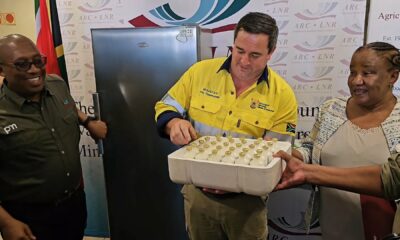
Steenhuisen has been leading the charge nationally. This week, he joined Limpopo MEC Nakedi Kekana for the fourth nationwide mass vaccination rollout campaign. Over the weekend, he was in Ekurhuleni with Gauteng MEC Vuyiswa Ramokgopa, overseeing the administration of 70,000 doses in high-risk areas like Mmagagula Heights and Katlehong.
Spokesperson Joylene van Wyk reported that the rollout is proceeding. “The Dollvet vaccine that went out last week has already been couriered to 98% of the provinces,” she said.
But the gap between vaccine distribution and vaccine administration is evident. Getting doses to provinces is one thing; getting them into animals is another. And with cases still rising, the urgency is acute.
The Farmer’s Wait
Behind the statistics are farmers watching their livelihoods walk around on hooves. For many, a single outbreak in a herd can be catastrophicanimals lost, movements restricted, markets closed. The promise of vaccination offers hope, but only when the vaccine actually arrives.
Some farmers are still waiting. The mass campaign is underway, but it is not yet complete. In rural areas, in communal herds, in operations large and small, the vaccine has not reached everyone.
The Southern Africa Agricultural Initiative board chair Theo de Jager has signaled that the private sector is ready to help. “Our members are willing, financially able and logistically capable of participating,” he said, “whether by procuring vaccine through lawful channels, arranging private veterinary support, or integrating vaccination into existing herd-management systems.”
The offer of private sector participation could accelerate the response. If farmers can access vaccines through their own channels, with their own resources, the burden on the state-led campaign could be reduced. But that requires regulatory approval, coordination, and trust.
Biosecurity First
Sambatha’s reminder that “this disease does not move on its own” cuts to the heart of outbreak management. The virus spreads through animal movement, through contaminated equipment, through human activity. Even the best vaccination campaign cannot succeed if biosecurity is ignored.
Controlling animal movements is difficult in practice. Livestock are traded, transported, gathered. Farmers need to sell. Markets need supply. But every movement is a potential transmission event. The tension between economic activity and disease control is real and constant.
Reporting suspicious cases is equally critical. Early detection allows for rapid responsequarantine, tracing, vaccination of at-risk herds. Late detection allows the virus to spread silently, establishing itself before anyone notices.
The Department’s Response
The department of agriculture is expected to provide feedback on progress by the end of the week. Farmers, industry bodies, and the public will be watching for signals: Are cases stabilizing? Is vaccine coverage expanding? Are new outbreaks being contained?
The answers will shape confidence in the response. If cases continue to rise despite the campaign, questions will be asked about strategy, execution, and resources. If the numbers plateau and then decline, the campaign will be validated.
The Stakes
Foot-and-mouth disease is not a threat to human health, but it is a devastating threat to animal health and agricultural economies. Infected animals must be culled. Movement restrictions disrupt supply chains. Export markets close. The costs multiply quickly.
South Africa’s livestock industry is a major economic player, supporting thousands of jobs and contributing significantly to GDP. An uncontrolled outbreak threatens all of that. The urgency of the response reflects the scale of what is at stake.
For now, the vaccine campaign continues, doses are moving, and farmers are waiting. The North West remains the epicentre, but cases could emerge anywhere. Sambatha’s message to farmers is simple: work with veterinary services, control movements, report suspicions. The disease does not move on its own. People move it. And people can stop it.
The next update from the department will be closely watched. Until then, the count stands at 179 and rising. The fight continues.