News
Foot-and-mouth becomes a national threat as farmers warn government is losing the race
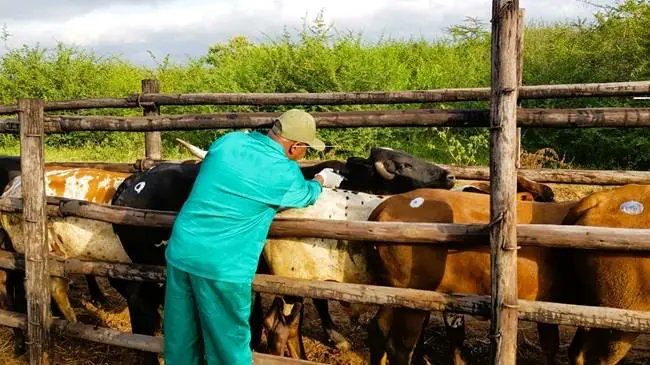
Foot-and-mouth becomes a national threat as farmers warn government is losing the race
What started as a livestock disease is now being described as a national economic threat, as frustration boils over among farmers, agricultural bodies and lobby groups who say government is moving too slowly to stop the spread of foot-and-mouth disease (FMD).
Across farming communities, the concern is no longer just about infected cattle. It’s about lost exports, rising costs, shrinking trust and a response many believe is stuck in red tape while the virus moves fast.
“This is no longer just an agricultural issue”
AfriForum has been among the most vocal critics, warning that the outbreak has crossed into crisis territory.
Lambert de Klerk, AfriForum’s manager for environmental affairs, said FMD now threatens the broader economy, not just farms and feedlots.
“The uncomfortable reality is that South Africa’s response model is still built around state-only control,” De Klerk said. “And that model is failing in real time.”
He warned that delays in vaccination and weak enforcement of movement restrictions are allowing the disease to spread unchecked.
“When vaccination rollout stalls, outbreaks multiply. Where enforcement is weak, restrictions become meaningless.”
Government pins hopes on a long-term eradication plan
The Department of Agriculture, however, insists it is laying the groundwork for recovery through a 10-year FMD eradication strategy, anchored in mass vaccination and international cooperation.
Last week, Agriculture Minister John Steenhuisen announced a major step: South Africa has resumed sending FMD field strains to the Pirbright Institute in the United Kingdom, the world’s reference laboratory for the disease.
This is the first time since 2011 that South Africa has submitted samples to Pirbright a move Steenhuisen described as critical to ensuring vaccines actually match the strains circulating locally.
“Pirbright doesn’t manufacture vaccines,” he explained, “but it tests whether the vaccines being used globally are effective against our specific virus strains.”
Why the Pirbright move matters
In practical terms, this step helps avoid a costly mistake: vaccinating millions of animals with a vaccine that doesn’t properly protect them.
Steenhuisen said the data from Pirbright will guide procurement and support South Africa’s goal of achieving FMD-free status with vaccination, rather than relying on culling alone a shift welcomed by many farmers in principle.
Mass vaccination plans and mounting impatience
Government’s phase one stabilisation plan includes intensive vaccination in high-risk provinces over the next one to two years.
According to Steenhuisen, vaccine supplies are expected as follows:
-
1 million doses from Biogénesis by mid-February
-
5 million more doses by mid-March
-
1.5 million doses from Dollvet by mid-February
-
700,000 doses from BVI by March
Locally, production is being ramped up through the ARC and Onderstepoort Biological Products (OBP), starting at 20,000 doses per week, with plans to scale up to nearly one million doses.
On paper, it sounds promising. On the ground, farmers say time is slipping away.
Farmers say promises aren’t matching reality
Dr Theo de Jager, chair of the Southern African Agri Initiative executive board, said expectations were raised as far back as November, when policy changes were first announced.
Instead, he said, permits to import vaccines have been delayed, tender processes loom, and confidence in procurement systems is low.
“Farmers have little faith in inefficient tender processes,” De Jager said. “And every delay costs money.”
Social media has reflected that frustration, with farmers warning that delays could permanently damage South Africa’s reputation in global meat markets a hard-earned position after years of disease control efforts.
Growing tension over who can vaccinate
One of the most contentious points is government’s plan for blanket vaccination of the national herd including healthy animals.
De Jager said this policy shift should come with regulatory flexibility.
“If you’re vaccinating healthy animals, it doesn’t make sense that only veterinarians can administer vaccines,” he argued, suggesting trained personnel could speed up rollout.
Farmers are also unhappy after learning that agents for vaccine manufacturers from Türkiye and Brazil were told the state would not work through local agents a move they say increases costs and delays delivery.
A race against time
At the heart of the dispute is urgency. Foot-and-mouth disease spreads fast, disrupts trade instantly and punishes hesitation.
While government speaks of long-term strategy, farmers are focused on the next few weeks worried that by the time systems fall into place, the damage may already be done.
For many in agriculture, the message is blunt: either the response speeds up, or the outbreak will define South Africa’s farming economy for years to come.
{Source: The Citizen}
Follow Joburg ETC on Facebook, Twitter , TikTok and Instagram
For more News in Johannesburg, visit joburgetc.com