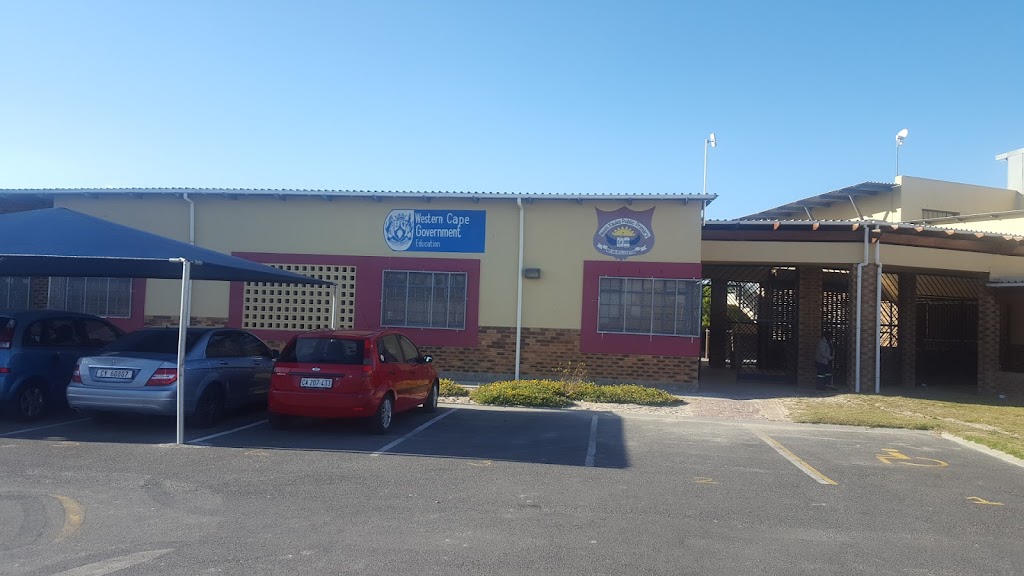
Friday afternoons at Noxolo Xakua Public Primary School used to mean the simple relief of a week completed. Now they bring something else entirely: anxiety. Staff lock up knowing that by Monday morning, their classrooms might be turned upside down again. Experience has taught them to expect the worst.
Since February, thieves have hit the Khayelitsha school four times. Four separate break-ins in just over six weeks. Each time, they leave destruction behind. Each time, staff arrive on Monday to pick up the pieces. Each time, they wonder when it will stop.
“We have started describing these break-ins as a pattern because we see it happening over and over again,” a school employee told GroundUp, asking not to be named for fear of backlash. “On Fridays, we leave the school worried because we have now started to expect that something bad will happen.”
A Classroom Attacked Twice
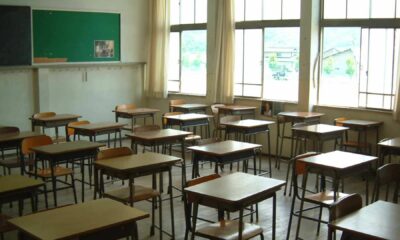
The most recent incident occurred over the past weekend. When staff arrived on Monday morning, they found classrooms in chaos. Images circulating on social media show rooms described as “upside down”chairs stacked haphazardly on tables, papers scattered across the floor, furniture overturned. On classroom boards, thieves had scrawled vulgar language and crude drawings.
“Different things go missing each time but the vandalism is consistent,” the employee said. “In the last burglary, we had about three cameras that were stolen, school stationery like staplers and pens were also missing.”
One classroom has been attacked twice. Others in the same hallway have also been targeted. The pattern suggests the school is being systematically victimized, not randomly hit.
The Silence That Follows
Despite the repeated incidents, there has been little formal response. Staff have not gathered to discuss what’s happening. The school governing body has not convened. Information that could help protect the school remains locked in individual experiences rather than shared as collective knowledge.
“Even after the most recent break-in this weekend, we still have not yet sat down as staff members or school governing body members to discuss what has happened or what has been happening over the past few weeks,” the employee said. “It is difficult to even share information amongst ourselves because there has been no move towards gathering staff about this.”
This organizational silence compounds the problem. Without coordinated action, without shared information, without a unified response, the school remains vulnerable to the next attack.
Infrastructure Under Attack
The break-ins don’t just steal supplies; they steal the ability to teach. The school’s electricity supply has been affected, further disrupting daily operations and learning conditions.
“As we speak, we do not have electricity at the school because during the break-ins, there are illegal connections that are made to the community and houses surrounding the school and every time they do this, it affects our connection,” the employee explained.
This detail reveals a troubling dynamic: the thieves aren’t just breaking in to steal. They’re tapping into the school’s infrastructure, treating a place of learning as a resource to be exploited for their own benefit. Each illegal connection disrupts power for learners who desperately need stability.
The Community Knows
Perhaps most frustrating for staff is the sense that the perpetrators are not strangers. They are known.
“The community is aware of these break-ins and vandalism attacks because these people are seen but nothing is done,” the employee said. “There is little support we get from the community as far as addressing crime goes.”
This is the cruelest irony. A school exists to serve its community. It educates the children who live in the surrounding streets. It employs local people. It represents investment in the future of that community. Yet when thieves target it repeatedly, that same community remains silent.
The employee said they are not aware of any extortion-related threats, leaving the motive unclear. Is it simple theft? Malicious destruction? A message? Without understanding why, it’s difficult to know how to respond.
The Official Response
The Western Cape Department of Education confirmed it is aware of a break-in that took place at the school on 3 March 2026. According to the department, doors and windows were vandalised during that incident and stationery was stolen. The estimated cost of damage amounts to R25,000. The matter has been reported to the South African Police Service.
However, the WCED said there have been no other break-ins reported by the school to its Safe Schools programme this year, adding that the district is currently engaging with the school regarding safety concerns.
This discrepancy between what staff describe and what has been officially reported raises questions about communication between the school and the department. Four break-ins since February, but only one reported through official channels? The gap suggests either underreporting or a breakdown in the reporting process.
The South African Police Service in Khayelitsha had not responded to questions at the time of publication.
The Human Cost
Behind the statistics, the damaged property, the stolen supplies, there is a human toll that’s harder to quantify. Teachers arrive at work already dreading what they might find. Learners walk into classrooms that have been violated, their learning environment disrupted by forces beyond their control. The sense of safety that every child deserves at school is eroded, replaced by an uneasy awareness that even here, they are not protected.
For the staff member who spoke to GroundUp, the frustration is palpable. “We have started describing these break-ins as a pattern.” The word “pattern” suggests resignation, an acceptance that this is simply how things are now. But it shouldn’t be. A school should not be a place where staff expect crime every weekend.
What Needs to Happen
Breaking this pattern requires action on multiple fronts. The school community needs to come togetherstaff, governing body, parentsto share information and develop a coordinated response. The WCED needs to ensure its Safe Schools programme is fully engaged, providing whatever support is available. SAPS needs to investigate not just individual incidents but the pattern, working to identify and apprehend those responsible.
And the community needs to decide whose side it’s on. When criminals are “seen but nothing is done,” that’s not just passive acceptance; it’s active permission. A school cannot protect itself alone. It needs the people around it to decide that education matters more than silence.
The Bigger Picture
Noxolo Xakua Public Primary School is not alone. Across South Africa, schools are targeted by thieves who steal computers, stationery, food suppliesanything that can be sold. The damage often costs more than the items taken. Broken windows, damaged doors, disrupted electricityeach repair diverts money from educational resources.
But the deeper damage is harder to measure. When children grow up seeing their school as a target, when they learn that criminals operate with impunity, when they absorb the message that education is not valued enough to protect, what kind of future are we building?
For now, the staff at Noxolo Xakua will continue their Friday ritual: locking up, hoping for the best, preparing for the worst. And on Monday, they’ll return to pick up the pieces, clean up the vandalism, and try to teach children who deserve so much better.