News
France sounds the alarm as Russia’s Oreshnik missile reshapes Europe’s defence thinking
France sounds the alarm as Russia’s Oreshnik missile reshapes Europe’s defence thinking
A single weapons system has once again jolted Europe’s security debate into sharper focus.
After Russia deployed its new Oreshnik hypersonic ballistic missile in Ukraine, French President Emmanuel Macron has issued a stark warning: Europe can no longer afford to fall behind in long-range strike technology.
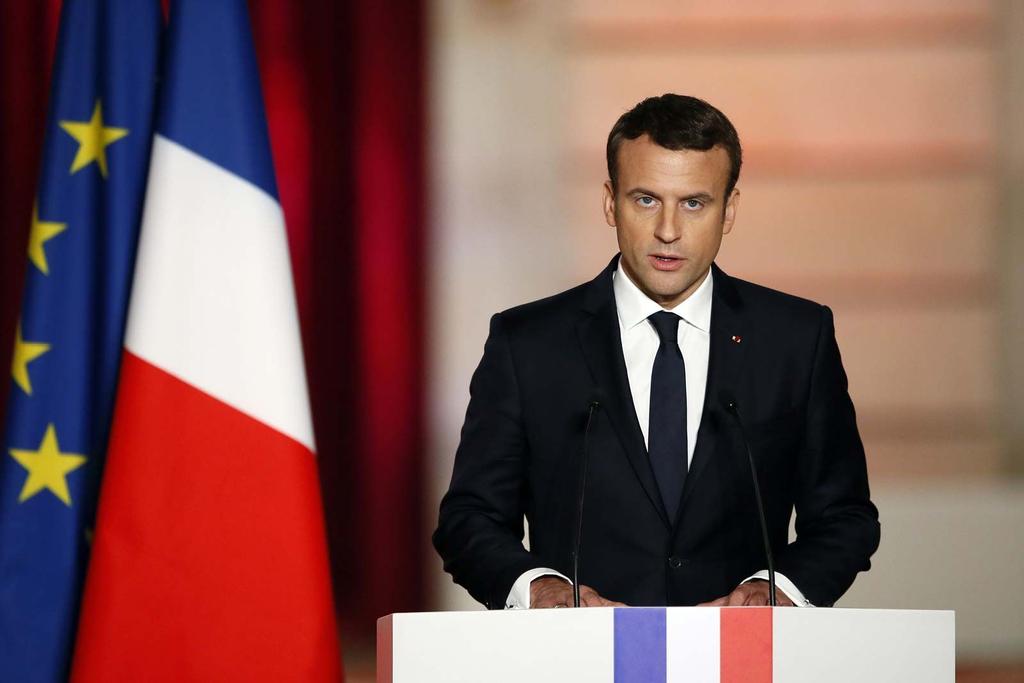
Speaking to French troops at the Istres-Le Tubé Air Base, Macron made it clear that the missile’s use was not just another development in the war in Ukraine, but a signal to the entire continent. “We are within range of these shots,” he told soldiers, a line that has since been widely shared and debated across European media and social platforms.
Why the Oreshnik strike matters
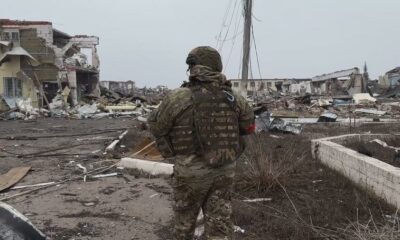
The Oreshnik missile was used last week in a strike on an aviation plant in Lviv, close to the Polish border. The facility was reportedly involved in servicing Ukrainian aircraft, including F-16s and MiG-29s.
Footage from the city showed multiple projectiles falling in rapid succession, underscoring the system’s speed and scale. While Ukraine has not confirmed the full extent of the damage, the images alone were enough to unsettle defence planners across Europe.
Russia first unveiled the Oreshnik in November 2024, when it struck a weapons plant in Dnipro during what Moscow described as a “combat test”. Since then, production has ramped up, and by late 2025 the system had been deployed in Belarus bringing it even closer to NATO borders.
President Vladimir Putin has repeatedly claimed the missile has no global equivalent, likening its destructive force to a “falling meteor” and boasting that it can travel at ten times the speed of sound while releasing multiple homing warheads.
Macron’s push for European firepower
Against that backdrop, Macron is pressing for faster progress on Europe’s own long-range strike capabilities through the European Long-Range Strike Approach (ELSA).
Launched in 2024 by France, Germany and Poland and later joined by countries including the UK, Italy, Sweden and the Netherlands, ELSA aims to pool industrial strength and costs to develop advanced conventional weapons. So far, however, the initiative has yet to deliver concrete systems.
Macron argues that must change, and quickly.
“If we want to remain credible,” he said, “we Europeans and especially France, must acquire these new weapons that will change the situation in the short term.” He stressed that progress alongside Germany and the UK was essential, not only for conventional defence but also to reinforce Europe’s nuclear deterrence.
A broader European anxiety
Across Europe, the reaction has been mixed. Some commentators see Macron’s comments as overdue realism in a rapidly militarising world. Others worry about an accelerating arms race at a time when many European economies are already under strain.
Still, the message from Paris is unmistakable: Russia’s deployment of Oreshnik has altered the strategic conversation. For France and its partners, the question is no longer whether Europe needs advanced long-range weapons, but how quickly it can build them before the balance of power shifts even further.
{Source: IOL}
Follow Joburg ETC on Facebook, Twitter , TikTok and Instagram
For more News in Johannesburg, visit joburgetc.com