For years, the Democratic Alliance (DA) positioned itself as the party of clean governancequick to criticise ruling party excess.
Now, with Premier Alan Winde and Minister Dean Macpherson facing scrutiny over international travel, the DA finds itself on the receiving end of the criticism it used to dish out.
Winde’s Woes
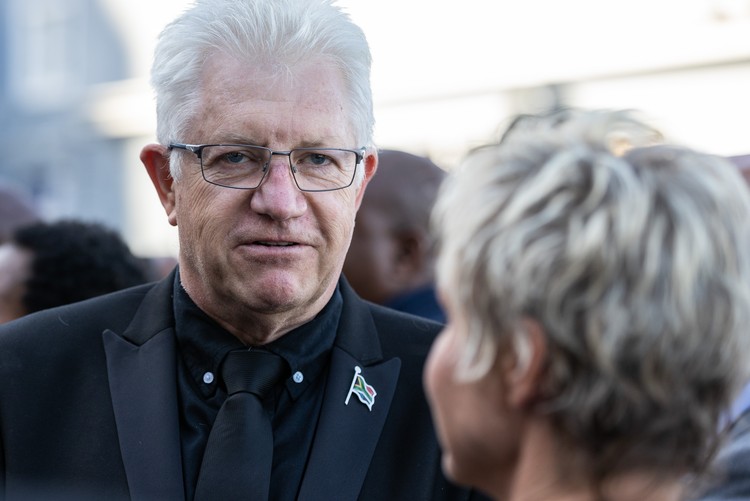
Winde is facing calls to “resign with immediate effect” after the Provincial Legislature’s Conduct Committee found he breached the Code of Conduct by failing to disclose sponsored foreign travel to the United States.
The committee confirmed that Winde had violated Paragraphs 12(9) and 3(7) of the Code by not declaring the sponsored trip in the Register of Members’ Interests.
Khalid Sayed, leader of the opposition in the Western Cape (ANC), called the finding “a victory for ANC-led public accountability and oversight.”
He said the finding highlighted deeper governance problems under the DA administration.
“The premier’s double standards and delinquency once again demonstrates his lack of respect for the institutions of our democracy. The premier is unfit to hold office.”
Macpherson’s Brazil Trip
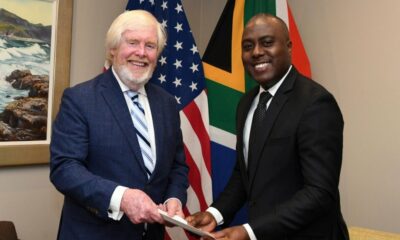
ActionSA has called on Macpherson, Minister of Public Works and Infrastructure, to repay R839,000 in taxpayer money allegedly spent on a trip to Brazil accompanied by his partnerdespite legal guidance advising against it.
“This latest scandal comes on the back of the Minister already racking up R3.2 million in travel expenses (as of June 2025), part of a staggering R448 million spent on travel by the broader GNU.”
“At a time when South Africans are battling rising costs, collapsing infrastructure and unreliable service delivery, this level of excess is indefensible,” said ActionSA MP Malebo Kobe.
The Context
In June last year, President Cyril Ramaphosa removed Andrew Whitfield from the position of Deputy Minister of Trade, Industry and Competition because he undertook an international visit without presidential permission.
The Experts’ View
Professor Dirk Kotzé (University of South Africa) agreed the DA is now facing criticism it once dispensedand that these examples show the party needs to tighten its understanding of the rules.
“The moment parties are in government, they start running the risk that mistakes or oversights or whatever you want to call it will be made by some of their members.”
“I think they have to make sure about the manner in which they deal with issues like this and follow the different regulations or ministerial handbooks.”
Professor Bheki Mngomezulu (Nelson Mandela University) said the travel scandals don’t paint a good look for the party, but the DA is no longer oppositionit’s part of the multi-party coalition.
“While the ANC in the Western Cape is calling for Alan Winde to resign, I don’t think that it will work because the ANC is a political party, and the DA is a political party, and if they feel aggrieved by what Alan Winde is doing, they have proper channels that they can follow.”
He noted a deeper confusion: “There is more confusion as to whether the ANC is still the government party or whether the DA is still the opposition party. They don’t seem to find an answer to that, when it’s clear that is not the case. They are all part of the multi-party coalition government.”
The Bottom Line
The DA built its brand on accountability. Now, its own leaders are under the microscope.
The travel scandals are embarrassingbut they also expose a deeper tension: how does a party that defined itself as opposition navigate the compromises and constraints of being in government?
For the GNU, the answer will determine whether these are minor missteps or signs of a coalition under strain.