News
Opposition slams Gauteng budget, warning economy is in ‘ICU’ while farm crisis grows
Opposition slams Gauteng budget, warning economy is in ‘ICU’ while farm crisis grows
Gauteng’s latest provincial budget has triggered sharp political debate, with opposition parties arguing that the spending plan misses the urgency of the province’s economic and agricultural challenges.
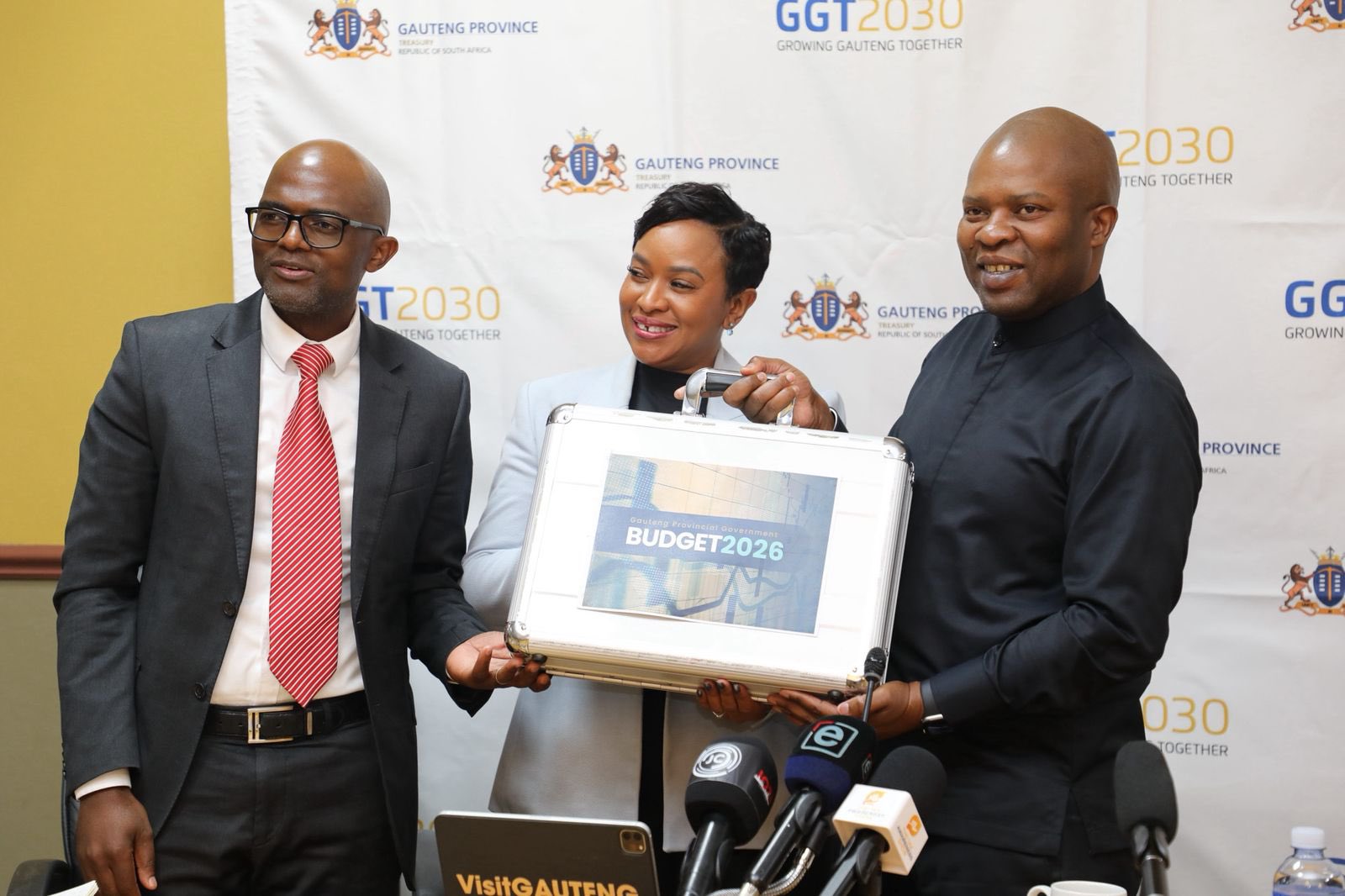
Finance and Economic Development MEC Lebogang Maile unveiled the province’s 2026–27 Medium Term Expenditure Framework this week, outlining spending of R549.3 billion over the next three years.
The plan divides the funds across three financial years, R179.2 billion, R182.4 billion, and R188.2 billion with the largest slices going to education and healthcare, two sectors that together will receive more than R220 billion.
But while the budget emphasises social services, opposition members in the Gauteng Provincial Legislature say key economic pressures, including a growing agricultural crisis and unemployment, were not given enough attention.
Farmers fear the budget ignores livestock crisis
One of the strongest criticisms came from the Democratic Alliance, which says the budget offers little reassurance for farmers grappling with a serious outbreak of Foot-and-Mouth Disease.
DA MPL Bronwynn Engelbrecht described the spending plan as a “sobering message” for farmers already struggling to contain the disease.
The provincial agriculture budget for 2026–27 totals R179 million, with about R63 million specifically allocated to the agricultural sector.
Engelbrecht argued that the amount does not reflect the scale of the outbreak.
According to provincial authorities, there are around 230 active FMD cases in Gauteng, while 300,000 animals could potentially be exposed to the disease.
For farmers, the consequences are immediate. Export markets can shut overnight when outbreaks occur, livestock movement becomes restricted, and income streams disappear almost instantly.
Although officials say more than 303,000 vaccine doses have already been administered with another 70,000 expected, critics argue that stronger intervention is needed to prevent long-term damage to the food supply chain.
“If the spread isn’t controlled,” Engelbrecht warned, “meat supplies could tighten, prices could rise, and agricultural jobs will be at risk.”
‘Economic ICU’: unemployment still a major concern
Economic development spending also drew criticism from Build One South Africa (BOSA), which argued that the budget prioritises social programmes over job creation.
Despite Maile’s claim that Gauteng created the most jobs in the previous financial year, BOSA pointed to the province’s stubbornly high unemployment levels.
Roughly 30% of Gauteng’s workforce remains unemployed, and the party says about 54,000 jobs were lost in the province.
In a sharply worded response, BOSA said that if Gauteng is meant to be the country’s economic powerhouse, the situation currently resembles “an economic ICU on a respirator.”
The party also questioned why economic development spending was significantly lower than allocations for social development and human settlements.
In their view, stronger investment should have been directed toward:
-
Bulk infrastructure for electricity and water
-
Safety and security improvements
-
Growth of township economies
These areas, the party argues, are essential for sustainable growth.
Calls to tackle wasteful spending
Meanwhile, the Freedom Front Plus focused its criticism on financial discipline inside government departments.
MPL Anton Alberts said the R3.6 billion increase in the provincial budget compared with last year would still not be enough unless wasteful spending was addressed.
He pointed to billions of rand lost through irregular expenditure in departments such as health, housing, social development and infrastructure development sectors that together will receive nearly R300 billion over the next three years.
Among the examples cited:
-
R520 million spent on feasibility studies for housing projects that were never built
-
R1.5 billion in irregular spending within the education department
According to Alberts, tighter procurement systems could save as much as R3 billion, funds that could be redirected to more urgent priorities.
Government promises tighter financial controls
In his budget speech, Maile acknowledged the need for stronger financial oversight.
He said government plans to digitise procurement systems and introduce more centralised budget monitoring across departments.
The goal, he explained, is to improve transparency while ensuring that public funds are spent more effectively.
Digital systems, he argued, will provide real-time data that helps officials track spending, strengthen planning and enforce stricter financial discipline.
Budget debate reflects broader political tensions
Budget debates in Gauteng are rarely just about numbers.
As South Africa’s economic hub, home to Johannesburg, Pretoria and a significant share of the country’s industry Gauteng’s finances are often seen as a reflection of the broader national economy.
With elections approaching in the coming years, opposition parties are increasingly scrutinising spending decisions and asking whether budgets are designed to drive long-term growth or provide short-term political relief.
For residents of the province, however, the questions are simpler: will the budget help create jobs, stabilise food prices, and keep essential services running?
Those answers will only become clear as the numbers on paper translate into action on the ground.
{Source: The Citizen}
Follow Joburg ETC on Facebook, Twitter , TikTok and Instagram
For more News in Johannesburg, visit joburgetc.com