News
Gezina residents push back against plan to relocate hundreds of immigrants
Gezina residents push back against plan to relocate hundreds of immigrants
A quiet suburb in Pretoria has suddenly found itself at the centre of a heated community debate.
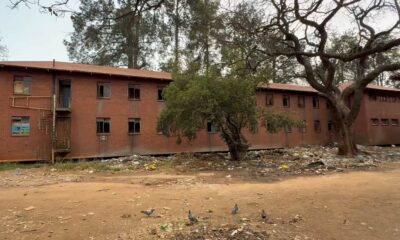
Residents in Gezina, part of the Pretoria Moot area, are raising strong objections to a proposal that could see more than 400 occupants from the Melgisedek building relocated to a nearby residential property.
The move follows a recent High Court of South Africa ruling ordering the eviction of unlawful occupants from the controversial Melgisedek Building, which was damaged by fire last month.
But while the court decision cleared the way for the building’s demolition, it also triggered a new challenge: where to house the hundreds of displaced residents.
Residents fear pressure on local infrastructure
One of the most vocal community members, Mari Joubert, has formally challenged the relocation proposal.
The plan involves housing the occupants at 531 Nico Smit Street, a property in the neighbourhood.
Joubert argues the city has not followed proper public consultation processes.
She says residents were not given the legally required opportunity to comment on the project before it was announced.
Her concerns go beyond procedure.
According to Joubert, suddenly placing more than 400 people in the area could strain local infrastructure including water supply, sewage systems and electricity capacity.
Security concerns and potential impacts on property values have also been raised by residents.
Petition gains momentum
Community frustration has quickly translated into action.
A petition opposing the relocation has already gathered more than 2,600 signatures, reflecting the growing anxiety among residents about the proposal.
Many say they are not against helping vulnerable people but believe the process should be transparent and properly planned.
Others worry that the area may not be zoned for such a high-density residential project.
Joubert argues that if the property is not already zoned appropriately, the City of Tshwane must apply for rezoning or consent-use approval, processes that typically involve a 28-day period for public objections.
Political voices join the debate
The issue has also drawn political attention.
Cilliers Brink, mayoral candidate for the Democratic Alliance in Tshwane, criticised the relocation proposal, saying the land in question may not be suitable for housing such a large group of people.
Brink warned that without a comprehensive long-term plan, relocating the occupants could simply shift longstanding social challenges from one neighbourhood to another.
He also raised concerns about reports that some of the displaced residents struggle with substance abuse issues.
According to Brink, the city needs a broader strategy rather than what he described as a quick relocation.
The long shadow of the Melgisedek building
The Melgisedek property has long been a symbol of urban decay in parts of Pretoria.
For nearly two decades, the building has been associated with hijacking, overcrowding and deteriorating living conditions.
Last month’s fire only intensified the urgency to remove occupants and demolish the structure.
According to Kholofelo Morodi, MMC for corporate and shared services in Tshwane, the recent court ruling finally cleared the legal path for the building’s demolition.
But as the city moves forward with that process, the relocation question remains complex.
A familiar challenge in South African cities
Across South Africa’s major metros, the issue of relocating displaced residents including undocumented migrants often sparks strong reactions.
Cities must balance humanitarian obligations with the concerns of existing communities.
Urban planners say that without careful planning, relocation projects can create tensions between residents and authorities.
In the case of Gezina, the debate also reflects broader frustrations around housing shortages, infrastructure pressure and migration patterns in urban areas.
Community tensions and the road ahead
Online discussions about the issue reveal a deeply divided public response.
Some social media users argue that vulnerable people need safe housing and support.
Others say municipalities must first ensure that relocation sites are properly prepared and that communities are consulted.
For now, the petition and formal dispute lodged by residents mean the debate is unlikely to fade soon.
As the City of Tshwane considers its next steps, one question remains at the heart of the controversy:
How do cities relocate vulnerable people without creating new problems for the communities receiving them?