News
No more promises, just deadlines: GNU partners raise the bar for Ramaphosa’s Sona
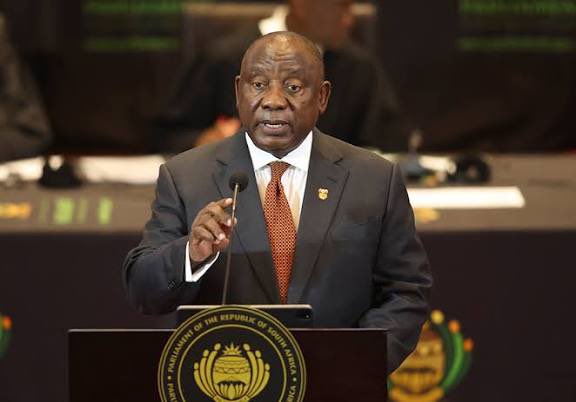
No more promises, just deadlines: GNU partners raise the bar for Ramaphosa’s Sona
Coalition cracks show as parties demand delivery, not dreams
There’s a different mood hanging over this year’s State of the Nation Address.
It’s not the usual opposition-versus-ANC theatre. This time, the pressure is coming from inside the tent.
Parties that now share power in South Africa’s Government of National Unity (GNU) are making it clear: President Cyril Ramaphosa cannot afford another speech filled with aspirations and five-year visions. They want deadlines. They want measurable targets. And they want action.
With unemployment sitting at a staggering 42.4% and economic growth limping along at just 1%, the patience of both politicians and ordinary South Africans is visibly thinning.
Cosatu: Jobs must come first
One of the ANC’s closest allies, the Congress of South African Trade Unions (Cosatu), has set the tone ahead of the address.
Matthew Parks, Cosatu’s parliamentary coordinator, said government must respond “decisively to the cries and hopes of the working class.”
In plain language: jobs, jobs and more jobs.
Cosatu argues that Sona must centre on tackling the unemployment crisis, poverty, inequality and the country’s entrenched problems with crime and corruption. The federation has welcomed Eskom’s progress in ending load shedding something that felt almost impossible two years ago, but it says that’s only part of the story.
Electricity prices are climbing, municipal debt has ballooned to around R100 billion, and corruption continues to bleed state coffers. Cosatu wants concrete steps to stabilise Eskom, reduce electricity costs and enable the utility to expand into renewable energy.
The federation also pointed to improvements at Transnet and Metro Rail, small signs of life in systems that once symbolised state collapse. But it warned that these gains must be accelerated.
Efficient ports and rail are not abstract policy issues. They directly impact mining, agriculture and manufacturing jobs and the daily commute of roughly 10 million urban workers.
The DA: “The time for plans has passed”
The Democratic Alliance, now a GNU partner, is blunt in its expectations.
National spokesperson Jan de Villiers said the president must deliver reforms, not new plans, proposals or hopeful rhetoric.
For many South Africans, this strikes a chord. Over the years, Sona has often been heavy on announcements and light on follow-through. Grand strategies have been launched with fanfare, only to fade quietly months later.
The DA wants implementation and proof that the GNU is not simply a political arrangement but a functioning governing machine.
IFP: Security, borders and rural neglect
The Inkatha Freedom Party is zeroing in on safety and rural development.
National Assembly chief whip Nhlanhla Hadebe said the president must outline firm measures to strengthen security and improve border control. The IFP has called for decisive action against illegal immigration, while supporting a regulated migration system that prioritises scarce skills.
But beyond border politics, the IFP is pushing hard on rural issues something that often gets overshadowed in national debates.
Rural water scarcity, failing infrastructure, struggling small-scale farmers and youth unemployment outside major metros remain stubborn problems. The party wants expanded pipelines, reservoirs and treatment facilities, alongside long-term drought mitigation and climate resilience planning.
Progress has been made on parts of the N2 and N3 and on rural bridge rehabilitation in KwaZulu-Natal and the Eastern Cape. But the IFP says “significant gaps remain,” especially in rural safety, economic growth and infrastructure development.
Crime and gender-based violence also remain top concerns.
The bigger fault line: economic reform
There’s another, more politically sensitive issue simmering beneath the surface.
Major parties within the GNU expect movement on growing the economy and job creation and some want to see a shift away from the ANC’s broad-based black economic empowerment approach.
While not all coalition partners agree on how far reform should go, there is growing recognition that the country’s growth model is not delivering sufficient results.
The question is whether Ramaphosa will use Sona to signal bold economic restructuring or attempt to balance competing ideologies within the GNU.
A new kind of Sona pressure
Historically, Sona speeches were judged by opposition reactions and public applause levels. This year feels different.
Social media chatter reflects a weariness with political speeches that promise “turnarounds” without visible timelines. The phrase “implementation roadmap” has become shorthand for credibility.
The IFP has explicitly demanded that Ramaphosa provide firm timelines and measurable targets. That kind of language is rarely used this directly ahead of Sona.
It reflects a coalition reality: Ramaphosa is no longer addressing Parliament as the uncontested leader of a majority government. He is speaking as the head of a fragile partnership that must prove it can govern effectively.
Delivery or drift?
South Africa has, in recent months, seen genuine progress, the end of load shedding, improved performance at some state entities, upgrades to key transport corridors.
But those gains sit alongside a harsh economic reality: slow growth, deep inequality, rising living costs and persistent unemployment.
If this Sona lands as another list of ambitions without accountability, GNU tensions could quietly deepen.
If it includes clear deadlines, transparent targets and visible reform commitments, it may strengthen confidence in the coalition experiment.
For millions of South Africans struggling with the cost of living and job insecurity, the political choreography matters less than one thing: whether this year’s speech signals real change or just another well-polished promise.
{Source: The Citizen}
Follow Joburg ETC on Facebook, Twitter , TikTok and Instagram
For more News in Johannesburg, visit joburgetc.com