News
A steady hand or soft touch? What to expect from Godongwana’s “feel better” budget
A steady hand or soft touch? What to expect from Godongwana’s “feel better” budget
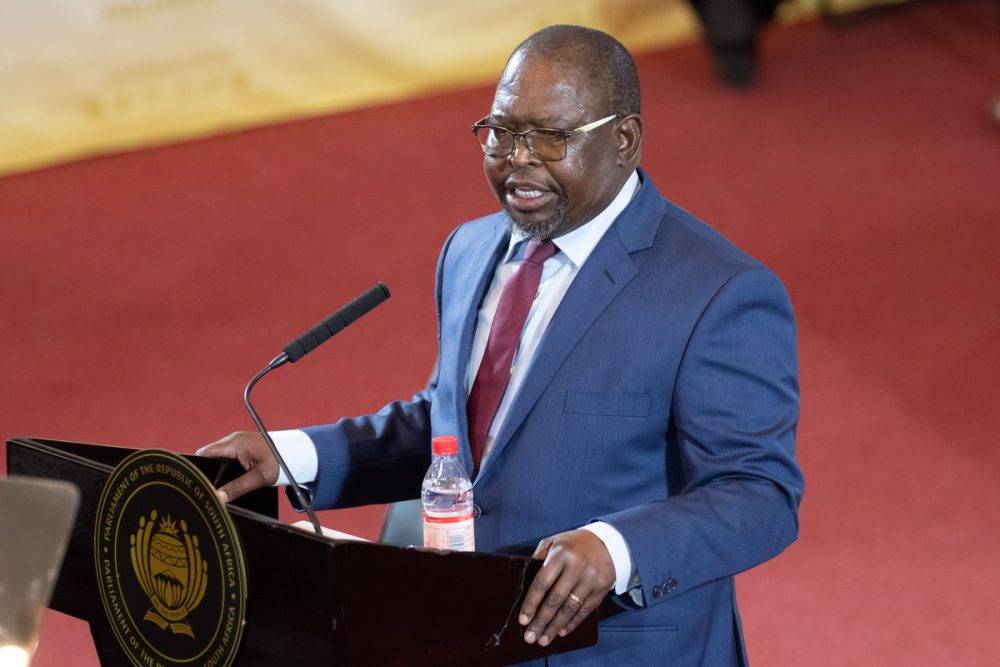
If last year’s VAT drama left South Africans clutching their wallets, today’s budget speech by Finance Minister Enoch Godongwana is expected to strike a very different tone.
According to political economy analyst Daniel Silke, this will likely be a “feel better” budget one designed to avoid unnecessary shocks, calm markets and showcase the effectiveness of the Government of National Unity (GNU).
In short: steady the ship, don’t rock it.
Stability first, politics second
The memory of last year’s VAT controversy still lingers. For many households already battered by rising living costs, even the whisper of another tax increase feels personal.
This time around, the expectation is that Treasury will lean into a message of economic stability. South Africa’s macro picture has shown some improvement helped by stronger mining revenues, a firmer rand, slightly lower interest rates and the country’s removal from the financial greylist.
The GNU, still finding its footing, will be eager to claim credit for that relative calm.
Silke suggests voters can expect a budget crafted not to inflame public anger ahead of crucial elections. The goal? Reinforce the narrative that the economy is stabilising and that recovery, however gradual, is within reach.
The fuel levy: the usual suspect
That said, not everything will be painless.
If there is one line item South Africans scrutinise every year, it’s the fuel levy. Often described as government’s reliable “cash cow”, it remains one of the easiest levers to pull when additional revenue is needed.
Any hike here hits immediately from taxi fares to grocery prices. Social media typically lights up within minutes of the announcement, with commuters and delivery drivers among the loudest critics.
Alongside fuel, so-called “sin taxes” on alcohol and tobacco are also expected to rise. These increases are politically easier to defend, but they still feed into broader concerns about the cost of living.
Medical aid tax credit under the spotlight
Perhaps the most contentious debate ahead of the speech centres on the medical aid tax credit.
Currently, the tax credit is a fixed monthly rebate R364 for the main member, R364 for the first dependant, and R246 for each additional dependant for the 2026 tax year.
It is not a percentage of contributions, but a set amount deducted from a taxpayer’s liability.
Civil society organisations, including the Alternative Information & Development Centre (AIDC), have called for this concession to be scrapped. They argue that the benefit disproportionately favours higher-income earners and costs the fiscus around R30 billion annually with about 40% flowing to those earning above R500,000 a year.
AIDC says these funds could instead support job creation, pointing to unemployed graduates and shortages of teachers, healthcare workers and police officers.
Their broader argument is about inequality. In one of the world’s most unequal societies, they believe tax policy should be more progressive placing greater pressure on the wealthy.
Would scrapping the rebate create jobs?
Not everyone is convinced.
Silke questions whether removing the medical aid tax credit would automatically translate into mass employment. Job creation, he argues, depends on sustained growth, policy certainty and investor confidence not a single fiscal adjustment.
There is also anxiety within the private healthcare sector. The debate around medical aid tax credits comes at a time when the National Health Insurance (NHI) framework already raises questions about the future profitability and structure of private care.
On platforms like X and community forums, medical aid members are divided. Some see the credit as necessary relief in an expensive healthcare environment. Others acknowledge that in a country where millions rely on overstretched public facilities, tax perks for private care are hard to justify.
Taxing the rich, again
Beyond medical aid, calls to “tax the rich” continue to echo in policy discussions. AIDC has also proposed shifting certain retirement contribution tax deductions into tax credits, arguing that deductions benefit higher earners more heavily.
The distinction may sound technical, but it goes to the heart of how South Africa structures fairness in its tax system.
For now, however, most analysts don’t expect sweeping structural changes in this budget. The political appetite for bold redistributive reform appears limited.
An election-season balancing act
With local government elections looming, the ANC and its GNU partners have little room for missteps. Municipal service delivery remains a sore point across the country, from potholes in Gauteng to water shortages in smaller towns.
A harsh budget could deepen voter frustration. A softer one, even if fiscally constrained, may buy time.
Ultimately, today’s speech is likely to walk a careful line: signal stability, avoid controversy, and project competence.
Whether that translates into tangible relief for ordinary South Africans, especially at the petrol pump and on medical aid statements, remains the question on everyone’s mind.
One thing is certain: in South Africa, budget day is never just about numbers. It’s about trust, priorities, and who feels the pinch first.
{Source: The Citizen}
Follow Joburg ETC on Facebook, Twitter , TikTok and Instagram
For more News in Johannesburg, visit joburgetc.com