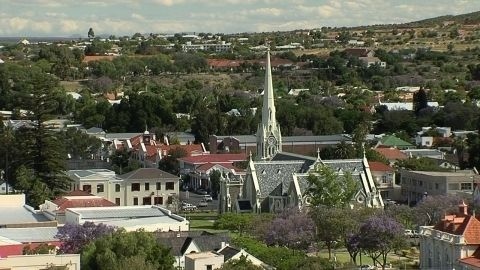
A quiet Karoo town known for its postcard charm has suddenly become the centre of a national conversation about identity, memory and belonging.
Graaff-Reinet, one of South Africa’s oldest towns, is no longer just a heritage stop on a road trip through the Eastern Cape. It is now at the heart of a growing dispute after government officially approved its renaming in honour of anti-apartheid leader Robert Sobukwe.
A Name Change That Cuts Deep
For many South Africans, renaming places is part of the long journey of undoing colonial and apartheid legacies. Since 1994, roughly 1,500 geographical names have been changed across the country.
But in Graaff-Reinet, the decision has struck a particularly emotional chord.
Founded in 1786 and named after Dutch governor Cornelis Jacob van de Graaff and his wife Reinet, the town carries deep historical significance, especially for Afrikaner communities. It also played a role in the Great Trek, making it a symbolic anchor in South Africa’s colonial past.
Now, that legacy is being challenged.
A Town Divided
What was once a relatively peaceful Karoo town of about 25,000 residents has become a site of tension.
Opposition groups have mobilised quickly. Petitions have circulated widely, with tens of thousands of objection forms reportedly submitted to government. Activists have gone door to door, urging residents to resist the change.
Critics argue that the renaming risks dividing a community that had managed to coexist despite its complex history. Some have even threatened legal action, citing survey data that suggests strong local resistance to the new name.
The debate has also exposed deeper frustrations, particularly among coloured communities who feel sidelined in post-apartheid transformation policies.
Why Sobukwe Matters
For others, however, the renaming is long overdue.
Robert Sobukwe, founder of the Pan Africanist Congress in 1959, is one of South Africa’s most important yet often overlooked liberation figures. Born and buried in Graaff-Reinet, his connection to the town is both personal and political.
Sobukwe played a leading role in anti-apartheid protests that culminated in the 1960 Sharpeville Massacre, a turning point that drew global attention to the brutality of apartheid.
Supporters of the name change say recognising him is not about erasing history, but about expanding it.
Heritage Versus Transformation
Graaff-Reinet’s appeal has long been tied to its preserved Cape Dutch architecture, jacaranda-lined streets and proximity to the Valley of Desolation. Tourism plays a key role in the local economy, with thousands of visitors passing through each year.
Some residents worry that changing the name could impact that identity and, by extension, tourism.
But others argue that South Africa’s heritage cannot remain frozen in a single narrative.
The renaming debate reflects a broader national tension. How do you honour the past while correcting it. And who gets to decide what is remembered.
A Nation Still Negotiating Its Story
The controversy has gone beyond paperwork and public meetings. The vandalism of Sobukwe’s grave this week has added another layer of urgency, with police now investigating the incident.
For supporters of the change, it is a painful reminder of how contested South Africa’s history remains.
For opponents, it reinforces fears that decisions are being made without meaningful community consensus.
What is clear is that Graaff-Reinet is no longer just a historic town in the Karoo. It has become a symbol of a country still negotiating how to tell its own story.
And as South Africa continues to rename its landscapes, the question remains whether these changes will unite communities or deepen the divides they aim to heal.