
News
After 13 years, Hong Kong ferry deaths are ruled ‘unlawful killing’
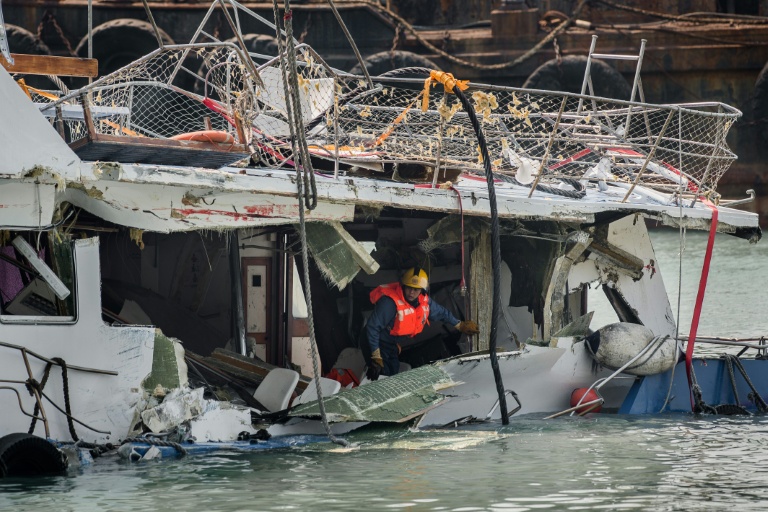
A verdict that took more than a decade
For families who lost loved ones on Hong Kong’s waters in 2012, Wednesday’s ruling landed with quiet weight rather than shock. Thirteen years after the Lamma IV ferry sank in one of the city’s worst maritime disasters, a coroner’s court has officially ruled the deaths of all 39 victims as unlawful killings.
The finding closes a long and painful chapter for relatives who have waited years for legal clarity. On the night of 1 October 2012, the Lamma IV collided with another vessel during National Day celebrations. Within two minutes, the ferry went down. Thirty-one adults and eight children never made it home.
At the time, Hong Kong was left reeling. The scale of the tragedy marked the deadliest maritime incident in the city since 1971 and shattered public confidence in ferry safety, something many residents rely on daily.
Gross negligence at the helm
Coroner Monica Chow ruled that the collision was caused by gross negligence on the part of both coxswains operating the vessels. Her conclusion followed an inquest that stretched over 40 days and heard testimony from 84 witnesses, including designers, builders, and certifiers linked to the Lamma IV.
Each of the 39 deaths was found to be unlawful. The ruling does not introduce new punishments, as coroners in Hong Kong do not have the power to sentence individuals. Both coxswains had already served prison time after being convicted in 2015.
What the inquest did do was put on record, in clear legal terms, what many families have believed for years.
A ferry that should never have sailed as it did
A judge-led commission previously uncovered what it described as a litany of errors linked to the Lamma IV. Most critically, the vessel was missing a watertight bulkhead door. That single absence allowed water to flood the ferry rapidly after impact, leading to its near-immediate sinking.
Witnesses during the inquest included government inspectors and shipyard figures, some of whom faced sharp criticism for lapses in oversight. Chow noted that the long passage of time had resulted in faded memories and inconsistent accounts, a frustration echoed by victim representatives.
Ryan Tsui, who lost his brother and niece in the disaster, has publicly spoken about his disbelief while following the proceedings, accusing multiple parties of complacency and avoidance of responsibility.
Pain in the courtroom and beyond
Survivors and families were present for the ruling. Among them was Philip Chiu, who lost his sister in the sinking. For many, the decision offered validation rather than relief. The loss remains unchanged, but the acknowledgement of unlawful killing carries emotional and symbolic weight.
Public reaction in Hong Kong has reflected a mix of sorrow and anger. Social media users have revisited questions about accountability, transparency, and why it took so long for such a conclusion to be formally reached.
What changed after the disaster
The tragedy forced reforms, though only after intense scrutiny. Two government ship inspectors were jailed in earlier proceedings for failing to ensure life jacket compliance. A separate government probe alleged misconduct by 17 Marine Department officers, although names and full findings were withheld for privacy reasons.
In response, the Marine Department has said it amended marine safety laws and established a dedicated team to strictly review vessel construction and modification. Official figures suggest progress. While the average number of marine accidents has remained relatively stable since 2012, the average annual death toll has dropped from 7.6 to 3.3.
A ruling that reshapes the legacy
The unlawful killing verdict does not rewrite history, but it reshapes how the disaster is remembered. No longer framed solely as an accident, the Lamma IV sinking now stands as a case study in compounded human error and systemic failure.
For Hong Kong, a city defined by its harbours and ferries, the ruling serves as a reminder that safety oversight cannot be optional and that accountability delayed is accountability diminished.
Follow Joburg ETC on Facebook, Twitter, TikT
For more News in Johannesburg, visit joburgetc.com
Source: IOL
Featured Image: Barron’s


