News
IEC Registers Record 472 Political Parties as South Africa’s Democracy Widens
South Africa’s political stage has never been more crowded. The Electoral Commission of South Africa (IEC) confirmed that 34 new political parties have been registered since the 2024 national elections, pushing the total number to a record-breaking 472.
On the surface, this surge is a sign of democracy’s vitality. But beneath the headlines lies a more sobering truth: only 18 parties currently hold seats in Parliament. For the rest, survival often ends at the ballot box.
A Democracy Alive, But Fragmented
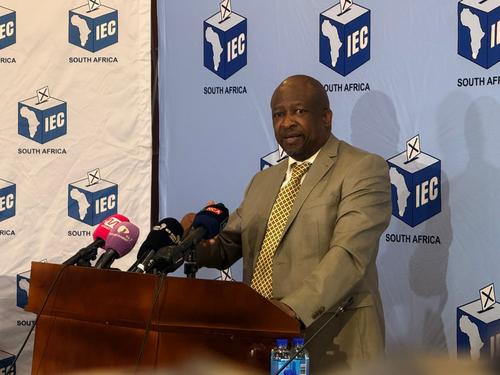
Announcing the numbers in Pretoria, IEC Chief Electoral Officer Sy Mamabolo called the rise in registrations evidence of a politically engaged society. But he also hinted at the pressure this places on the commission to keep elections stable, transparent, and credible as the political arena grows more crowded.
Of the 472 registered entities, 287 are national parties, while 185 operate provincially, district-wide, or in metros. This reflects not just a hunger for national influence, but also grassroots attempts to tackle governance at the local level.
For many South Africans, however, the question remains: how many of these parties are truly viable, and how many exist only on paper?
Looking Ahead: The 2026 Local Government Elections
With the next round of local government elections expected between November 2026 and January 2027, the IEC is already preparing. Mamabolo announced that a series of information sessions will be rolled out from November 2025, aimed at smaller and unrepresented parties, as well as independent candidates hoping to break into the political arena.
The actual election date, he stressed, is not yet set. That decision rests with the Minister of Cooperative Governance and Traditional Affairs, in consultation with the IEC.
Public Reaction: A Mix of Excitement and Skepticism
On social media, the record number of political parties drew both applause and sarcasm. Some citizens see it as proof of an energetic democracy where every voice can try to find a seat at the table. Others worry that the political space is becoming overcrowded, with too many small parties diluting the opposition and leaving voters overwhelmed with choices that may not translate into real power.
It’s a debate that mirrors a deeper frustration: South Africans want more political accountability, but they’re wary of endless new entrants that disappear after one election cycle.
Scams and Caution
Mamabolo also used the briefing to issue a warning: fraudsters are exploiting the IEC’s name by advertising fake jobs and creating bogus websites. These scams, he said, are designed to lure job seekers into sharing personal information. The reminder was timely, given how trust in institutions is already under strain.
A Record Worth Watching
The number 472 might sound impressive, but it also asks tough questions about the future of South Africa’s democracy. Can so many parties coexist in a system where only a handful ever make it into Parliament? Will local communities find genuine representation in the mix, or will fragmentation weaken accountability?
As the 2026 elections draw closer, voters may not remember every name on the ballot, but they will certainly remember who delivered results in their daily lives.
{Source: IOL}
Follow Joburg ETC on Facebook, Twitter , TikTok and Instagram
For more News in Johannesburg, visit joburgetc.com