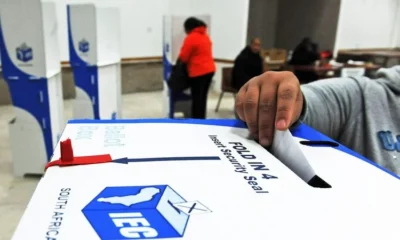
Voter registrations climb ahead of local government elections as IEC pushes digital drive
As South Africa edges closer to its next round of local government elections, early signs suggest more citizens are stepping forward to take part in the democratic process.
The Electoral Commission of South Africa (IEC) says voter registrations are steadily increasing, thanks in part to a growing number of South Africans signing up through online platforms.
For the commission, the shift marks a welcome change after years in which the national voters’ roll often shrank between elections due to natural factors such as mortality.
Now, officials say the trend appears to be reversing.
Online registrations gaining momentum
According to Sy Mamabolo, the IEC’s chief electoral officer, the commission’s digital voter registration campaign has started to show tangible results.
Between November 2025 and February 2026, the IEC recorded 260,205 new voter registrations across the country.
Of these:
-
132,092 were completed online through the IEC’s digital portal
-
128,113 were captured in person using voter management devices during outreach programmes
Mamabolo said the numbers indicate that citizens are becoming more comfortable using both online and traditional registration channels.
“This campaign demonstrated that South Africans are heeding the call to register early and proactively participate in the democratic process,” he said.
Gauteng leads the digital surge
Election analysts say regional trends in the data are particularly revealing.
According to analyst Michael Atkins, Gauteng recorded the highest number of online registrations, with 41,848 new voters signing up digitally.
Other provinces following the digital trend include:
-
KwaZulu-Natal – 23,858 online registrations
-
Western Cape – 17,733 online registrations
Meanwhile, Northern Cape, which has the country’s smallest population, recorded 4,009 online sign-ups.
Interestingly, Gauteng’s in-person registrations were relatively low compared with other provinces, suggesting that urban voters may be increasingly relying on digital tools rather than physical registration drives.
Rural provinces still favour in-person sign-ups
In contrast, provinces with more rural communities continue to rely heavily on face-to-face registration.
Limpopo led the country in in-person voter registrations with 27,798, followed by:
-
Eastern Cape – 24,308
-
KwaZulu-Natal – 19,915
-
Western Cape – 15,995
-
North West – 14,701
The differences highlight South Africa’s digital divide, where connectivity and access to technology still shape how citizens interact with government services.
A crowded political landscape
Another sign of South Africa’s vibrant, if sometimes fragmented, political environment is the growing number of political parties.
The IEC currently lists 508 registered political parties, including 20 new registrations since October 2025.
Of these:
Analysts say, however, that the number of registered parties does not necessarily translate into competition in every election.
Many smaller parties contest only in specific municipalities or regions.
Preparing for election season
Behind the scenes, the IEC is ramping up its election readiness.
Mamabolo confirmed that 530 municipal outreach coordinators have been appointed to strengthen civic education programmes and encourage voter participation at grassroots level.
These coordinators play a crucial role in explaining voting processes, helping citizens register, and ensuring communities understand their rights in the electoral system.
Election analyst Atkins says the IEC has historically handled the logistical preparation of elections well.
“The IEC has generally been very good during the preparation stages for elections, and this year looks no different,” he said.
The challenge of voter turnout
Even with rising registration numbers, the bigger question is whether people will actually turn up at the polls.
South Africa has experienced declining voter turnout in recent years, particularly among younger voters who often feel disconnected from traditional political structures.
Some analysts argue that expectations placed on the IEC to solve voter apathy are unrealistic.
Turnout, they say, is influenced more by political trust, service delivery, and public confidence in government than by the mechanics of registration itself.
Cleaning up the party system
Meanwhile, changes could soon reshape the political landscape.
The pending Electoral Laws Amendment Bill is expected to tighten administrative requirements for political parties, including rules around annual registration renewals.
If implemented, analysts say the legislation could reduce the number of inactive or non-compliant parties on the electoral roll.
The aim is not to limit political participation but to ensure that parties operating in the system meet minimum standards.
A test for South Africa’s democracy
As the next local government elections approach, the steady rise in voter registrations offers a small but important sign of civic engagement.
In a country where elections remain a cornerstone of democracy, even incremental increases in participation matter.
The real test, however, will come on election day, when South Africans decide whether registering was just the first step in making their voices heard.