News
Iran declares control of Strait of Hormuz as Middle East war rattles oil markets
Iran declares control of Strait of Hormuz as Middle East war rattles oil markets
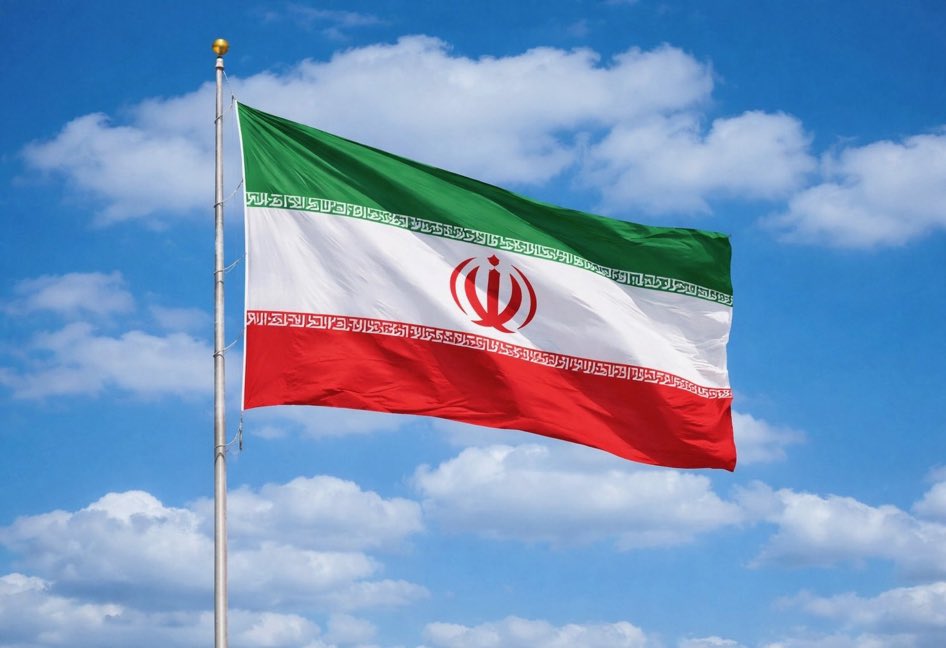
The world woke up to another jolt from the Middle East on Wednesday this time with Iran claiming it now has “complete control” of the Strait of Hormuz, one of the most strategically important waterways on the planet.
For South Africans filling up their cars or watching the rand nervously, it’s not just distant geopolitical drama. What happens in that narrow stretch of water between Iran and Oman could soon show up in fuel prices at home.
Why the Strait matters more than most realise
The Strait of Hormuz isn’t just another shipping lane. It’s the artery through which a significant portion of the world’s oil and gas flows. When Iran’s Revolutionary Guards said vessels passing through risked being hit by missiles or stray drones, traders reacted instantly.
Oil prices surged.
West Texas Intermediate jumped over 12% to more than $75 a barrel, while Brent crude climbed above $82 up more than 13% in days and more than 24% since mid-February. Some analysts are now whispering about the possibility of $100 oil.
That kind of spike doesn’t stay in the Gulf. It travels, straight into inflation, interest rates and household budgets across the globe.
Missiles, drones and mounting strikes
The war, now in its fifth day, shows little sign of cooling.
Iran’s Revolutionary Guards say they have fired more than 40 missiles at US and Israeli targets in a fresh wave of attacks. Israel, in turn, announced a broad new round of strikes on Iranian sites, including what it described earlier this week as an underground nuclear facility.
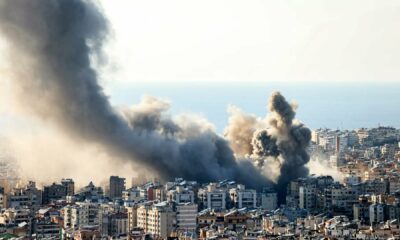
Explosions were heard in Beirut shortly after midnight, as Israel and Hezbollah exchanged fire. Lebanese officials reported fatalities and injuries following strikes south of the capital and later in Hazmieh and Baalbek.
Meanwhile, in Iraq, an air strike hit the Jurf al-Nasr base, which houses members of the Iran-backed Kataeb Hezbollah group. More than 10 fighters have reportedly been killed in Iraq since the weekend.
The conflict is no longer confined to one border.
US steps in and tensions widen
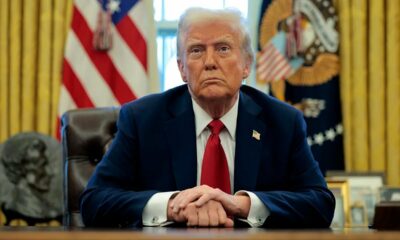
US President Donald Trump said the US Navy stands ready to escort oil tankers through the Strait if necessary, promising to ensure the “free flow of energy to the world.” Washington has also arranged charter flights to help Americans leave parts of the region.
In Dubai, a drone attack sparked a fire at the US consulate, as Iran reportedly expanded its targeting of American diplomatic missions in the Gulf.
Qatar, which hosts a major US military base, said it dismantled two spy cells allegedly linked to Iran’s Revolutionary Guards, arresting 10 suspects.
Even Europe is shifting into gear. Emmanuel Macron announced that France’s flagship aircraft carrier, the Charles de Gaulle, is heading toward the eastern Mediterranean after being pulled from a North Atlantic deployment.
The diplomatic temperature is rising too. Trump threatened to sever trade ties with Spain after it declined to allow US aircraft to use its bases for strikes on Iran.
Markets shudder as uncertainty deepens
Asian markets felt the shockwaves first. Seoul’s stock exchange tumbled more than 12% in panic selling, and broader regional markets struggled under fears of prolonged instability.
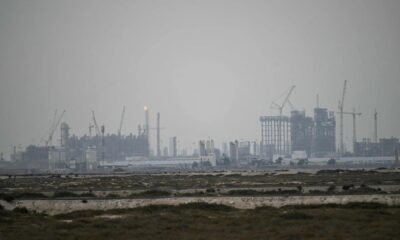
Investors are grappling with two big unknowns: how long the conflict will last, and whether oil infrastructure across the region will remain operational. Some fields have already shut down, tightening supply further.
The longer crude supplies are choked, the harder it becomes for central banks to consider interest rate cuts a sobering thought for economies already under strain.
A region on edge
What makes this moment particularly volatile is the sheer number of moving parts. Iranian strikes have reportedly targeted several neighbouring countries. Israeli operations continue across Iran and Lebanon. US military officials say nearly 2,000 targets have been struck in Iran so far, with significant damage inflicted on air defences and missile systems.
On social media, reactions range from alarm to fatigue. Many in the region speak openly about living with the constant thrum of drones and the fear of sudden blasts. Others question how quickly this spiralled into a multi-front confrontation.
There’s also a broader anxiety: if the Strait of Hormuz were to close entirely, the economic ripple effects would be immediate and severe.
The bigger picture
The Middle East has seen flare-ups before, but control of the Strait is different. It is the global economy’s pressure point.
Iran’s declaration may be as much about deterrence as dominance. But even the suggestion of restricted access is enough to shake markets and force governments into emergency planning.
For now, oil tankers still move, markets still trade, and diplomacy remains a possibility. Yet the margin for error feels thin.
And as the conflict stretches into another day, the world watches that narrow strip of water, knowing that what happens there will not stay there.