News
Unregistered company linked to deadly Joburg building collapse
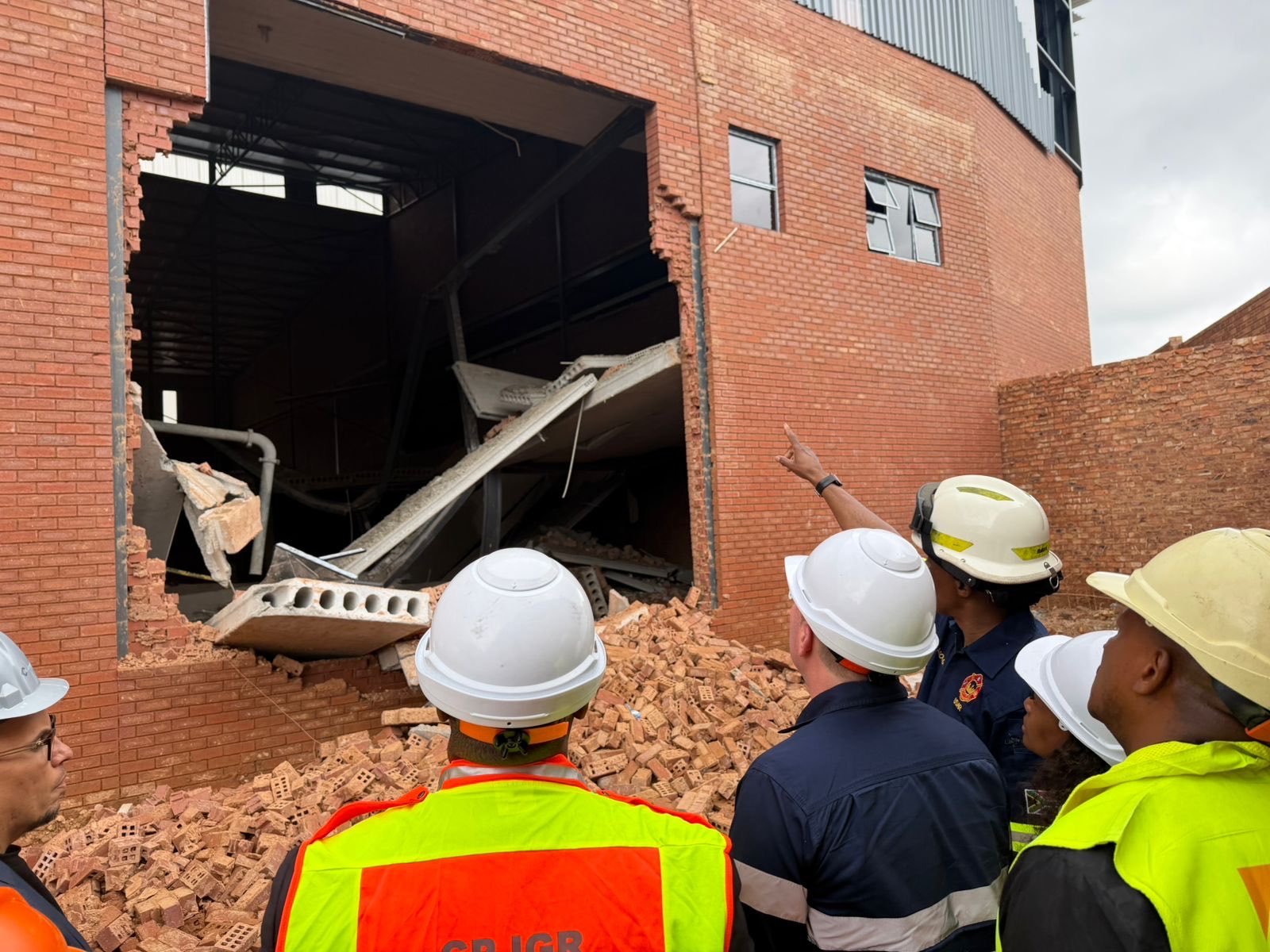
Unregistered company linked to deadly Joburg building collapse
On Monday afternoon, a construction site in Johannesburg turned into a disaster zone.
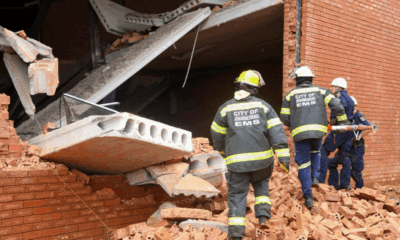
Concrete slabs pancaked. Steel rods twisted in the air. And by the time rescue teams packed up nearly a full day later, nine workers had lost their lives.
Now, as dust settles over the rubble, troubling details are emerging about the company behind the collapsed structure including the fact that it was not registered with South Africa’s construction regulator.
No registration, no approved plans
The National Home Builders Registration Council (NHBRC), the statutory body tasked with regulating home builders, confirmed that New World Order Investments 90 Pty Ltd does not appear on its system.
Registration with the NHBRC is a legal requirement for anyone building homes. It ensures that contractors meet industry standards for technical skill, experience and financial capacity. The law also requires new homes to be enrolled with the regulator at least 15 days before construction begins, a safeguard designed to protect consumers against structural failure.
In this case, there was no sign of compliance.
Johannesburg mayor Dada Morero, who visited the site on Tuesday, said municipal development planning officials found no evidence that building plans had been submitted for approval before construction began.
“We should have probably picked up that these people are building where they should not build,” Morero said, adding that the city was still trying to track down the company’s owners.
Owners missing, phones switched off
Officials say the developers were on site as recently as Monday but have since switched off their phones. Efforts to trace them have so far proved unsuccessful.
When journalists visited the company’s listed address in Ormonde, an employee reportedly claimed the owner lives overseas.
Records show the company is owned by 71-year-old Tesmin Ghood and was started in 2007. It appears to have no online presence unusual in an era when most property developers market aggressively on digital platforms. Ghood is also listed as director of three other property investment companies operating in Gauteng.
The silence following the collapse has only deepened public anger.
“It was unlikely to survive much longer”
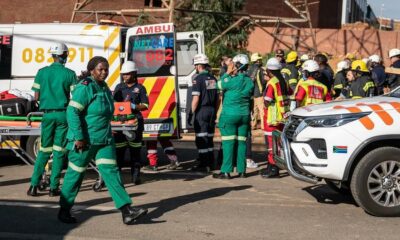
For the emergency teams who arrived shortly after 2.30pm on Monday, the scene was chaotic and dangerous.
Freddy Morukhu, Johannesburg divisional chief for Emergency Management Services, described a structure that appeared unstable from the outset.
Based on his experience, he said, the building seemed destined to collapse at some point.
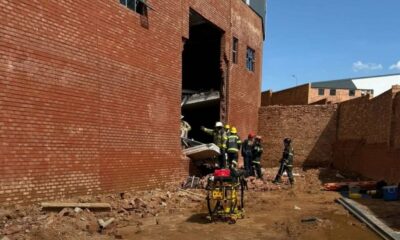
When rescuers reached the site, parts of the structure were still shifting. Concrete slabs had trapped workers beneath them, and the steel reinforcement bars were scattered dangerously. The slabs were so thick that cutting through them took significant time.
Stabilising equipment struggled to find firm footing amid debris. Yet the team pushed on.
“At first we thought no-one could survive,” Morukhu said. Then they heard screams.
Two bodies were visible from outside the rubble. More teams were called in. The first victim was recovered within about 20 minutes, but the operation stretched late into the night. The final body was retrieved at 11.20am on Tuesday.
A system under strain
Beyond the immediate tragedy lies a bigger question: how did an apparently unregistered company erect a building without approved plans?
City manager Floyd Brink acknowledged that Johannesburg faces a shortage of building inspectors. Of 132 inspectors on the books, only 59 are assigned specifically to building control.
In a province battling rapid urban development, illegal construction and aging infrastructure, oversight gaps can have deadly consequences.
Across social media, residents expressed shock and grief but also frustration. Many questioned how a structure could rise without the necessary approvals, while others called for criminal accountability.
More than a construction failure
This collapse is not just a story about one building. It’s about regulation, enforcement and whether systems designed to protect workers and residents are functioning as they should.
The NHBRC’s mandate exists precisely to prevent structural failures. Its website warns that enrolling projects allows inspectors to ensure homes are not exposed to collapse.
Nine families are now grieving loved ones.
As investigations continue, the focus will likely shift from twisted steel and broken concrete to paperwork or the absence of it. And in that paper trail, authorities may find answers to how this structure went up in the first place and why it came down so tragically.