Johannesburg doesn’t feel like a city on the brink of a water crisis anymore. For many residents, the crisis has already arrived, quietly, unevenly, and with growing anger bubbling just below the surface.
In suburbs stretching from Kensington to Emmarentia, Meldene to parts of Midrand, taps have been dry for days at a time. In some cases, nearly three weeks have passed without a stable supply. Civil society group WaterCAN says the uncomfortable truth out loud: large parts of Joburg are already living under Day Zero conditions.
Not the dramatic countdown we remember from Cape Town years ago, but something messier, more chaotic, and arguably more dangerous.
What “Day Zero” looks like on the ground
Day Zero isn’t just about reservoirs hitting rock bottom. It’s about what happens when water becomes unpredictable, when households can’t plan, schools can’t function normally, and dignity starts to erode.
Across areas supplied by the Hursthill, Alexander Park and Berea reservoirs, residents describe the same routine: checking neighbourhood WhatsApp groups for tanker alerts, waking up before dawn to queue, and hoping the water doesn’t run out before their turn.
In Midrand, the situation has turned into a balancing act between the President Park, Grand Central and Eland reservoirs. The result? Water that comes and goes without warning, making daily life feel like a gamble.
WaterCAN’s assessment is blunt: this isn’t a temporary inconvenience. It’s a systemic failure playing out in real time.
When water shortages turn neighbours against each other
Perhaps the most worrying shift isn’t technical, it’s social.
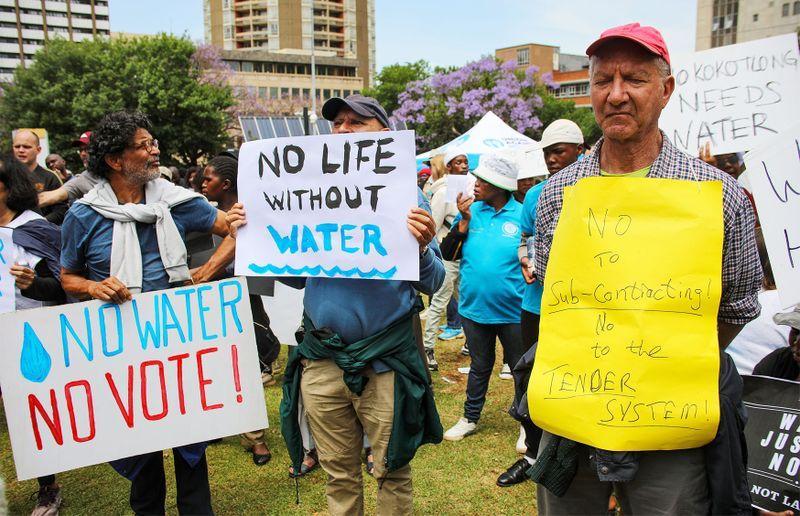
WaterCAN has warned that the ongoing outages are now fuelling tension at community level. Tanker queues stretch for hours. Supplies run dry before everyone can collect. Tempers flare when some residents fill multiple containers while others often the elderly or families with small children, walk away empty-handed.
Social media is filled with videos and posts showing late-night queues, arguments at tanker points, and residents pleading for clearer rules and fairer distribution. The message is consistent: people aren’t just frustrated, they’re exhausted.
“When people are forced to compete for water, dignity collapses,” WaterCAN says and it’s hard to argue otherwise.
A crisis years in the making
While hot weather and rising demand are part of the story, this didn’t start with summer.
WaterCAN points to long-standing infrastructure failures, weak planning, and poor accountability as the real drivers of Johannesburg’s water breakdown. The group is particularly critical of communication failures, saying residents are often left in the dark about restoration timelines, while tanker schedules remain erratic and poorly managed.
Johannesburg Water, for its part, has acknowledged that its central systems remain under severe strain due to poor incoming supply and demand that exceeds available capacity. Several key reservoirs, including Alexander Park and Berea, remain closed as part of operating protocols to rebuild capacity meaning no water at all for affected zones.
Even where improvements are recorded, such as at South Hills Tower, high demand continues to trigger intermittent supply.
Rand Water sounds the alarm on consumption
Adding another layer to the crisis, Rand Water has raised serious concerns about water usage across Gauteng particularly in Johannesburg and Tshwane.
According to the bulk supplier, consumption has exceeded allocated volumes, placing infrastructure under extreme pressure and destabilising supply across the network. Rand Water says this has forced parts of the system to operate under stress, with knock-on effects for multiple areas.
Spokesperson Makenosi Maroo confirmed that Rand Water is now consulting with high-consuming municipalities and will reduce supply where necessary to stabilise the system.
The warning is clear: unless demand drops, outages are likely to continue, or worsen.
Calls for a disaster declaration grow louder
WaterCAN is now urging national government to step in decisively, including declaring Johannesburg a national disaster area. The move, they argue, would unlock emergency resources and force coordination across government departments.
Among their demands:
-
Daily, area-specific updates from Johannesburg Water with realistic timelines
-
Public engagement from Rand Water on bulk supply constraints
-
Strong national intervention to protect health, livelihoods and basic dignity
“Johannesburg is the economic heart of South Africa,” WaterCAN warns. “Normalising life without reliable water access signals a failure of governance.”
The uncomfortable truth
Joburg may not have officially hit Day Zero, but for thousands of residents, that distinction feels meaningless.
When taps run dry for weeks, when water becomes something you queue and fight for, and when basic services feel like a privilege instead of a right, the crisis is no longer theoretical.
The real danger now isn’t just empty reservoirs. It’s a city slowly learning to live without certainty and the social cost that comes with it.