News
Morero confronts constitutional limits in Joburg’s hijacked buildings crackdown
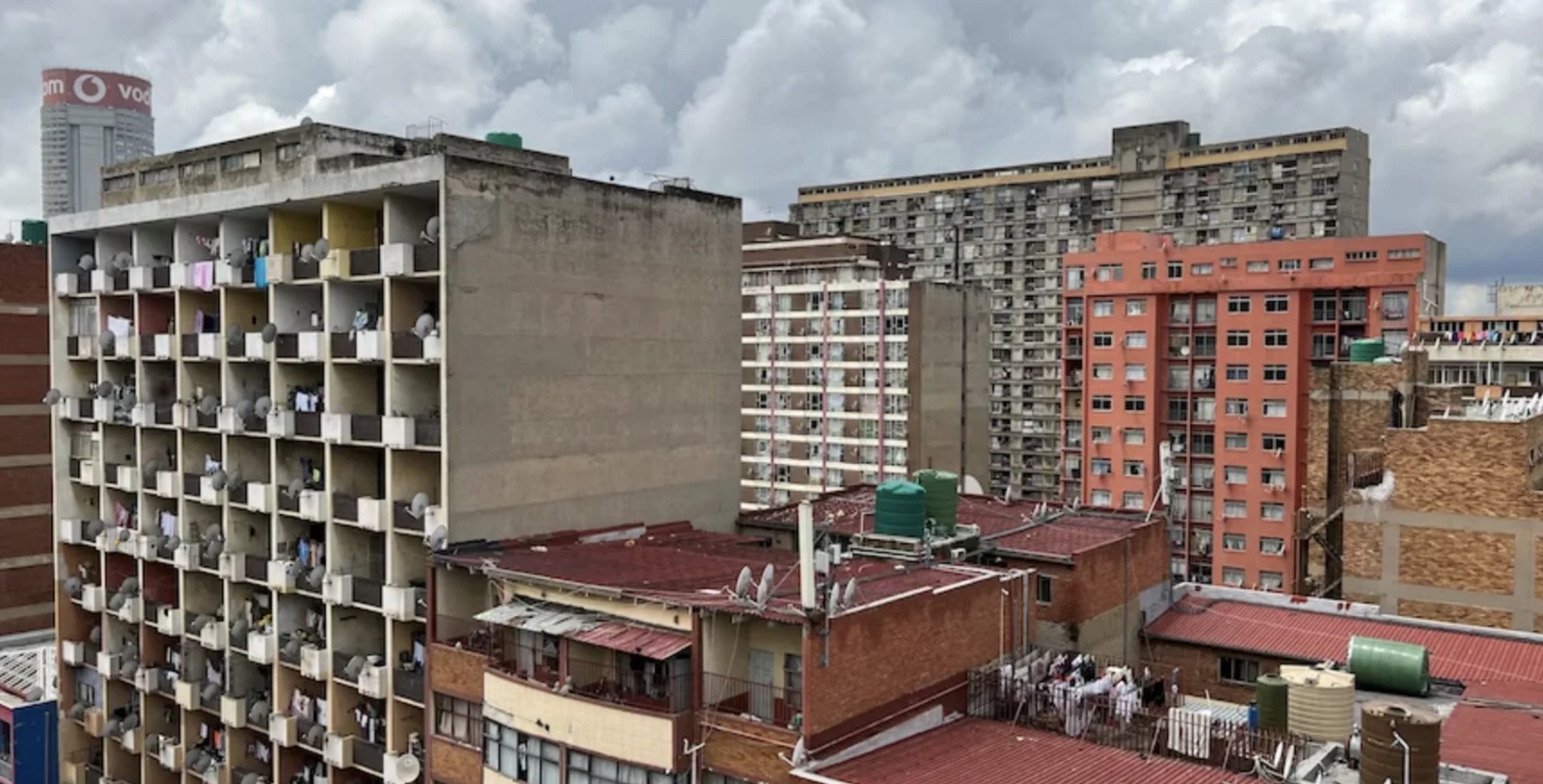
Walk through parts of Hillbrow or the inner city, and you can feel the tension between what Johannesburg was and what it is trying to become. Towering buildings once meant for families and businesses now stand as symbols of neglect, crime, and contested ownership. At the centre of this struggle is Johannesburg Mayor Dada Morero, who says more than 200 hijacked buildings remain a serious problem across the city.
Speaking recently on SABC, Morero acknowledged what many residents have long suspected. Criminal syndicates are allegedly behind the takeover of both public and private properties. According to the mayor, the city is working closely with law enforcement and other stakeholders to dismantle these networks and restore order.
Yet the battle is not straightforward.
The constitutional dilemma
Morero has pointed to a major legal obstacle. South Africa’s Constitution requires municipalities to provide alternative accommodation to people who are evicted. That obligation, affirmed by Constitutional Court rulings, means the city cannot simply remove occupants without first making provision for where they will go.
In practical terms, this slows everything down. The mayor has said the city is trying to partner with the private sector to strengthen its capacity to offer alternative accommodation. Once that is in place, he believes the city will be able to act more decisively.
For many Joburg residents, this is where frustration boils over. On social media and in community meetings, some argue that constitutional protections are being exploited by criminal syndicates who hide behind vulnerable tenants. Others insist that human dignity and housing rights cannot be sacrificed, even in the face of criminality. It is a debate that strikes at the heart of South Africa’s democratic values.
Clarendon Heights and the legal tug-of-war
The issue came into sharp focus after the Gauteng High Court in Johannesburg granted an eviction order against 38 residents of Clarendon Heights in Hillbrow. The residents failed in their bid for leave to appeal but have indicated that they will petition the Supreme Court of Appeal in an effort to overturn the order.
Complicating matters further, some residents have rejected the label of a hijacked building. They have disputed claims of violent takeover dynamics, even as certain owners and trustees have pointed to judicial findings referencing serious violence and intimidation linked to elements associated with the building.
The Clarendon Heights case illustrates how tangled these disputes can become. Legal processes stretch on, while buildings deteriorate and surrounding communities bear the consequences.
Lessons from the Usindiso tragedy
Any conversation about hijacked buildings in Johannesburg cannot ignore the findings of the Justice Khampepe Commission of Inquiry into the Usindiso Building fire. The commission concluded that the City of Johannesburg and its entities, including the Johannesburg Property Company, must bear partial responsibility for what happened. It found that the building had effectively been abandoned since at least 2019 and that the city contravened various health, fire safety, town planning, and building control laws, as well as its own bylaws.
The commission recommended disciplinary processes against accounting officers at several city entities, including the Johannesburg Property Company, Johannesburg Water, City Power, and Pikitup, where evidence showed failures in fulfilling duties.
For many residents, this was a sobering moment. It underscored that the crisis is not only about criminal syndicates but also about governance failures and oversight gaps.
Small signs of change
Despite the legal and political headwinds, Morero insists that progress is being made. The city has prioritised buildings declared unsafe and subject to court-ordered evacuations, including the MOTH Building, the Vannin Building, the CASA MIA Building, the Delvers Building, and the Remington Building, which has since been successfully redeveloped following its evacuation.
There are also incremental improvements in areas long associated with urban decay. In Yeoville, the local councillor has worked with NGOs to clean and secure Rocky Street and the surrounding areas. In the CBD, changes are visible along Claim Street, Plein Street, and Bree Street, where renewal efforts are beginning to take shape.
These may seem like small victories in a city as vast as Johannesburg, but they represent an attempt to rebuild trust and restore confidence in municipal governance.
A city at a crossroads
Johannesburg’s hijacked buildings crisis sits at the intersection of crime, housing rights, urban management, and constitutional law. Morero’s administration faces pressure from residents demanding swift action while also being bound by legal obligations that protect some of the most vulnerable people in the city.
The real question is whether the city can balance these competing imperatives. Reclaiming buildings without addressing homelessness and housing shortages risks deepening social fractures. Ignoring criminal syndicates risks allowing lawlessness to spread.
For now, the mayor’s fight continues, shaped as much by the Constitution as by the concrete and steel that define the skyline. In a city built on resilience, the outcome will shape not only the CBD and Hillbrow but also the future identity of Johannesburg itself.
Follow Joburg ETC on Facebook, Twitter, TikT
For more News in Johannesburg, visit joburgetc.com
Source: IOL
Featured Image: ActionSA