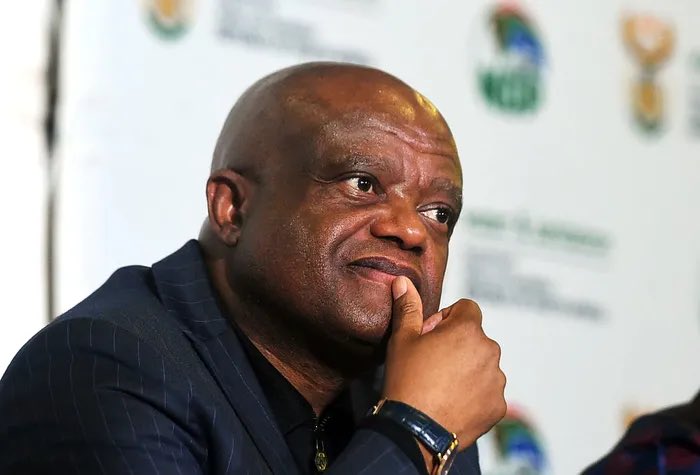
Pressure mounts as Joburg mayor Dada Morero faces likely recall
Johannesburg’s political stage is heating up again and this time, the spotlight is firmly on Dada Morero, the embattled mayor who may soon be forced out of office.
Within political circles at the city council, talk of a recall is no longer whispered speculation. Instead, it’s becoming an increasingly likely scenario as the governing African National Congress (ANC) grapples with pressure from opposition parties, coalition tensions, and growing frustration from residents across Johannesburg.
But critics say that even if Morero leaves office, the damage to the city’s governance may already be done.
“He can’t go soon enough,” say opposition councillors
Opposition councillors, particularly from the Democratic Alliance, believe the recall process should happen immediately.
According to several councillors, Morero’s leadership has coincided with worsening infrastructure issues, financial pressure on the city, and ongoing instability inside the municipal government.
“The reality is that Joburg has been deteriorating for years,” one councillor said. “The question the ANC must answer is whether the mayor is managing that crisis or whether he has become the symbol of it.”
Morero became mayor in 2024, but since then residents have increasingly voiced frustration about service delivery, particularly as water shortages and infrastructure failures continue to disrupt daily life.
For many residents, politics takes a back seat to a simpler question: does the city still work?
As one councillor put it:
“People don’t experience politics through speeches or social media. They experience it when they turn on the tap and nothing comes out.”
The recall process still has hurdles
While the ANC’s Johannesburg regional executive committee has already resolved to recall Morero, the process isn’t immediate.
The decision still needs to move through provincial and national structures within the party before it becomes official.
That delay has frustrated opposition parties who argue the city cannot afford further political limbo.
Behind the scenes, political observers say the ruling party is trying to manage both internal divisions and a suddenly energised opposition.
Zille and Mashaba shake up the mayoral race
Adding to the pressure is the renewed political energy coming from figures like Helen Zille and Herman Mashaba.
Zille’s involvement in the Democratic Alliance mayoral campaign has drawn national attention to the state of governance in South Africa’s economic powerhouse.
Mashaba the leader of ActionSA and a former Joburg mayor himself, has also stepped into the race, adding another layer of political competition.
Some councillors believe the ANC is feeling the pressure.
“The attention that Zille brings shines a spotlight on what’s happening in Joburg,” one councillor said. “It amplifies the governance failures for the whole country to see.”
While Zille’s campaign has avoided commenting on internal ANC matters, the heightened political contest has clearly intensified scrutiny of the current administration.
A water crisis years in the making
Among the biggest issues fuelling dissatisfaction is the city’s ongoing water instability.
Residents in some northern suburbs recently came close to running dry again, a situation councillors say has been building for years.
According to opposition leaders, the crisis didn’t appear overnight.
Instead, they describe it as the result of long-term infrastructure neglect and inconsistent maintenance.
“The water system was like a pot simmering for years,” one councillor said. “Eventually the lid blew.”
Water supply interruptions, crumbling infrastructure and ageing pipes have increasingly become everyday realities for residents in parts of Johannesburg.
For a city that serves as South Africa’s financial hub, these failures carry economic as well as political consequences.
Who could replace Morero?
As speculation grows around Morero’s future, attention has already turned to possible successors.
One name circulating in political circles is Loyiso Masuku, the city’s deputy mayor and finance MMC.
However, critics argue Masuku may struggle to present herself as a fresh start.
Opposition councillors point out that she has been closely involved in managing the city’s finances during the same period in which many of the current problems emerged.
Beyond individual candidates, there is another political reality to consider: coalition politics.
Johannesburg’s council is fragmented, meaning the ANC may need to negotiate with smaller parties if it hopes to stabilise leadership at City Hall.
Some councillors believe that bargaining over positions such as deputy mayor could form part of those negotiations.
What happens next for Johannesburg?
The city council is scheduled to meet on 25 and 26 March, sessions that could offer clearer direction on the mayor’s future.
But even if Morero is removed, some councillors believe Johannesburg’s deeper governance problems will remain.
“Changing mayors doesn’t automatically fix structural issues,” one opposition councillor said.
For residents, the hope is simpler: stable leadership and functioning services.
Until that happens, the political drama unfolding at City Hall may continue to feel far removed from the everyday realities on Johannesburg’s streets where the real test of leadership is whether the taps run, the lights stay on, and the roads hold together.