News
Stepping Down to Step Up: Steenhuisen’s Pivot From DA Politics to Farming Crisis
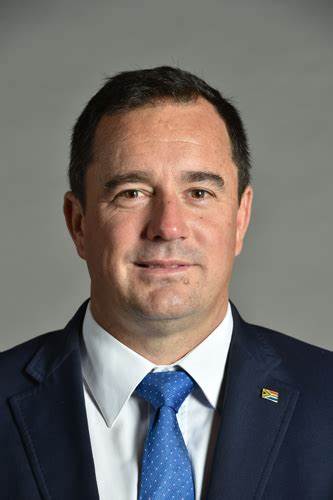
In a move that has shifted the conversation from party corridors to farm gates, John Steenhuisen has announced he will not seek a third term as Democratic Alliance (DA) leader. Instead, he says his focus will turn fully to his ministerial duties and, critically, to resolving the relentless foot-and-mouth disease (FMD) crisis crippling South Africa’s agricultural heartlands.
The reaction reveals a nation grappling with two parallel priorities: the future of a major political party, and the urgent survival of a foundational economic sector.
“Save the Farmer, Not the Politician”: Agriculture’s Plea
For farming groups, Steenhuisen’s political exit is secondary. What matters is his capacity now, as minister, to act. Bennie van Zyl, General Manager of TLU SA, voiced a sentiment echoing across the platteland: “For us, it is about the farmer and the farmer alone. We have no business with political views and opinions.”
The demand is for process over politics. Van Zyl welcomed Steenhuisen’s earlier admission of state capacity problems in managing the FMD outbreak but issued a stark warning. “If the state is serious… it must use the expertise and capacity that is there, and it lies in the private sector.” The contradiction of inviting private-sector help while insisting on state control over vaccine distribution, he argues, is a fatal flaw in the current approach. For farmers watching livestock valuations plummet and export markets slam shut, Steenhuisen’s legacy will be defined by his actions in the coming months, not the past six years.
Civil rights group AfriForum, whose largely farming-affiliated membership holds significant sway, maintained its distance from the party politics of the moment. CEO Kallie Kriel reiterated, “Our members think for themselves and no party can take their support for granted.” The message is clear: tangible results on FMD will influence votes far more than any leadership transition.
A Consequential Leader: The DA’s Internal Reflection
Within the DA, senior figures are reflecting on a transformative chapter. Cape Town Mayor Geordin Hill-Lewis called Steenhuisen “one of the most consequential leaders in our party’s history,” crediting him with steadying the party, returning it to growth, and most significantly, leading it into national government for the first time as part of the Government of National Unity (GNU).
Tshwane’s Cilliers Brink highlighted the ideological coherence Steenhuisen fostered alongside Federal Council Chair Helen Zille, leaving the party “in a stronger position.” Steenhuisen himself pointed to the successful negotiation of the GNU as a key achievement, a complex feat that redefined South Africa’s political landscape after the 2024 elections.
The Fork in the Road: Minister vs. Party Leader
Steenhuisen’s decision creates a rare fork in the road. One path leads into the heated internal battle for the DA’s soul and strategy. The other leads directly to the front lines of a national agricultural emergency that threatens food security, exports, and rural livelihoods.
The agricultural sector’s response indicates which path they believe holds greater national importance. They are not bidding farewell to a party leader; they are holding a minister to account. The debate his exit has stirred is less about who will next lead the DA, and more about whether the state can finally muster a competent, collaborative response to a disaster that has been simmering for years.
Steenhuisen’s tenure as DA leader may be remembered for navigating the party into government. His success as agriculture minister will be measured by something more visceral: whether he can help heal the land and protect the farmers who work it. The two roles have now decisively separated, and the nation will be watching both stages intently.
Follow Joburg ETC on Facebook, Twitter , TikTok and Instagram
For more News in Johannesburg, visit joburgetc.com