A carefully worded announcement and a party holding its breath
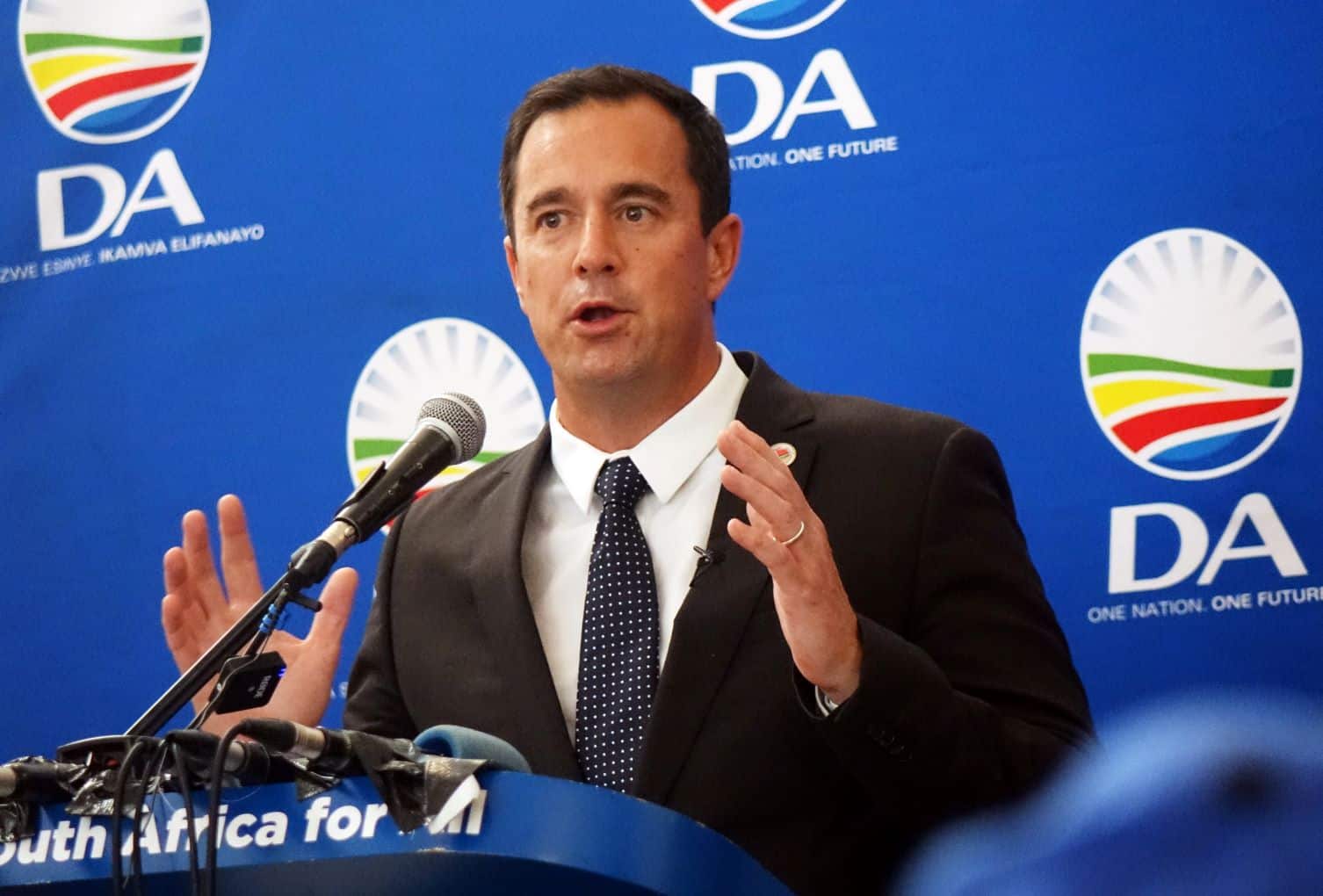
When Democratic Alliance leader John Steenhuisen announced he would address the media on “matters of national importance and public interest,” it didn’t take long for political circles and social media, to fill in the blanks.
Is he stepping aside?
Is he preparing to fight?
Or is this a strategic reset before the DA’s crucial April congress?
Steenhuisen himself tried to shut down the rumour mill, posting a photo of former US president Harry Truman holding the famously incorrect “Dewey defeats Truman” newspaper headline, a pointed warning against jumping to conclusions. His message was clear: wait for the facts.
But inside the DA, few believe this moment came out of nowhere.
Pressure that’s been building for months
Steenhuisen’s leadership has been under strain since the DA entered the Government of National Unity (GNU), a move that delivered power but also exposed sharp ideological fault lines within the party.
Those tensions exploded into public view last month when DA MP Dion George resigned, accusing the party’s leadership of being compromised and ineffective. In a scathing exit statement, George claimed the DA had been “captured,” silenced, and stripped of its ability to act independently, allegations that landed heavily at Steenhuisen’s door.
For a party that prides itself on clean governance and internal accountability, the optics were damaging.
A crowded leadership field and loud silence from the top
Before the current wave of speculation, Steenhuisen was widely expected to contest the leadership again, potentially facing heavyweight challengers including Western Cape Premier Alan Winde, Cape Town Mayor Geordin Hill-Lewis, and Communications Minister Solly Malatsi.
Now, analysts are questioning whether that contest will even happen.
Political analyst René Oosthuizen believes Steenhuisen’s address will be less about personalities and more about performance. Rather than defending himself, Oosthuizen says the DA leader is likely to lean into delivery metrics governance outcomes, coalition stability and measurable wins in what he describes as a “high-stakes internal accountability moment.”
In other words: less drama, more spreadsheets.
“The writing was on the wall”
Not everyone is convinced that Steenhuisen still has room to manoeuvre.
North-West University political lecturer Benjamin Rapanyane argues that internal momentum may already have turned against him. In his view, attempting to contest the leadership would have risked a humiliating defeat a scenario the party would rather avoid.
Rapanyane believes the fallout from George’s resignation may have accelerated what was already coming, though he doubts it will cause lasting damage to the DA’s voter base.
“The old guard is still there,” he notes, pointing to figures like Helen Zille as stabilising forces during leadership transitions.
Agriculture, ideology and unexpected allies
Criticism hasn’t only come from inside Parliament. Agricultural lobby groups and civil society organisations have also weighed in, particularly over Steenhuisen’s handling of foot-and-mouth disease and broader agricultural policy.
Red Meat Action Group’s Jaco De Villiers questioned whether the DA’s ideological framework is compatible with the realities of farming, while AfriForum leaders accused Steenhuisen of aligning too closely with ANC-style centralisation especially on education policy and disease control.
One AfriForum spokesperson summed up the backlash bluntly: alienating core support bases has consequences, especially in a party that relies on a broad, fragile coalition of voters.
What this means for the DA and the GNU
Beyond personalities, the bigger issue is stability. The DA cannot afford prolonged internal turmoil while serving as a key partner in the GNU. Any perception of weakness or division risks undermining its influence at national level and handing ammunition to political rivals.
Political analyst Piet Croucamp believes a shake-up is already underway. The unanswered question, he says, is whether leadership changes stop at the party level or spill over into Cabinet.
For now, Steenhuisen remains both DA leader and senior GNU figure, but the clock is ticking.
A defining moment, not just for one man
Whether Steenhuisen steps aside, fights on, or charts a third path, this moment marks a turning point for the Democratic Alliance. It’s a test of how the party manages power, dissent and accountability in a post-election South Africa where coalitions are no longer theoretical they’re the reality.
As one political observer put it online: “This isn’t just about Steenhuisen. It’s about what kind of DA comes next.”
All eyes are now on that podium and on what remains unsaid.