News
Kubayi Calls for Lifestyle Audits as Prosecutor Wealth Raises Integrity Concerns
When the numbers do not add up
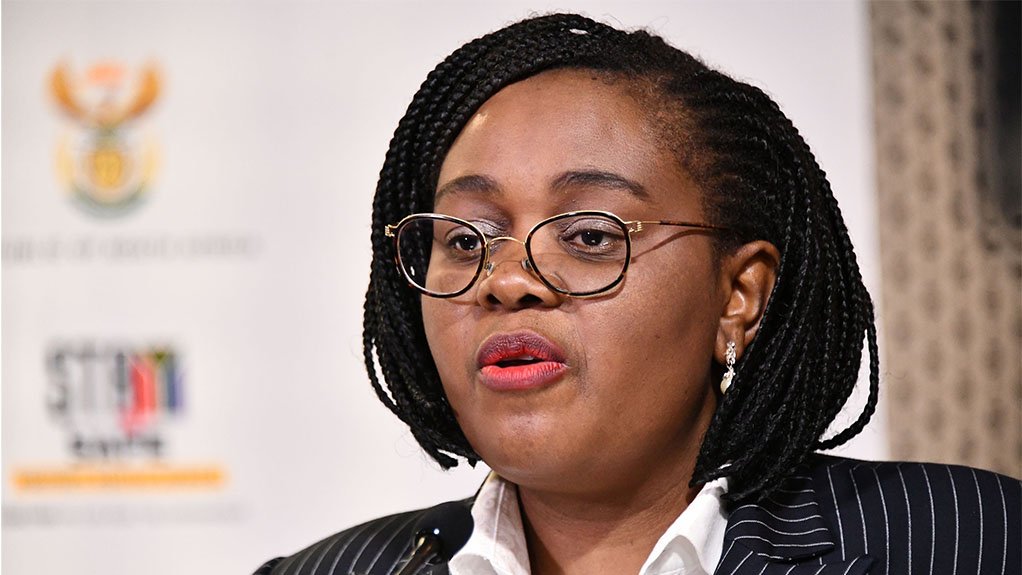
In South Africa, people notice when the math does not make sense. A luxury car in a courthouse parking lot. Designer labels on a public servant’s salary. A lifestyle that simply does not align with the payslip. These quiet observations are what Justice Minister Mmamoloko Kubayi has now turned into a public challenge.
Speaking in a recent interview with the South African Broadcasting Corporation, Kubayi called for compulsory lifestyle audits for all prosecutors. Her message was blunt. If someone tasked with defending the rule of law is uncomfortable explaining how they fund their lifestyle, that alone should raise alarm bells.
For Kubayi, this is not about gossip or envy. It is about risk. A justice system cannot stand firm, she argues, if its own guardians are financially exposed or compromised.
A credibility problem that will not go away
The call comes at a sensitive moment for the National Prosecuting Authority. The institution is in a leadership transition following the end of National Director of Public Prosecutions Shamila Batohi’s contract this month.
Kubayi was careful to separate individuals from the broader system. She publicly praised Batohi’s tenure, noting that she was never associated with corruption or political interference. Yet she also acknowledged a hard truth that many South Africans have felt for years. The NPA carries historical baggage. Internal divisions and past allegations have eroded public confidence, and rebuilding that trust will take more than new appointments.
Lifestyle audits, in Kubayi’s view, are part of that reset.
Why lifestyle audits are gaining ground
The idea itself is not new. Over the years, multiple reports across government departments have exposed officials whose assets and spending patterns could not be reconciled with their legitimate income. In Gauteng, for example, internal probes into supply chain units uncovered irregular dealings that pointed to deeper structural weaknesses in how the state safeguards public money.
Against this backdrop, lifestyle audits are increasingly seen as a practical tool rather than a political threat. They work by comparing declared income with assets, liabilities, and spending habits. When used properly, they can flag red flags early, before corruption hardens into networks that are harder to dismantle.
Kubayi has been clear that this is not meant to be a witch hunt. She describes audits as preventative, not punitive. Their value lies in verification. If allegations surface, there must be something solid and measurable to rely on, not whispers or factional accusations.
Public reaction and a familiar frustration
Online reaction has been telling. Many South Africans welcomed the minister’s stance, with social media users pointing out that prosecutors should be held to an even higher standard than other officials. Others were more sceptical, asking whether audits would be enforced consistently or quietly shelved once the headlines fade.
That scepticism is rooted in lived experience. South Africans have heard strong words before, only to watch accountability stall. Kubayi seems aware of this fatigue. Her insistence that she cannot personally vouch for prosecutors’ integrity until audits are in place speaks to a desire for systems, not personalities, to do the work.
Drawing a line for the future
At its core, Kubayi’s intervention is about drawing boundaries. Accountability and transparency, she says, are what ultimately force people to toe the line. Without them, institutions drift, and trust drains away.
Whether mandatory lifestyle audits become policy or remain a proposal will shape the next chapter of the NPA’s reform story. But the message is already out there. In a country where inequality is stark and corruption scandals are never far from the news cycle, unexplained wealth is no longer something the public is willing to ignore.
For prosecutors, the expectation is simple. If you guard the law, your life must stand up to its scrutiny, too.
Follow Joburg ETC on Facebook, Twitter, TikT
For more News in Johannesburg, visit joburgetc.com
Source: IOL
Featured Image: Polity.org.za