News
“We are sorry”: Lesufi apologises as Gauteng’s service delivery crisis deepens
“We are sorry”: Lesufi apologises as Gauteng’s service delivery crisis deepens
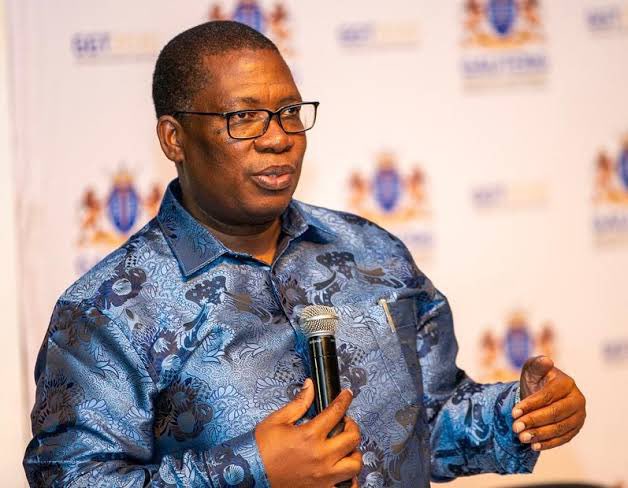
There’s something rare about a politician standing up in front of thousands of people and saying, plainly, “We are sorry.”
On Monday evening at the Nasrec Expo Centre, Panyaza Lesufi did exactly that.
During his State of the Province Address (SOPA), the Gauteng Premier apologised to residents for the province’s ongoing service delivery failures, a crisis that has left many communities frustrated, fatigued and, in some cases, without water for weeks.
For many watching at home, the apology was long overdue.
A province running on empty
Gauteng may be South Africa’s economic powerhouse, but lately it has felt like a province running on empty taps and fading patience.
Midrand. Thembisa. Parts of Melville and Westbury. Residents have been voicing their anger across community WhatsApp groups and social media platforms for months. Photos of dry reservoirs and water tankers parked on street corners have become part of the daily scroll.
Lesufi acknowledged that water challenges were worsened by infrastructure failures, including a dramatic incident on 27 January.
According to the Premier, an unexpected explosion at a Rand Water plant triggered a chain reaction: a fire on transmission machinery, followed by a major pipe burst. The impact was immediate. Reservoir levels dropped sharply, and emergency measures had to be activated.
It wasn’t just inconvenience, it was disruption to daily dignity.
The R750 million promise
Lesufi announced what he described as a permanent solution: a R750 million phased infrastructure upgrade in the City of Johannesburg aimed at resolving long-standing water instability.
He admitted that certain areas remain “stubborn and difficult,” including Westdene, Coronationville, Sophiatown, Melville and Emmarentia.
Among the interventions:
-
A new reservoir in Brixton
-
An emergency boosting pumping station set to go live
-
Long-term infrastructure upgrades to stabilise supply
In addition, national government has stepped in. Water and Sanitation Minister Pemmy Majodina approved an urgent application allowing Rand Water to abstract additional water from the Integrated Vaal River System to stabilise struggling municipal reservoirs.
Lesufi framed this as a collaborative effort between provincial and national government to restore reliability and, in his words, restore dignity.
Political pressure mounts
But not everyone is satisfied.
Ahead of the address, DA Gauteng chairperson Solly Msimanga criticised the provincial government’s inability to maintain consistent water supply across several regions.
He argued that almost every community, from Tshwane to Merafong, is grappling with at least one major service delivery issue, ranging from water and electricity to sanitation, schools and roads. He pointed out that the DA-led Midvaal appears to be the exception.
On social media, residents echoed the sentiment. Some welcomed Lesufi’s apology but questioned why major infrastructure investment is only being prioritised now. Others said apologies mean little without strict timelines and visible progress.
The mood online can be summed up in one recurring phrase: “We just want consistency.”
The bigger picture: 13 priorities and rising frustration
Last year, Lesufi introduced 13 key priorities aimed at tackling service delivery and economic challenges.
Yet dissatisfaction has grown.
Crime remains high. Infrastructure maintenance lags behind population growth. Power outages due to transformer failures continue in certain areas. Water supply interruptions have become frequent enough to alter daily routines.
The Premier’s apology may reflect political maturity, but it also underscores how deeply the crisis has cut into public trust.
Can trust be rebuilt?
Here’s the fresh angle many residents are quietly considering: this is no longer just about water pipes and reservoirs.
It’s about credibility.
When infrastructure collapses in South Africa’s richest province, confidence in government competence weakens. Investors watch. Residents question whether to stay or relocate. Small businesses absorb losses when water or electricity fails.
The R750 million upgrade is significant. The emergency pumping station may bring relief. Additional water abstraction could stabilise reservoirs.
But the true test will be simple: do taps run consistently three months from now?
An apology is a start, not a solution
Lesufi’s words at Nasrec were important. Acknowledging failure in public office is not common practice.
Yet for Gauteng residents who have queued for water tankers or showered with bottled water, the real measure of leadership will not be the speech, it will be the follow-through.
If the infrastructure upgrades succeed, Monday night may be remembered as a turning point.
If not, it risks becoming another well-delivered address in a province still waiting for basic services to flow.
For now, Gauteng waits, cautiously hopeful, but watching closely.
{Source: IOL}
Follow Joburg ETC on Facebook, Twitter , TikTok and Instagram
For more News in Johannesburg, visit joburgetc.com